Why a Transit Vehicle May Be Told to Wait
A bus or train that falls behind can make the gap behind it worse. Because it arrives late, more passengers have had time to gather at the next stop. More people boarding and getting off means a longer stop; that extra delay makes the vehicle later still. Meanwhile, the vehicle behind reaches stops sooner, where fewer passengers are waiting, so it spends less time there. The two vehicles begin to bunch together.
Transit planners call the time spent stopped for passengers dwell time. It is not just a pause in the timetable: it changes how quickly a vehicle can complete its route and how far it stays from the vehicles around it.
A Short Hold Can Restore the Gap
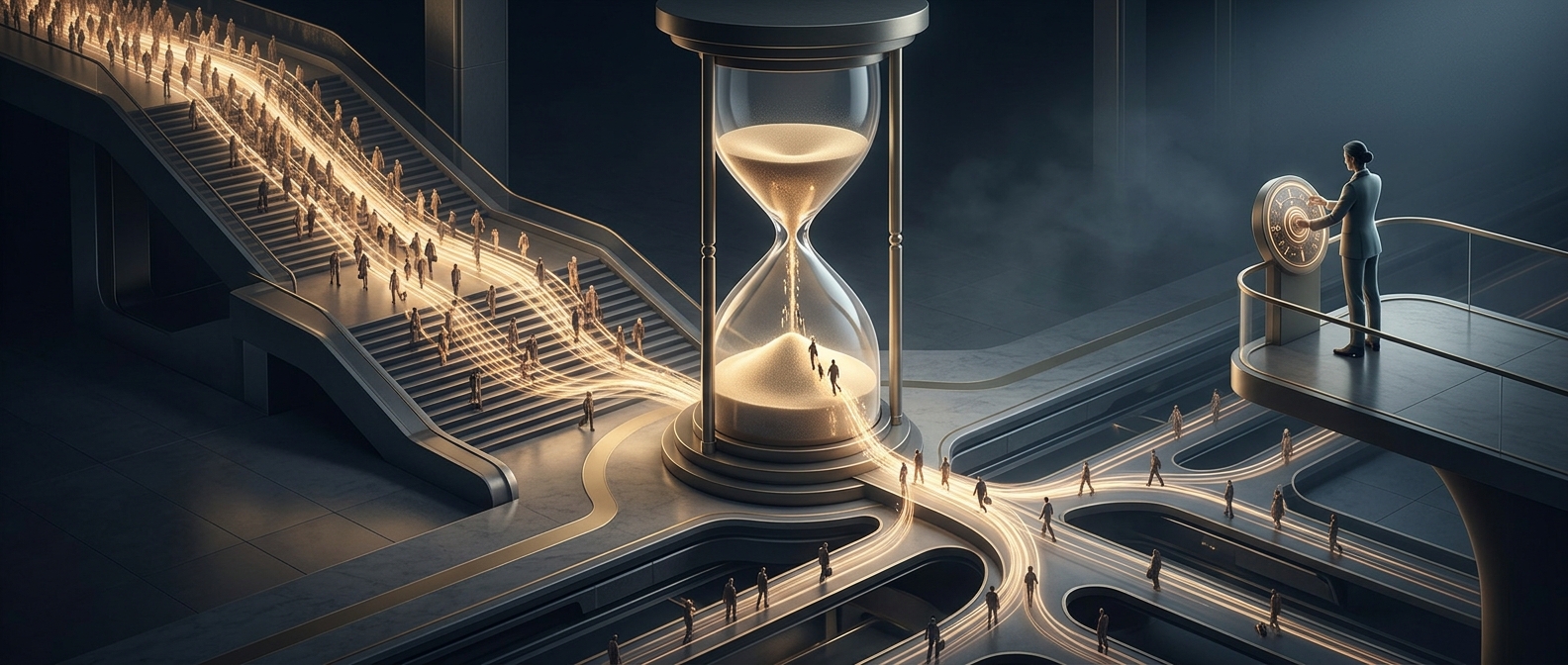
When vehicles bunch, dispatchers can ask one to wait at a stop or another suitable point. The hold may feel like an avoidable delay to passengers aboard, but it gives the vehicle ahead time to move farther away. That can spread passenger demand across the pair: the leading vehicle collects some of the waiting crowd, while the held vehicle has a better chance of encountering a smaller crowd later.
The aim is not necessarily to make every vehicle run exactly on schedule. On a busy route, keeping service evenly spaced can matter more than preserving the printed arrival times. A predictable interval helps prevent one overloaded vehicle followed closely by another with empty space.
The Tradeoff Is Delay Now for Less Bunching Later
Holding a vehicle adds waiting for the people already on board, and it cannot solve every cause of disruption. But without intervention, the delay can feed on itself: crowded stops lengthen dwell time, and longer dwell time makes service less regular. A brief, deliberate pause can interrupt that cycle before a small gap becomes a convoy of vehicles arriving together.