Why a Station Turns Speech Into a Blur
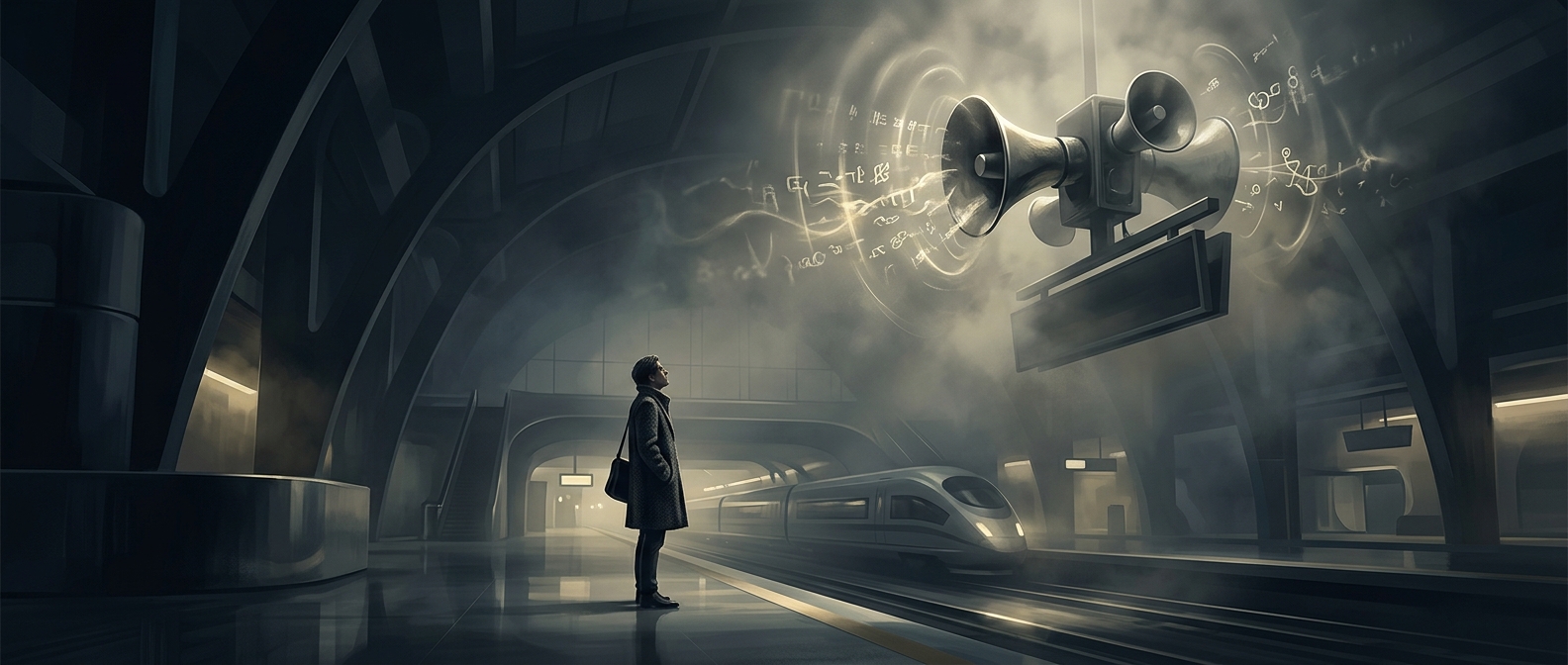
A loudspeaker can make an announcement louder without making it clearer. In a station, sound from the speaker reaches a passenger directly, then bounces off hard surfaces such as walls, windows, and train bodies. Those reflections arrive fractions of a second later, overlapping the next sounds in the sentence. The result is reverberation: a lingering wash of sound that blurs the boundaries between words.
That blur matters because speech depends on quick changes. Vowels carry much of a voice’s loudness, while brief consonants—such as the crisp sounds at the ends of words—often distinguish one word from another. Echoes can smear those small cues, so a listener may hear the sentence’s general rhythm but miss its precise wording.
Louder Is Not Always Clearer
Train noise adds a second problem. Rolling wheels and rushing air mask parts of speech, especially when their sounds overlap in frequency with the speaker’s voice. Turning up the volume raises both the announcement and its reflections; it may make the whole space noisier without restoring the missing consonants.
The layout creates a tradeoff. A speaker powerful enough to reach people across a platform may also send sound into surfaces that reflect it back. Speakers aimed at smaller listening areas can limit some of that spill, but passengers move, trains arrive, and background noise changes. There is no single volume that makes every seat—or every moment—equally clear.
The Listener Has to Reconstruct the Message
People use context to fill gaps: a station name, a familiar route, or the phrase “doors closing” can make a partly heard announcement easier to understand. But unfamiliar names and sudden changes are harder to recover. In a reverberant station, the announcement may be fully spoken and still leave passengers guessing at the one detail they need.