A Check Becomes a Shared Signal
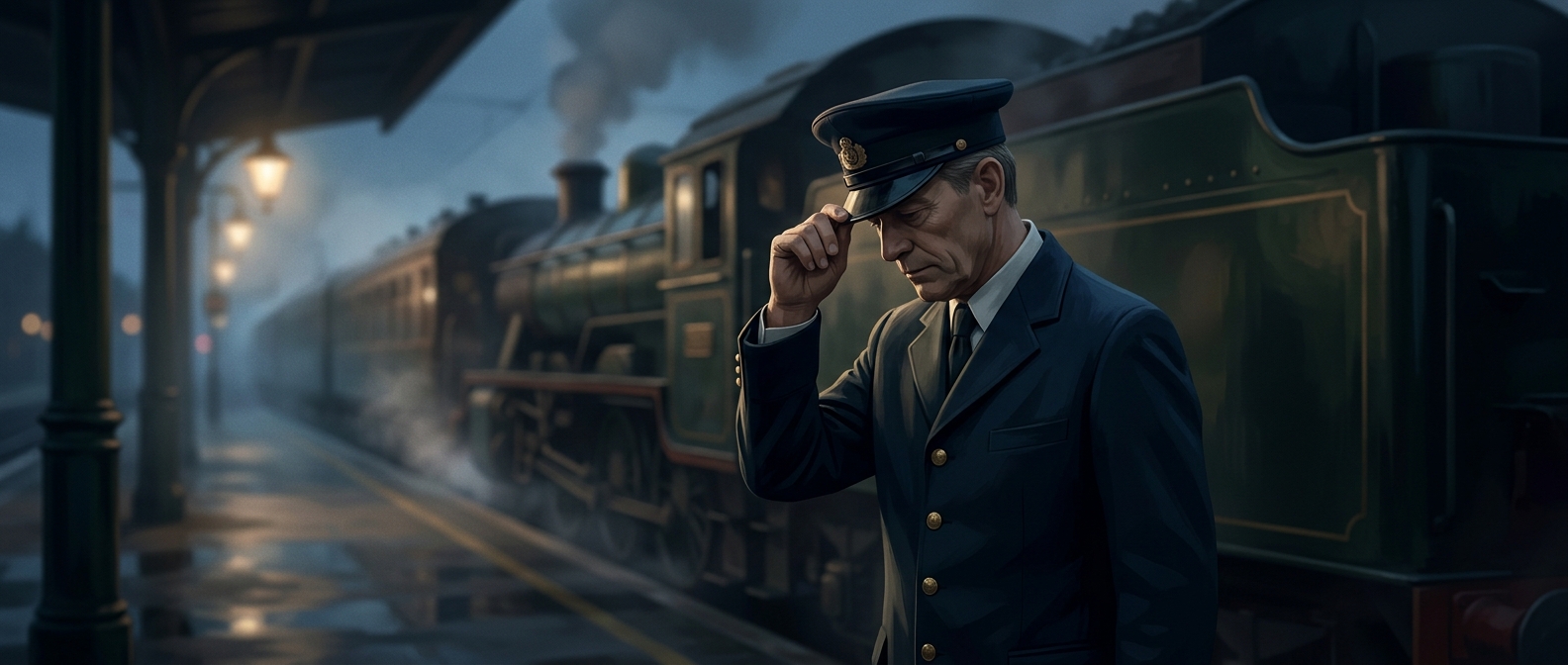
An inspection happens mostly out of sight: passengers can’t watch every check or know what the inspector has confirmed. A nod gives that hidden work a visible endpoint. Instead of leaving people to wonder whether the check is still underway, the gesture communicates that the inspector has finished and sees no immediate reason to hold things up.
That matters because transport depends on coordination. A train can be ready in one sense but still waiting for people around it to recognize that it is ready. A brief, familiar signal helps align what the inspector knows with what others can see, without requiring an explanation over platform noise or across a busy carriage.
Why the Ending Feels So Good
The nod also resolves a small stretch of uncertainty. While someone is checking, the outcome is pending; once they signal completion, attention can move on. That change—from “not yet known” to “apparently cleared”—is satisfying because it gives the moment a clean boundary.
The gesture is not a guarantee that nothing can ever go wrong. Its value is more immediate: it makes the result of a routine check legible to other people. A tiny signal can make an invisible process feel complete—and let everyone else act accordingly.