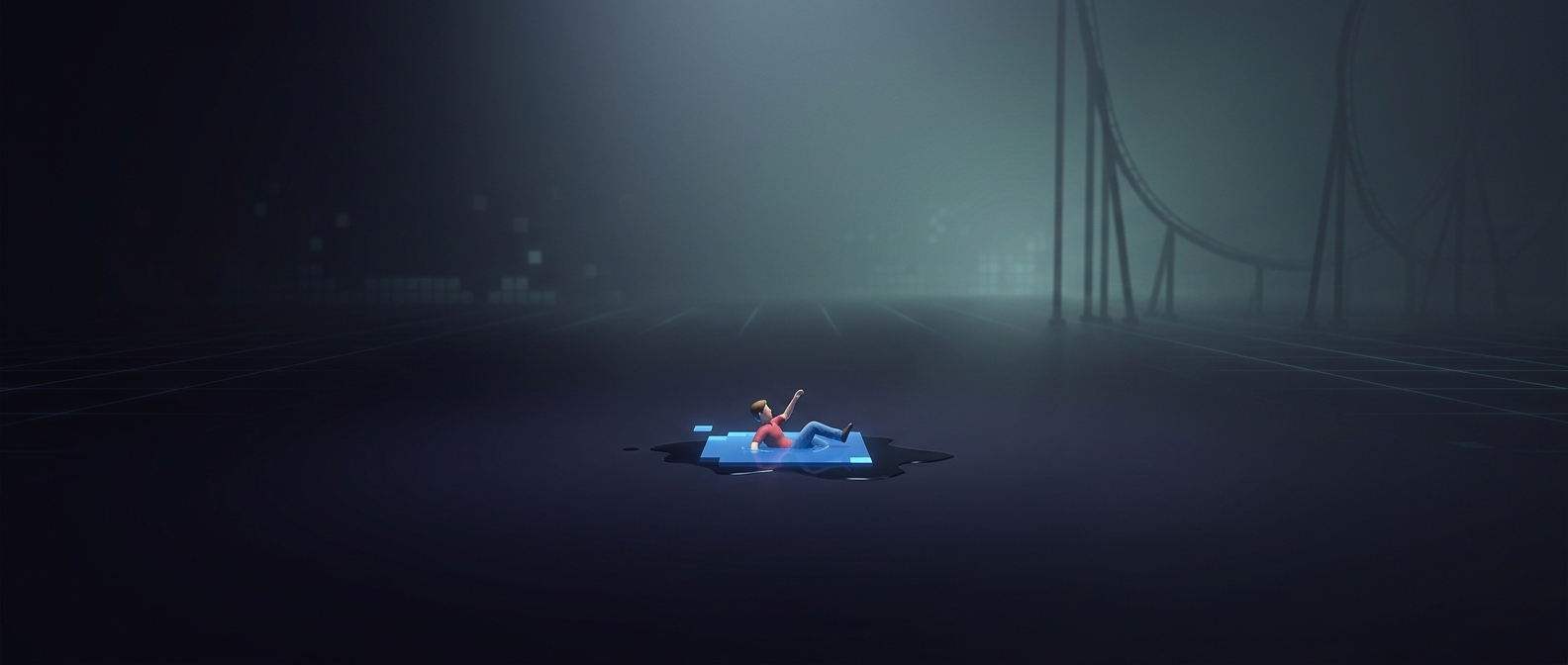
A puddle could behave like a pool
RollerCoaster Tycoon did not treat every patch of water as harmless scenery. Water occupied a game tile that guests could enter, but it was not ordinary walkable ground. A guest dropped into it could paddle for a while without finding a way back onto the path, then drown—even when the water looked shallow.
That gap between appearance and rules is what made the mishap memorable: the game showed a small patch of water, while its simulation treated being in water as a serious hazard.
How a park manager could cause it
Players could grab guests with the cursor and move them around the park. Dropping one over water placed the guest in the hazard; an accidental fall could do the same. The game did not require a dramatic ride crash or a deep lake. A little water in the wrong place could be enough.
The mechanic also made park layout matter. Water features needed to be kept away from places where guests might fall, and players could not assume that a guest landing in a shallow-looking spot would simply stand up and walk away.
A tiny rule with a darkly comic effect
RollerCoaster Tycoon turns park management into a chain of interacting rules: guests move along paths, rides can go wrong, and terrain can create hazards. Drowning follows from that system rather than from a special set-piece animation. The result is an unexpectedly grim consequence of a simple design choice: in the game’s logic, water was a trap, not a soft landing.