The muddy gesture at Lourdes
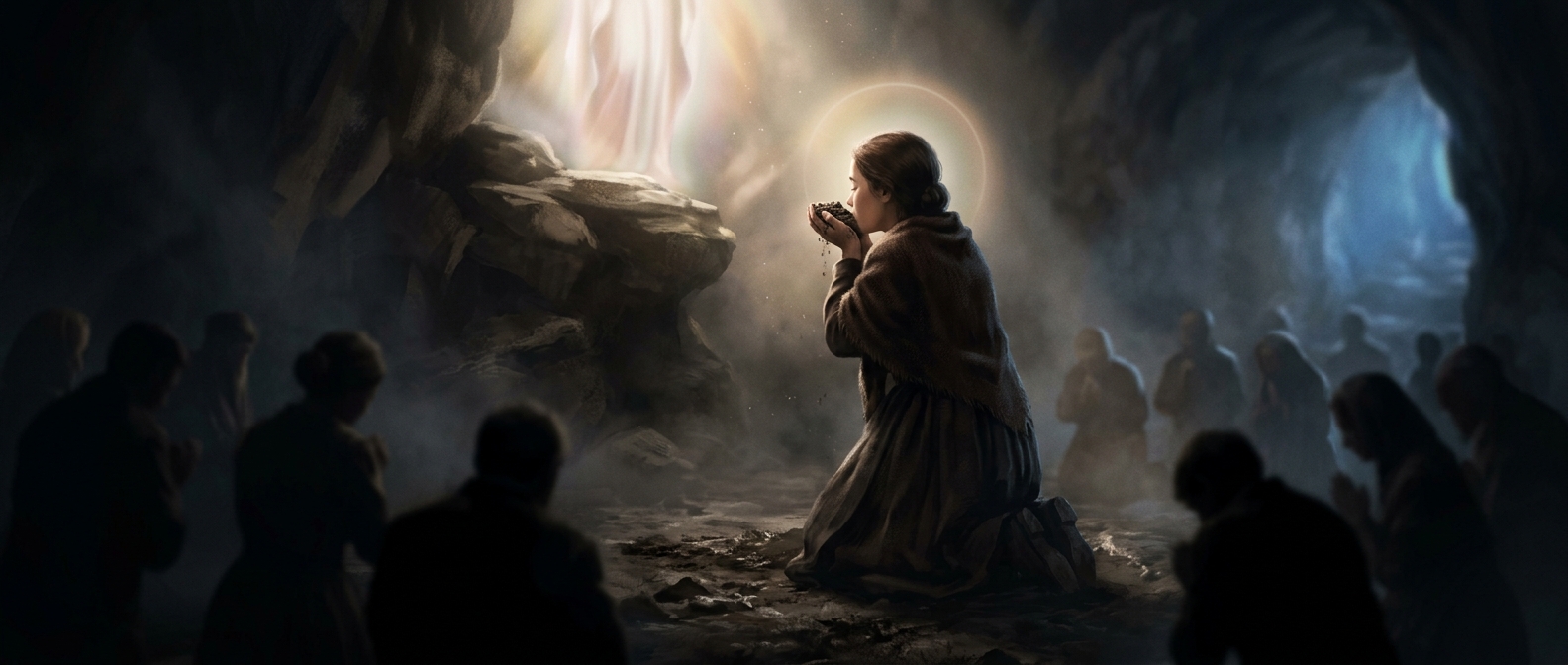
In 1858, Bernadette Soubirous, a teenage girl from Lourdes in southwestern France, said a woman she identified as the Virgin Mary appeared to her in a grotto. During one vision, Bernadette was told to dig in the ground and drink from a spring. At first, the spot she scraped yielded only damp earth. Accounts of the episode say she put the mud to her mouth, a sight that startled people watching nearby.
The act was not presented as an ordinary way to find clean water. In the religious story, it was a humble, uncomfortable gesture of obedience: Bernadette acted on the instruction before the spring was visibly flowing. As water emerged from the disturbed ground, the muddy scene became part of how believers understood the apparition—not merely as a discovery, but as a sign tied to the vision.
From a seep to a place of pilgrimage
Water gathered at the grotto and came to be associated with Lourdes’s religious significance. Pilgrims later traveled there to pray and seek healing, and the spring became central to the site’s devotional life. The episode’s force lies in its sequence: a girl digging in bare earth, tasting mud, and then pointing others toward water. The act that looked degrading to onlookers became, for believers, the first visible step toward a sacred spring.