How a Sawing Illusion Made the Threat Feel Real
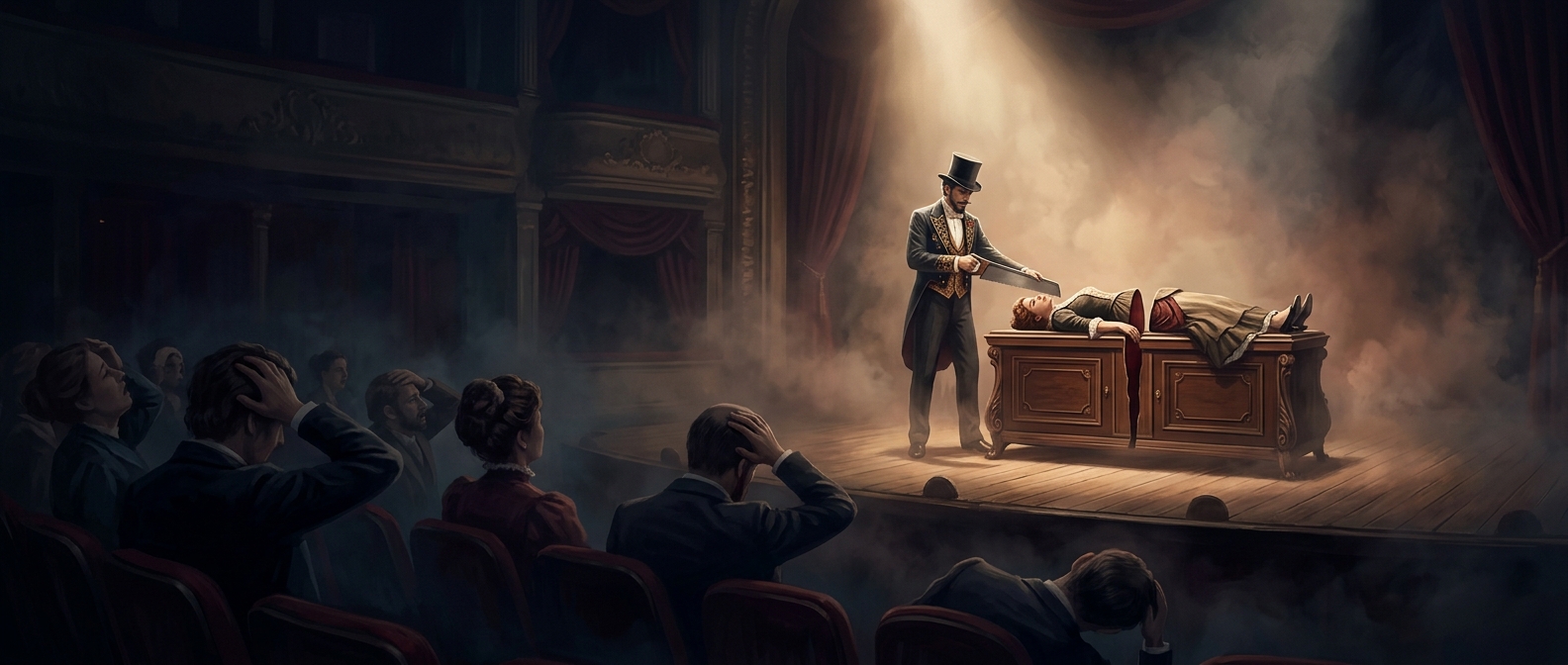
A magician’s saw did more than supply a dramatic prop: it gave the audience a clear, frightening story to follow. A person went into a box or behind a screen; the blade appeared to pass through; then the performer emerged alive. Concealment and controlled sightlines kept the method out of view, while the visible sequence invited spectators to imagine the injury the trick supposedly inflicted.
That gap between what people saw and what they feared was part of the effect. The illusion needed to look dangerous enough to provoke a reaction, but remain controlled enough to be repeated safely. The performer’s composure and the magician’s deliberate handling of the saw helped sell that tension.
Why Fainting Became Part of the Show
Reports that promoters stationed ambulances outside and paid actors to faint point to a second layer of theater: the audience was being cued how to interpret the spectacle. A staged collapse could make nearby spectators wonder whether someone had truly been overcome, adding apparent proof of danger without changing the illusion itself.
A genuine fainting episode and a planted one are not the same, but in a crowded room either could intensify the moment. Once attention shifted from the magician to a person slumping in the aisle, the imagined peril seemed to have consequences beyond the stage. The trick’s most unsettling prop, in other words, may have been the audience watching one another react.