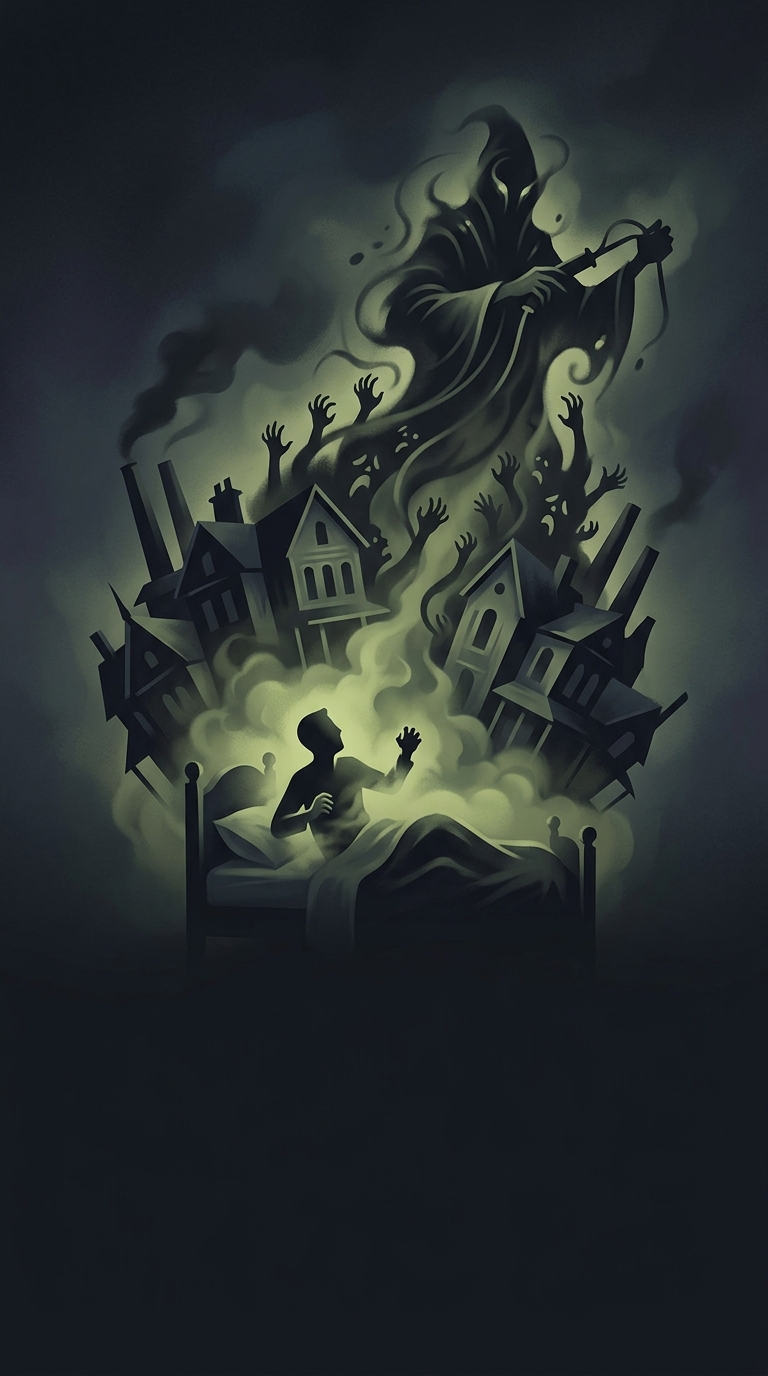
How a smell became a townwide mystery
In the summer of 1944, reports from Mattoon turned an unfamiliar odor into a frightening pattern. Residents described smells entering homes at night, alongside sensations such as nausea, weakness, or difficulty moving. Some said they had seen a prowler. As the stories circulated, the supposed attacker acquired a nickname: the “Mad Gasser.”
The reports did not all describe the same experience. Some accounts emphasized a sweet or sickly odor; others included physical symptoms or a figure outside a window. That variation made the mystery harder to verify—and gave each new report room to resemble the ones already in the news.
How fear can make reports reinforce one another
Mass hysteria, also called mass psychogenic illness, describes real symptoms that spread through a group when people are frightened and share a plausible explanation for what they feel. It does not mean that people are pretending. Stress can intensify bodily sensations, while expectation can shape how an ambiguous smell, weakness, or nighttime disturbance is interpreted.
That process can become self-reinforcing: a neighbor’s account makes others more alert to odors or sensations; those sensations then seem to confirm the story. Wartime fears of poison gas offered a ready-made explanation for an odor that might otherwise have been puzzling. Attention from newspapers and the threat of a prowler could further heighten vigilance.
Why the case never yielded a clear culprit
Police investigated, but reports did not produce a confirmed attacker or a single, demonstrated chemical source. Industrial odors in the area have been proposed as a possible contributor, but that explanation has not been established as the cause of every report. The episode is best understood as a mystery with several possible ingredients—environmental smells, fear, expectation, and rapidly shared stories—rather than as proof of one hidden gas attack.
Its most striking consequence was how quickly an uncertain sensation could acquire a shape: once residents expected an intruder and a sweet odor, ordinary clues became potential evidence of the same invisible threat.