Tawakkul and the Choice to Leave a Door Open
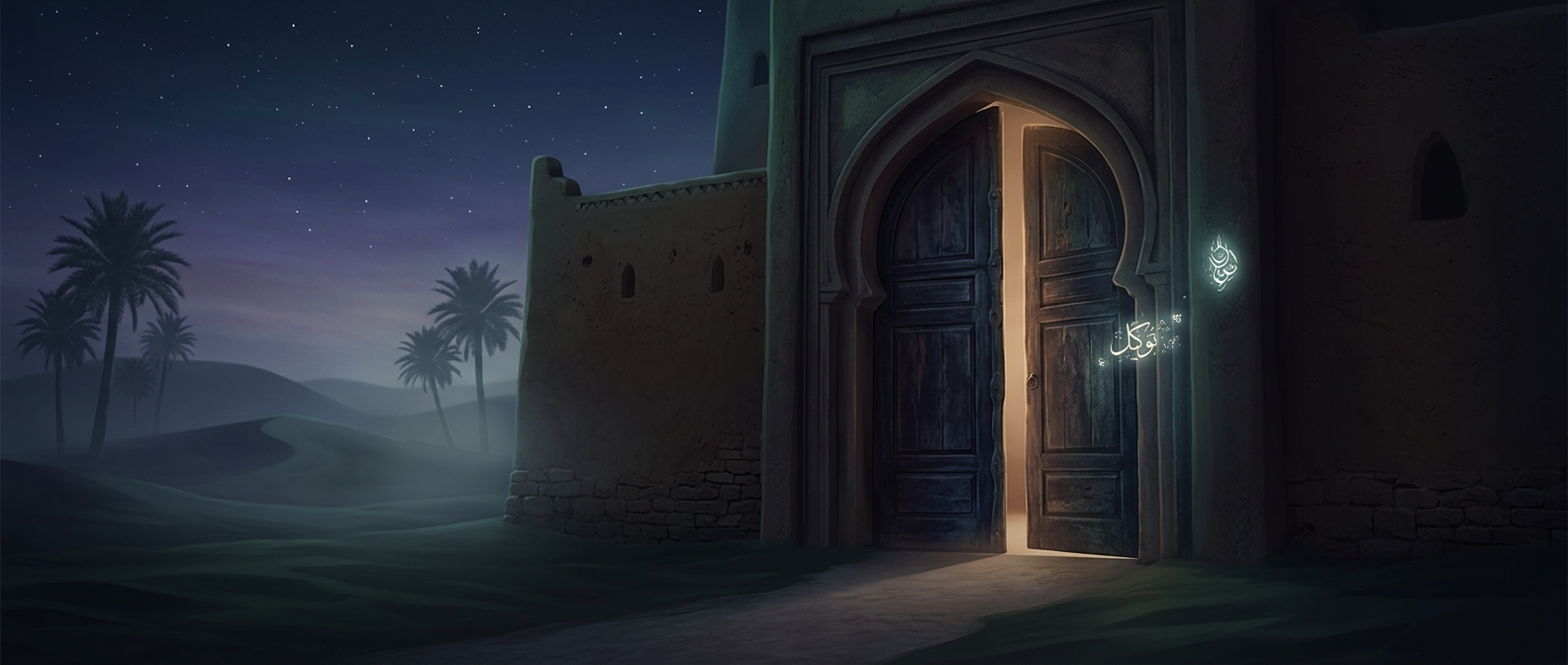
Tawakkul is reliance on God: entrusting the outcome of events to divine care rather than treating personal control as absolute. In some mystical settings, that trust is expressed through radical simplicity—accepting uncertainty instead of arranging every possible safeguard. Leaving a front door unlocked can make that commitment visible in an ordinary, consequential way.
The unlocked door is not simply a claim that danger does not exist. It can be a deliberate refusal to let fear govern every decision, rooted in the belief that provision and protection ultimately come from God. The same outlook may lead a practitioner to enter a difficult situation without the supplies another person would consider essential, accepting dependence rather than insisting on self-sufficiency.
Trust, Not a Universal Rule
Tawakkul does not have one uniform expression, and leaving a home unsecured is not a requirement for Muslims generally. Many understand trust in God as compatible with taking practical steps: one can make a plan, lock a door, or carry supplies while still recognizing that outcomes are not fully under human control. Others, especially in intensely ascetic or mystical practice, may choose greater exposure to uncertainty as a discipline.
That distinction matters because the outward act alone does not explain its meaning. To an observer, an unlocked door may look like carelessness; to the practitioner, it may embody a spiritual choice about fear, possession, and dependence. Its striking implication is also its risk: an act intended to demonstrate trust can leave a person or household more vulnerable, so it reflects a particular path of devotion—not a general safety instruction.