How the Grand Tour Turned Lessons Into Social Capital
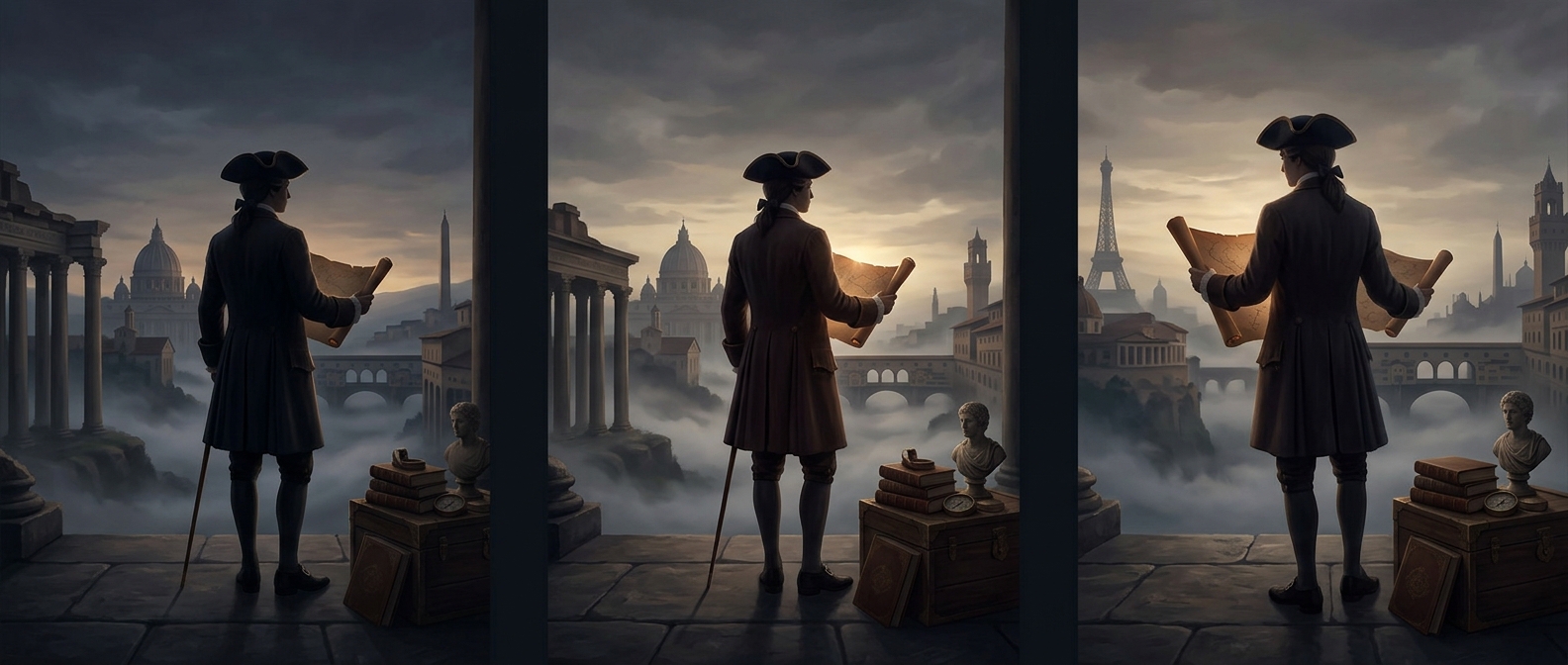
For a young aristocrat in 17th-century Europe, education did not necessarily end with books or a tutor’s lessons. Travel could serve as a final stage: in cities abroad, a traveler encountered languages, art, architecture, and customs in the places where they were practiced and displayed. The experience was meant to make learning usable in conversation and public life.
There was no single curriculum or exam. What mattered was returning able to recognize cultural references, discuss what one had seen, and move with confidence among educated peers. Travel offered a kind of practical test: could a young man interpret a foreign court’s manners, follow a conversation, or distinguish important works and buildings from ordinary surroundings?
Seeing—and Being Seen
The journey taught through observation, but it also made the traveler’s education visible. Knowledge of foreign music or literature could signal refinement; skill at fencing could suggest the poise expected of a gentleman. Clothing, purchases, and the company a traveler kept could reinforce that impression—or make the effort look like mere display.
That tension helps explain why the trip could become so expensive. Its value rested partly on what a traveler learned and partly on how convincingly he could present himself afterward. A returnee might bring home objects and stories, but the lasting prize was a reputation: evidence that he had encountered the wider world and knew how to speak about it. The Grand Tour was therefore not just travel added to schooling; it was a way of turning education into a social identity.