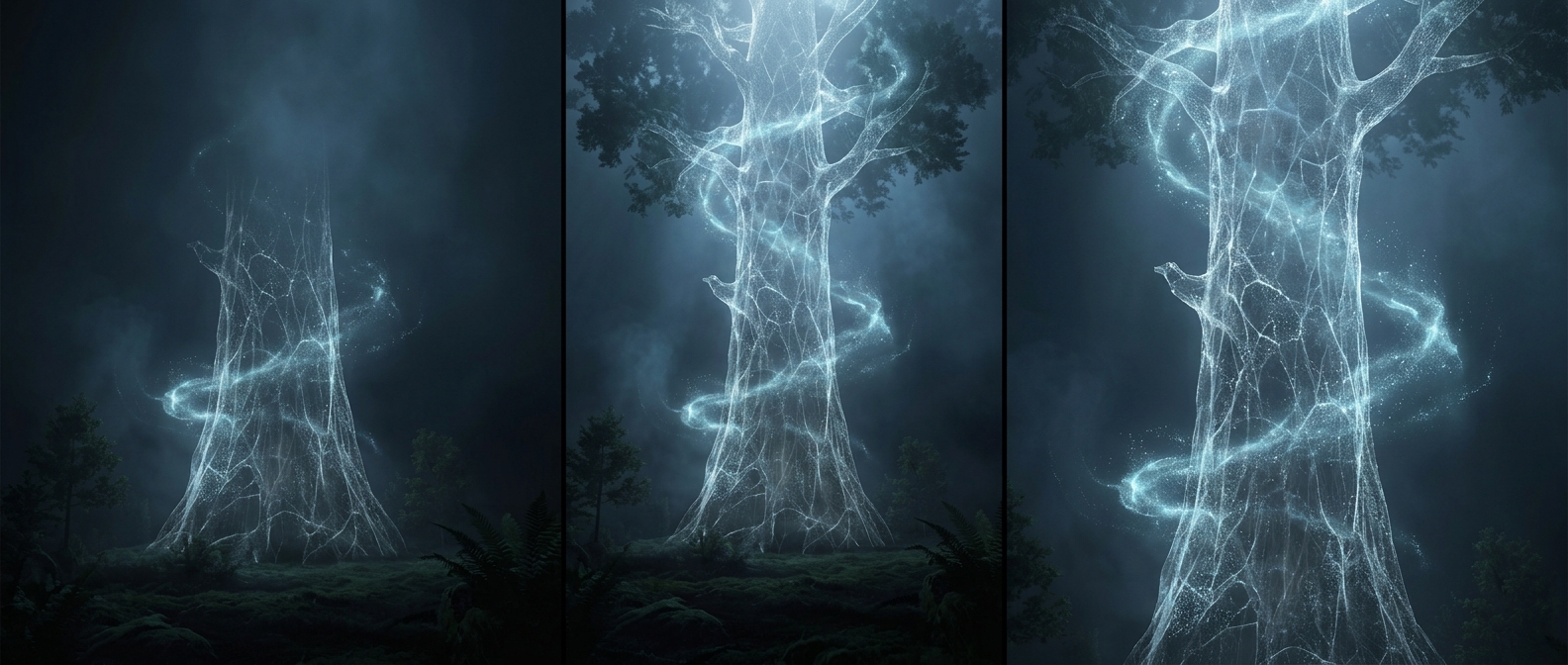
How Air Becomes Wood
A tree does not pull most of its trunk’s building material out of the ground. The carbon atoms in its wood come mainly from carbon dioxide in the air. Leaves take in the gas through tiny pores, then use sunlight to power photosynthesis: a chain of reactions that joins carbon from CO₂ with hydrogen and oxygen from water to make energy-rich sugars.
Those sugars are both fuel and feedstock. Some are used immediately to keep the tree alive; others are transported to growing parts of the tree and assembled into larger molecules. Cellulose, the tough material that makes up much of a plant’s cell walls, is built from linked sugar units. Other carbon-based compounds help form and protect the wood.
What the Soil Contributes
Roots take up water and minerals from the soil, and both matter to growth. Water supplies hydrogen used in photosynthesis and helps move dissolved materials through the tree. Minerals such as nitrogen and phosphorus are needed for proteins and other essential molecules. But they are not the bulk source of the carbon framework in a trunk. That framework is assembled from carbon captured from the air.
This is why a tree’s dry wood can weigh far more than the minerals it took up from the ground. The tree has turned invisible gas into solid tissue, using sunlight to drive the chemistry. As the trunk thickens, some of that captured carbon remains stored in its wood for years or centuries—until the wood decays or burns and much of the carbon returns to the atmosphere.