From a hardy crop to a useful ingredient
Guar gum begins inside the seed of the guar plant, a legume grown in dry regions. Processors separate the seed’s gum-rich inner portion, grind it, and produce a powder that can be mixed into foods and personal-care products. The crop can tolerate dry conditions better than many alternatives, making it valuable to farmers in places where water is limited—but harvests still depend on growing conditions.
Why a little powder changes the texture
Guar gum contains long carbohydrate molecules that absorb water and swell. As they spread through a liquid, they make it flow less easily: a thin mixture becomes thicker without needing a large amount of added material. That same thickening can help keep ingredients evenly dispersed rather than settling or separating.
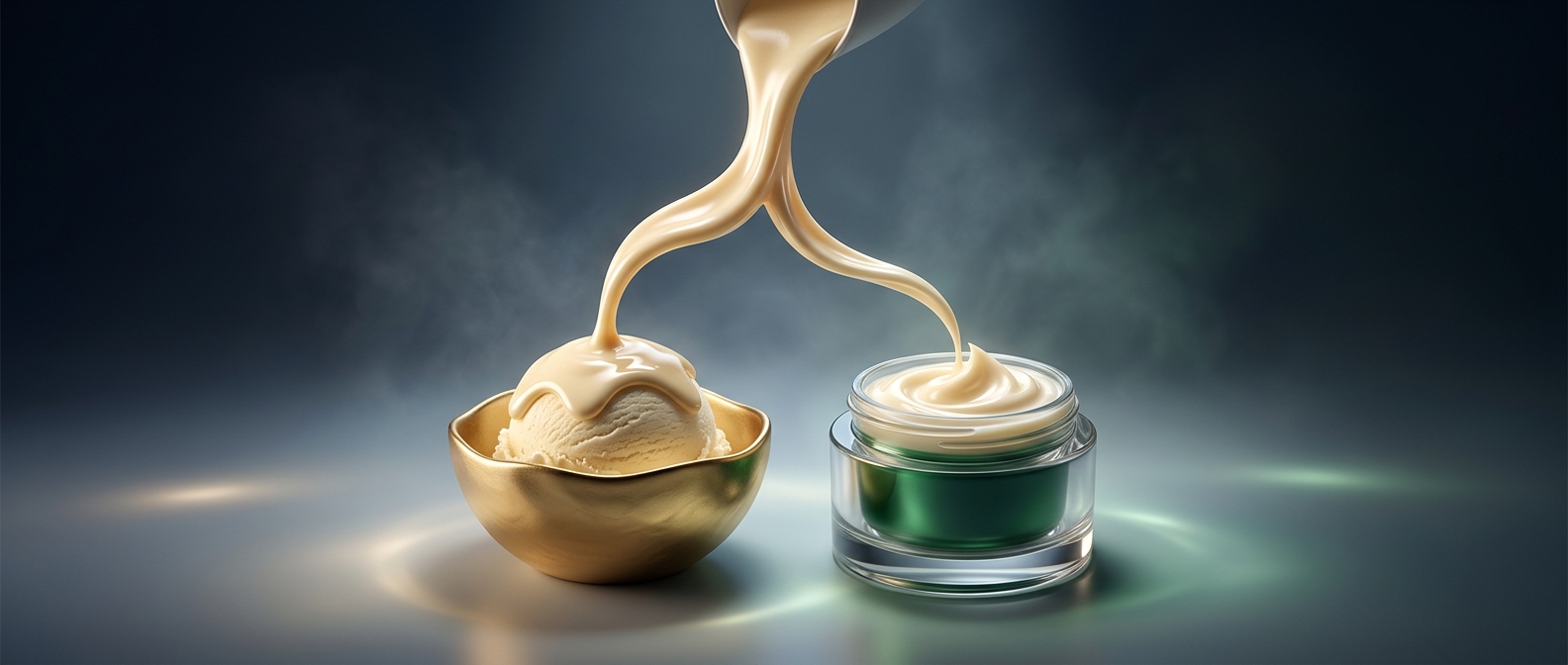
In ice cream, the gum helps limit the growth of large ice crystals during storage, preserving a smoother texture. In cosmetics, it can give a lotion or gel a more substantial feel and help keep its ingredients mixed. The effect is useful precisely because the powder works at low concentrations; manufacturers can adjust texture without turning a product into a heavy paste.
A crop tied to many kinds of demand
Guar’s versatility connects farm harvests to very different industries, from food to cosmetics and industrial products. That broad demand can create opportunities for growers and processors, but it also means the market is not determined by grocery products alone. When demand from one major use changes, it can affect the value of the crop and the cost of the ingredient for other buyers.
The bean’s economic importance lies in that conversion: a crop suited to dry farming becomes a compact ingredient capable of changing the feel of products made far from the fields where it grew.