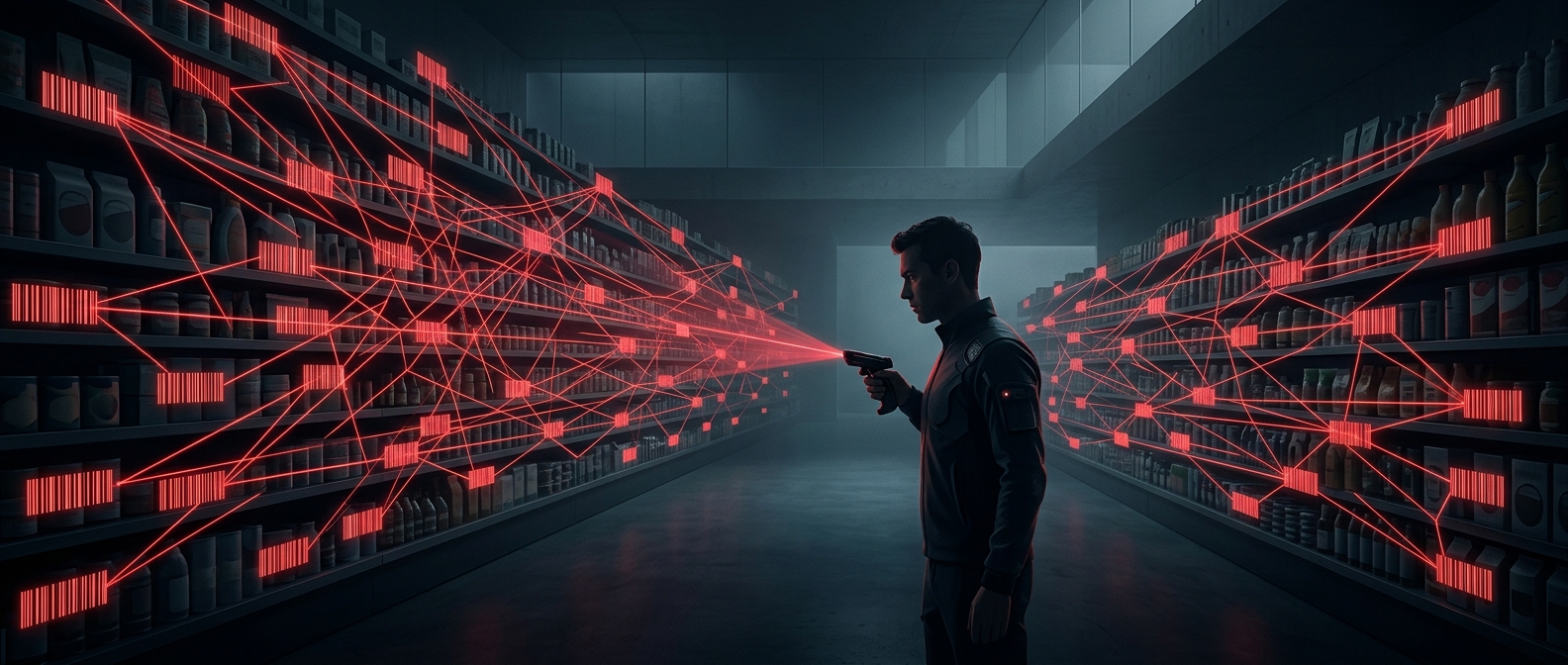
A barcode is a key, not a product description
The black bars on a retail package do not contain a full description of what is inside. In a UPC, the bars encode a number; a scanner reads that number and sends it to a store’s system. The system uses the number to retrieve the product record—such as its name, price, and inventory details.
That separation matters. A cashier does not need to interpret a package’s wording or recognize its design, and a retailer can update a price in its system without changing the barcode. The identifier stays the lookup key; the store’s database supplies the information attached to it.
Why businesses share a numbering system
Retailers, manufacturers, and wholesalers all need to refer to the same sellable product. GS1, a nonprofit standards organization, coordinates the system used for identifiers such as the Global Trade Item Number (GTIN). Companies receive a numbering capacity and assign identifiers to their products under GS1 rules; a different size or package configuration generally needs its own identifier because it is a different item to order and sell.
This shared format reduces the need for each trading partner to invent a private code and then translate it for everyone else. A retailer can match a shipment record to a checkout scan, while a supplier can use the same identifier in product and order data. The barcode makes that common number quick to capture, especially when a store processes many items at a time.
Consistency has limits
An identifier points to a product record; it does not, by itself, reveal where a particular package came from, prove what it contains, or track an individual unit through the world. Those tasks require additional records or identifiers. Its economic value is more basic: it lets separate businesses coordinate around the same product reference, reducing mix-ups between similar goods and making routine buying, selling, and stockkeeping easier.