Why Chaplin’s coffin became a ransom target
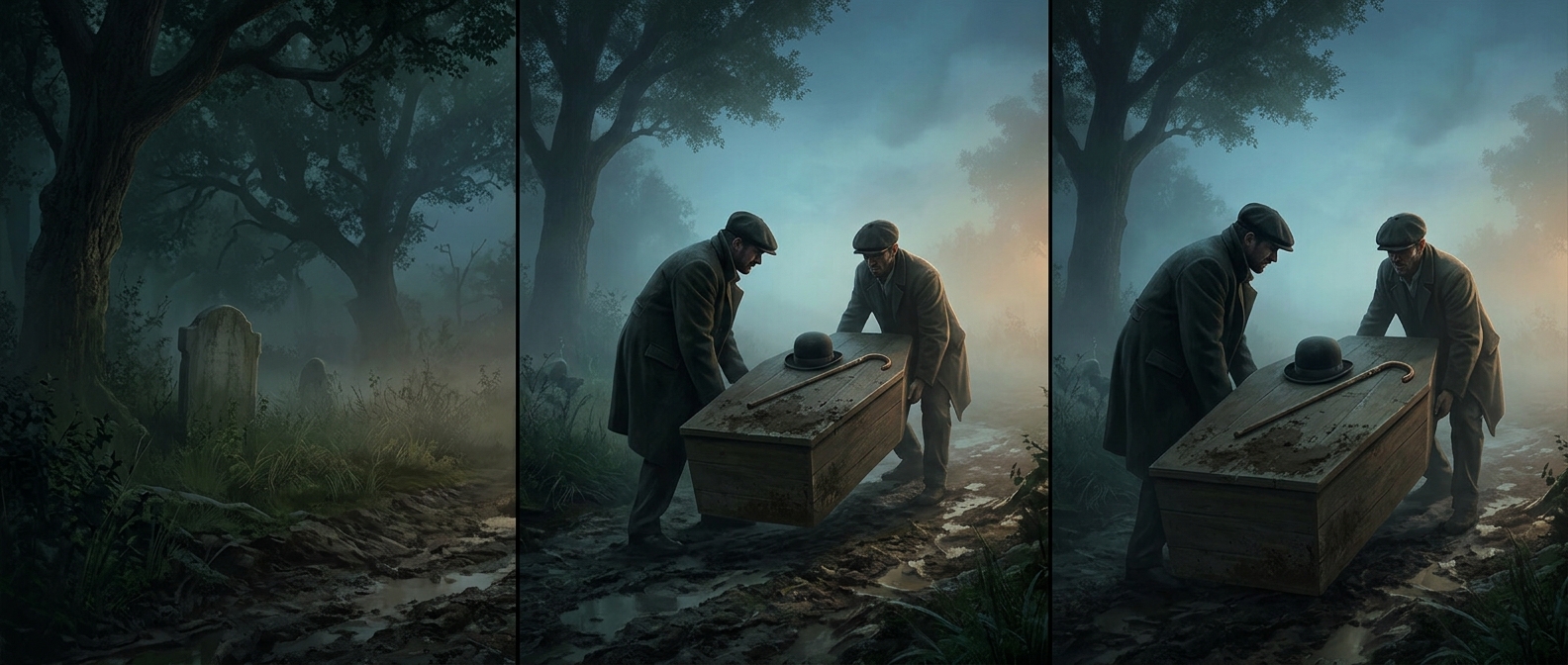
Charlie Chaplin died in 1977 and was buried in Corsier-sur-Vevey, Switzerland, near the home where he had spent his final years. His fame made the grave recognizable, but the theft also depended on a practical vulnerability: a coffin buried in an ordinary cemetery could be dug up and moved. In March 1978, two men stole it and contacted Chaplin’s widow, Oona, seeking money for its return.
The ransom failed—and the search began
Oona refused to pay. That decision denied the thieves the easy payoff they had hoped to obtain, but it left the family facing the possibility that Chaplin’s body might remain hidden. Police investigated the demand and searched for the coffin. They eventually found it buried in a field near the village of Noville, roughly 20 miles from the cemetery.
The men were arrested and later convicted. Their plan had turned a celebrity’s burial into an attempted extortion: the family’s grief and the public’s interest were meant to create pressure to pay. Instead, the investigation ended with the coffin recovered and the perpetrators brought to court.
A grave redesigned against another theft
Chaplin was returned to his original cemetery, but the grave was then covered with concrete to make it far harder to dig up. That added barrier changed the burial site from an accessible plot into one protected against the same method of theft.
The episode is memorable partly because it collided two very different kinds of fame: Chaplin’s carefully crafted public image as a comic performer and the blunt physical reality of a coffin that could be stolen. The concrete over his grave is the lasting, practical consequence of that collision.