A cave formed when the sea was lower
The Great Blue Hole lies within Lighthouse Reef, a coral atoll off Belize. Its story began on dry land: when sea levels were lower, rainwater slowly dissolved limestone and carved chambers into the rock. Water dripping through cave ceilings deposited minerals in hanging formations called stalactites.
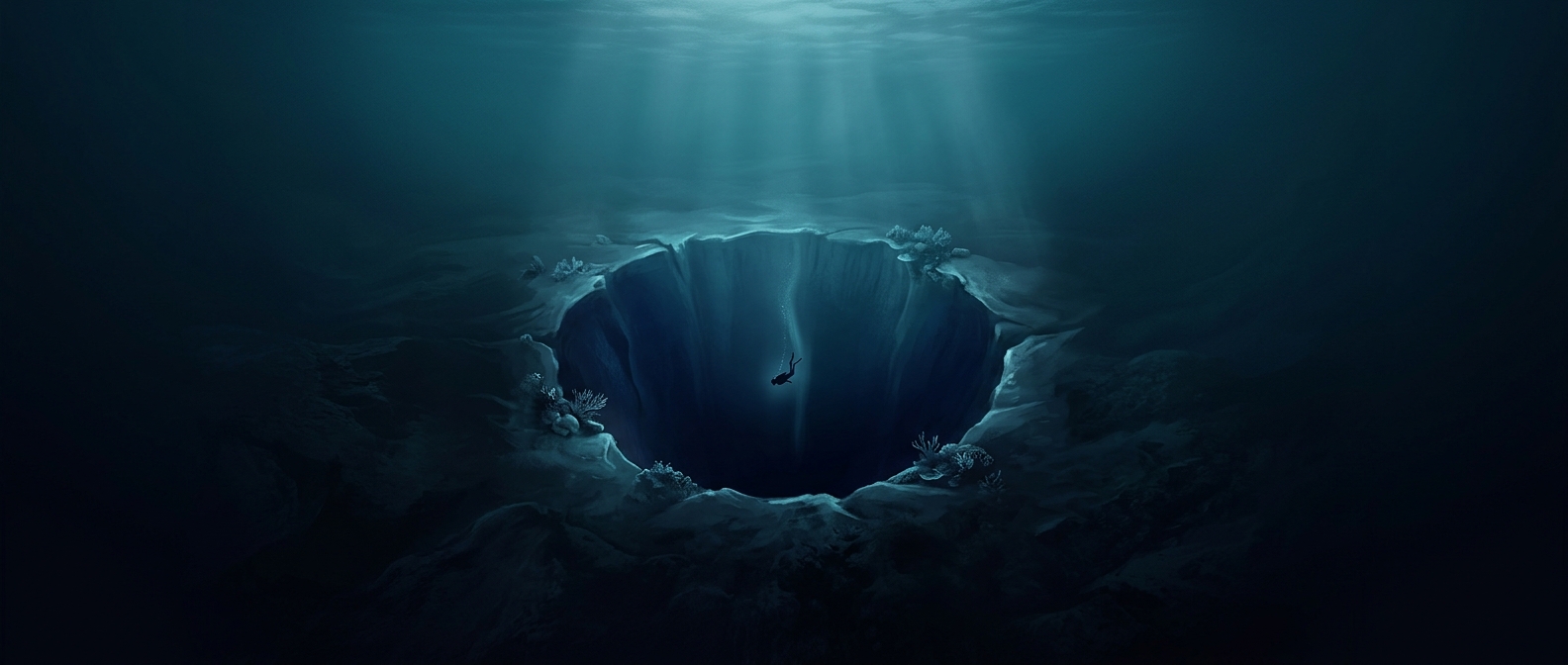
As the climate warmed after the last ice age, rising seas flooded the cave system. The roof of the largest chamber eventually gave way, leaving a broad opening above a deep, steep-sided cavity. The stalactites remain below the waterline—a clue that the chamber formed in air, not underwater.
Why the opening looks so dark
The surrounding reef is shallow, so sunlight makes its water appear bright turquoise. The hole plunges into much deeper water, where less light reaches the bottom; from above, that contrast makes the center look nearly black. Its clear, circular outline comes from the exposed rim of the old limestone chamber.
For divers, the descent is a journey through changing geology: reef life near the rim gives way to a shadowed interior and ancient cave formations. The striking color is not a separate pool of dark water, but a view into a flooded landscape carved before the sea covered it.