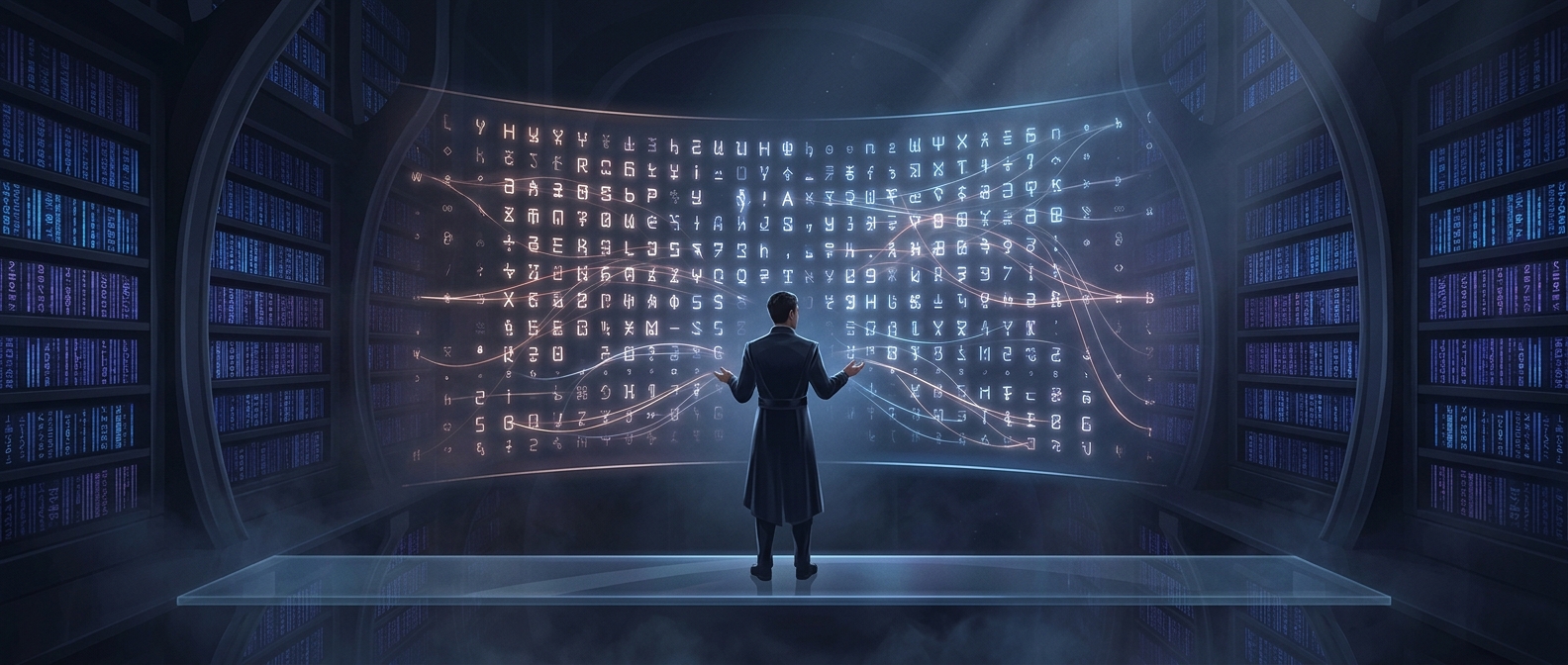
The calculation moves inside the ciphertext
Ordinarily, a server must turn encrypted data back into readable form before it can use it. Microsoft SEAL is a software library for a different approach, called homomorphic encryption: the client encrypts data first, and the server applies supported mathematical operations directly to the ciphertext—the scrambled, encrypted representation.
The key idea is that encryption preserves a useful relationship between operations. If a client encrypts two numbers, the server can combine their ciphertexts so that the result, once decrypted by the client, corresponds to adding or multiplying the original numbers. The server handles the calculation without receiving the secret key needed to read the inputs or result.
Privacy comes with a computational cost
This is not the same as running any ordinary program on encrypted data. The calculation must be expressed using operations the encryption scheme supports, and encrypted operations require much more computation than their plain-text equivalents. As operations build up, the ciphertext also accumulates mathematical noise; parameters must be chosen so the result remains accurate and decryptable.
SEAL supports different schemes for different needs. Some are designed for exact integer arithmetic, while another supports approximate arithmetic useful for values such as measurements. Choosing a scheme and its parameters is part of designing the computation, not an automatic step the server can ignore.
The result stays with the client
The server sends back an encrypted output, and the client uses its secret key to reveal it. This makes the approach useful when an organization wants an outside service to process sensitive information without handing over the information itself. The tradeoff is practical: the work must fit the supported operations, and the added computation can make encrypted processing slower and more resource-intensive than processing readable data.