How an ancient river system concentrated gold
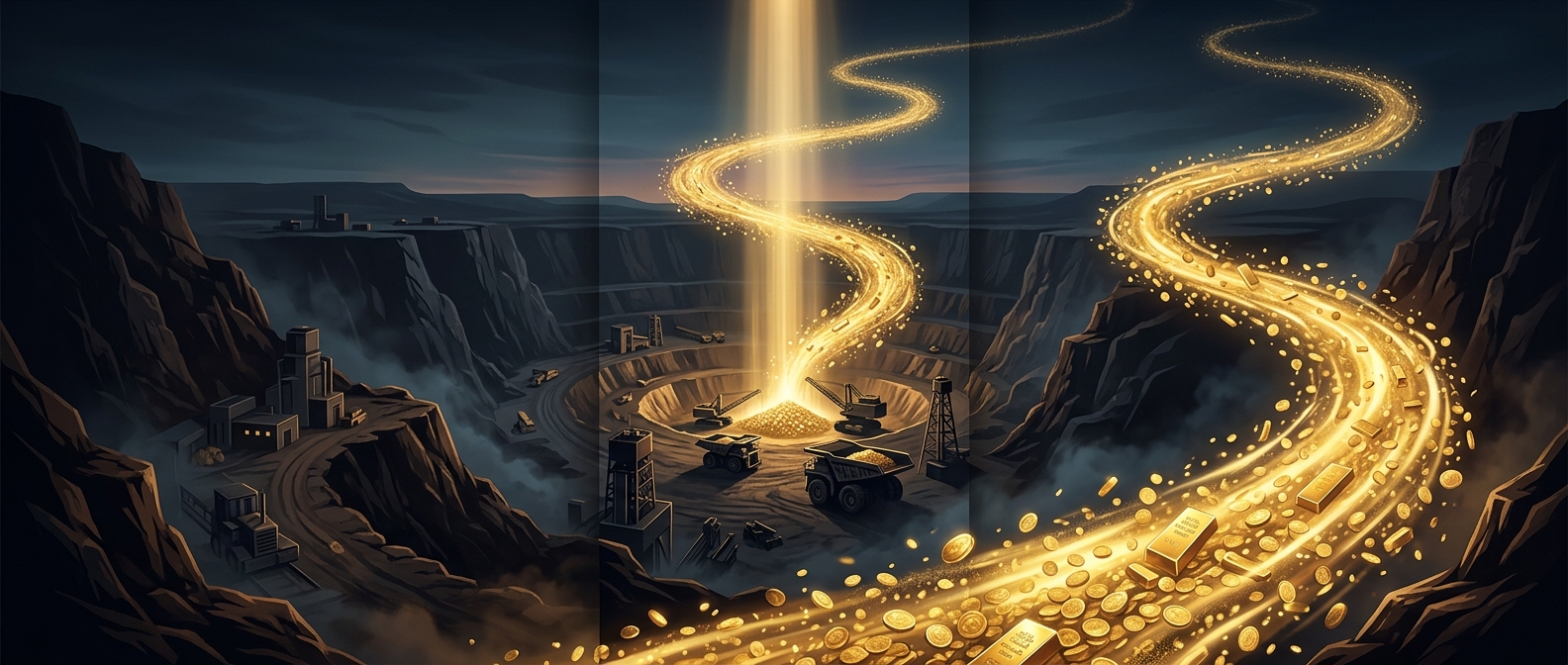
The Witwatersrand is a geological basin, not a giant hollow filled with nuggets. Its gold-bearing rocks formed from sediments laid down by ancient rivers. As the sediments accumulated and hardened into rock, gold became concentrated in layers of coarse pebbles and sand. Miners call these gold-bearing layers reefs—a mining term for rock strata, not coral formations.
That arrangement made the deposit unusually extensive: miners could follow gold-bearing layers across a broad region rather than relying on isolated pockets. The discovery in 1886 turned those buried seams into a mining rush and helped establish Johannesburg nearby.
Why abundance demanded heavy industry
The gold was not easy to reach. As mining followed the reefs underground, shafts had to descend farther, and operations needed machinery to lift workers and ore, pump out water, and move rock to the surface. The challenge was not simply finding gold, but extracting it from hard rock at a scale large enough to justify that infrastructure.
That scale drew investment and workers to the region and linked South African mines to global markets. The basin’s extraordinary output came from a combination of geology and industrial effort: ancient sediments had gathered the gold into workable layers, and modern mining built the costly system needed to reach them. A deposit that looks like a natural treasure on a map was, in practice, an immense underground engineering project.