The challenge is building a shoe around a shoe
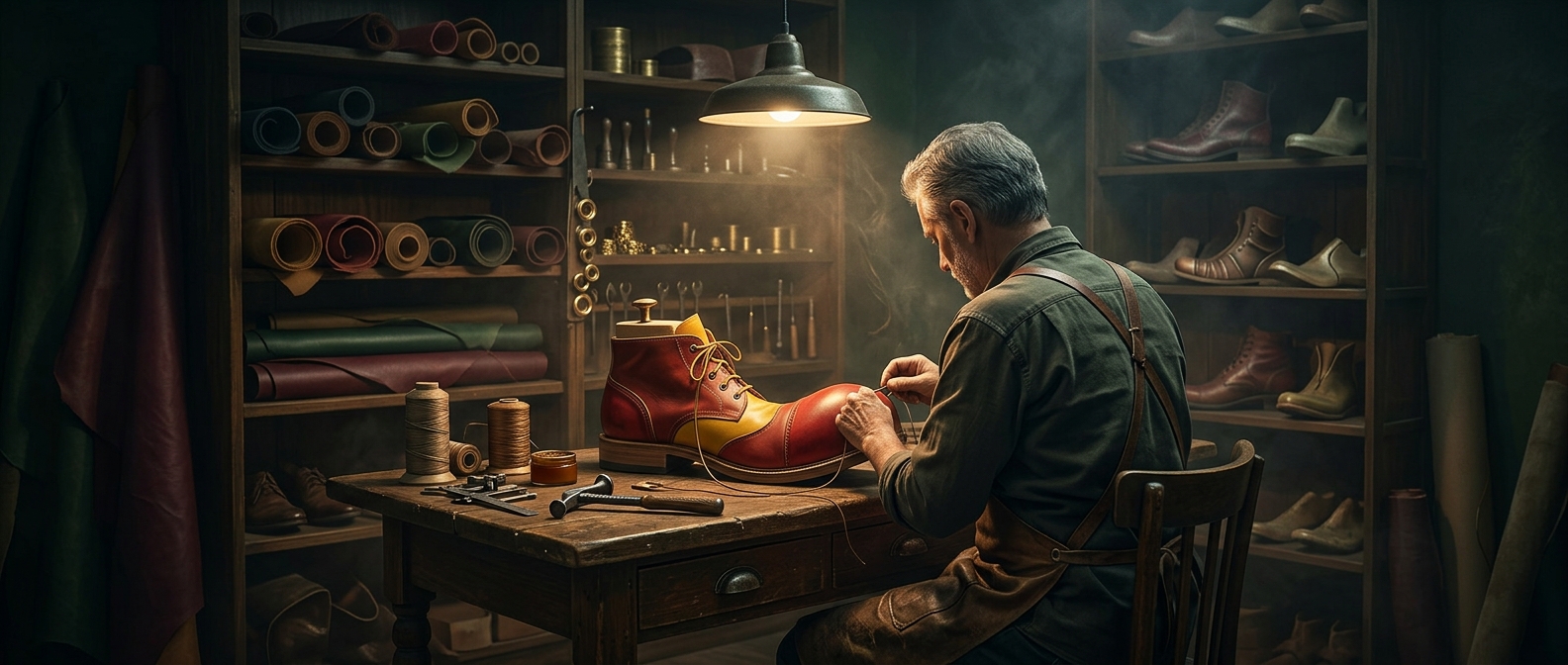
A clown shoe has to look comically oversized without behaving like a loose costume prop. The performer’s foot still needs support, and the shoe must stay secure while walking, dancing, or moving quickly. That creates a design problem: the visible shape can be much larger than the foot it contains, so the maker has to reconcile two different scales in one object.
A craftsperson can shape the exterior around the performer’s measurements and the intended silhouette, rather than forcing every wearer into a standard pattern. The material has to hold the exaggerated outline, while the inner construction must let the foot move naturally enough for performance. Small changes in proportion can affect not just appearance but how the shoe feels and moves.
Why custom work makes economic sense
Mass production is most efficient when an item can be made repeatedly from the same pattern. Oversized clown shoes often call for unusual dimensions and individual adjustments, making a standard production run a poor fit. Handmaking shifts more labor onto each pair, but allows the maker to build for a particular performer instead of producing stock that may not fit or function well.
That labor also makes the shoe a piece of working equipment, not merely a visual gag. A performer who depends on a distinctive pair may value a fit and shape that can be maintained or repaired over time. The tradeoff is straightforward: the buyer pays for skilled, individualized work, while the maker takes on the slower task of producing an object that does not conform neatly to factory sizing.
The result is an accessory whose absurd proportions are carefully controlled: from the audience, it looks enormous; from inside, it still has to work like footwear.