What people mean by a mutual dream
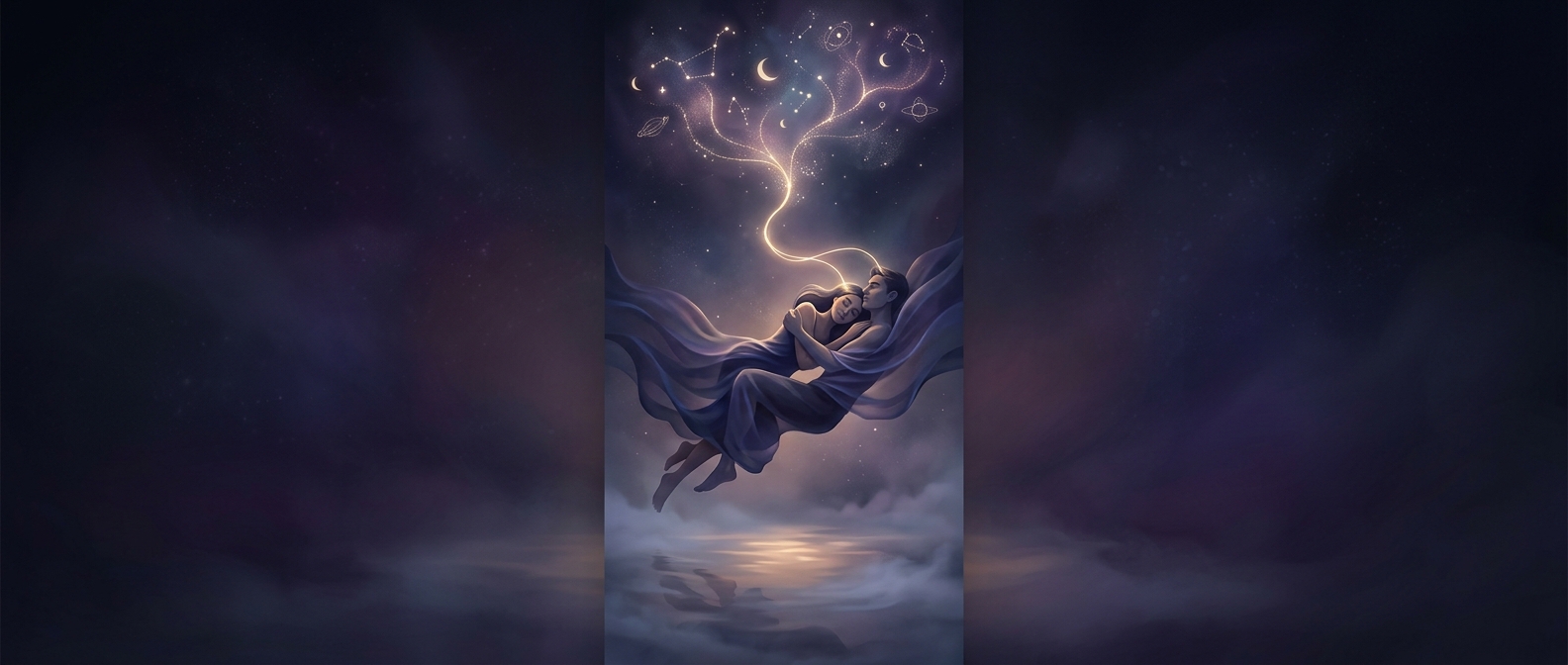
People describing a mutual dream say that two or more people dreamed the same event, place, or encounter at roughly the same time. The experience can feel unusually intimate: a detail remembered by one person seems to confirm what another saw, as if the dream had been a meeting rather than a private nighttime story.
The phrase “one channel” captures that sense of connection, but it is a metaphor, not an established account of how dreaming works. Dreams arise from activity in an individual sleeping brain; reports of matching dreams do not show that two minds literally shared one.
How separate dreams can come to feel shared
People who know one another often carry overlapping memories, worries, and expectations into sleep. A familiar person or place may therefore appear in both dreams without either dream being identical. After waking, conversation can sharpen the resemblance: one person mentions a setting, the other recalls a related image, and the two accounts take shape together.
Dream memories are also fragile. They can fade quickly and are often reconstructed when recalled. That does not mean someone is making up an experience; it means the remembered version may be influenced by later details and by what the other person says.
Why the experience matters
For many people, mutual dreaming is meaningful because it gives a vivid form to closeness, coincidence, or a feeling of being understood. The story can be shared even when the dreams themselves were not demonstrably identical. Its most striking detail may be less a supernatural channel than the moment two people compare what they remember—and discover how much of their inner lives they already have in common.