How the brain turns fading light into a night signal
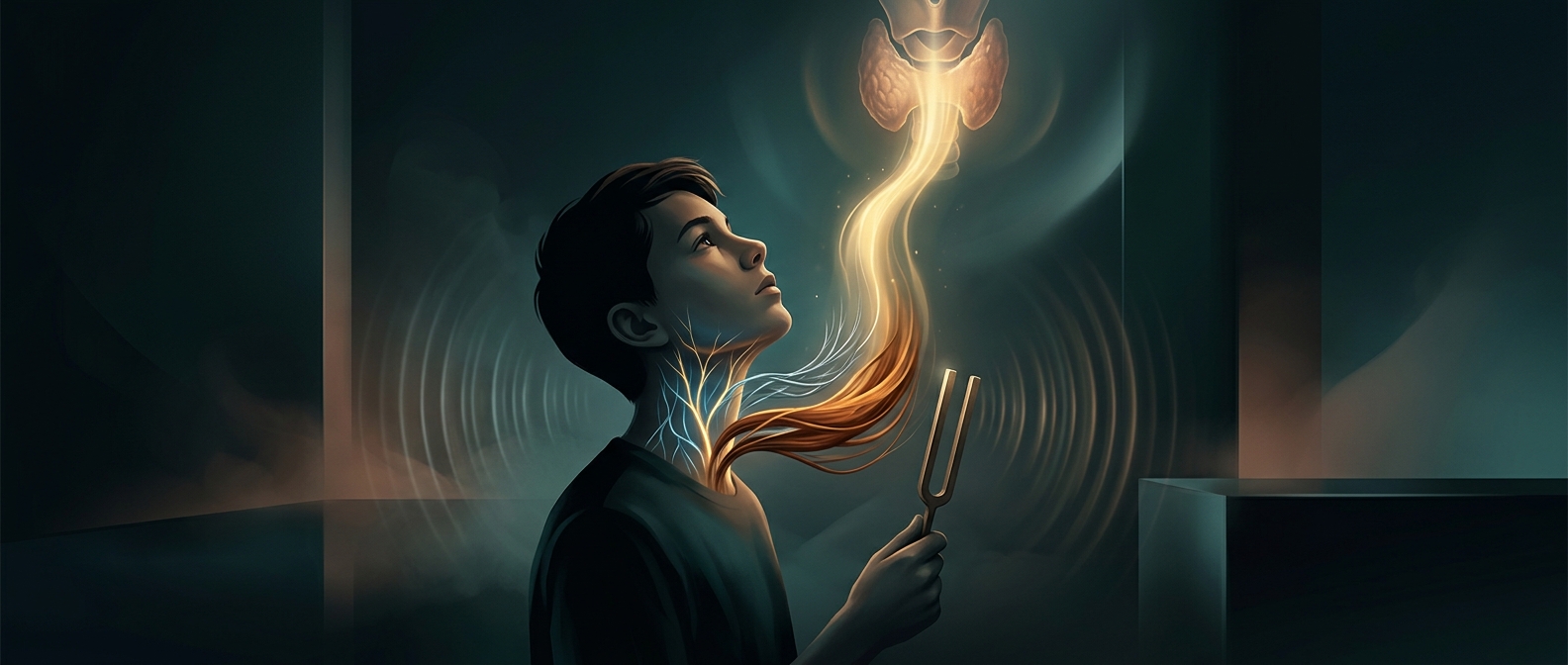
The pineal gland does not simply detect darkness on its own. Light-sensitive cells in the retina send information to the brain’s suprachiasmatic nucleus, a small cluster of cells that coordinates the body’s daily clock. From there, nerve signals influence the pineal gland: in darkness, the clock’s pathway allows melatonin release to rise; light can suppress it.
That relay helps the body time its night physiology. Melatonin levels typically rise in the evening, but the timing depends on the internal clock—not just on whether a room has suddenly gone dark. A bright screen or lamp late at night can provide the eyes with a signal that shifts melatonin production, while a dark room at midday does not automatically make the body behave as though it is bedtime.
A signal of timing, not an instant sleep switch
Melatonin is better understood as a message that biological night has begun than as a command to fall asleep. It helps align sleep-related processes with the day-night cycle, but sleep also depends on factors such as accumulated need for rest and the surrounding environment. That is why taking melatonin or turning off a light does not necessarily produce immediate sleep.
The distinction matters: the pineal gland’s nightly release is part of a coordinated timing system. Darkness supplies useful information to that system, while the brain’s clock determines when the information should translate into a melatonin signal.