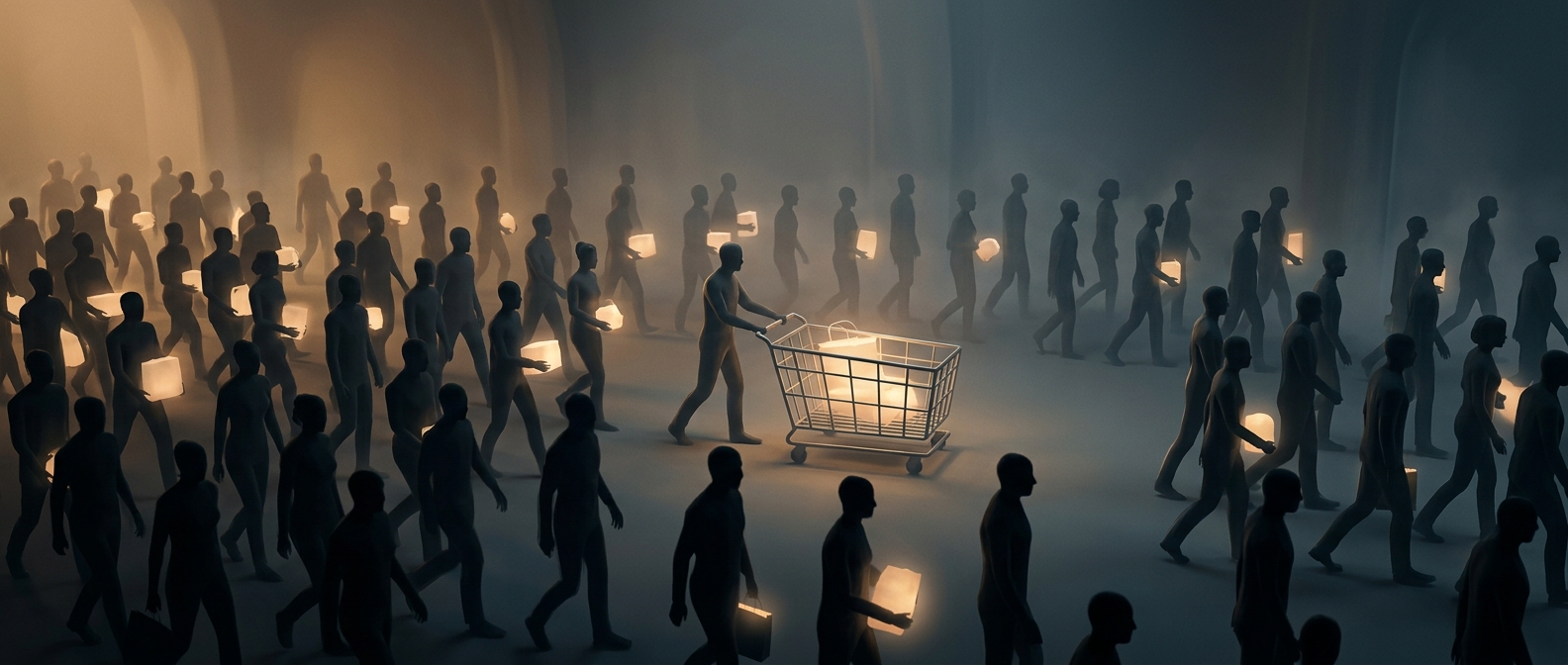
Why a trend can change what feels appealing
A style is not judged in isolation. Once it becomes common among people whose opinions matter to you, it can signal belonging, shared taste, or awareness of what is current. That social meaning becomes part of the item’s appeal—even if its shape or color has not changed.
This is the bandwagon effect: the tendency to favor something partly because many others do. It can also reduce uncertainty. If friends are wearing a look, their choices may seem like evidence that it is attractive, acceptable, or worth trying. That cue can shift a person’s judgment without erasing their original preferences.
How popularity feeds on itself
Visible adoption gives a trend momentum. More people wearing a style makes it easier to notice; greater visibility can prompt others to consider it; their purchases then make the style still more visible. The result is a feedback loop, not proof that everyone independently reached the same conclusion.
For sellers, this dynamic can make popularity commercially valuable. A product that appears widely accepted may feel like a safer choice, while stores and brands have an incentive to put attention behind items that are already catching on. But the cycle has limits: a look can lose its appeal when it becomes overfamiliar, or when the social group a buyer wants to identify with moves on.
The choice is social as well as personal
Buying into a trend can offer a real benefit—feeling in step with friends—while also narrowing the space for individual taste. The useful distinction is whether someone likes the item itself, the connection it represents, or both. In fashion, those motives often arrive together, which is why a look that once seemed unappealing can become hard to ignore.