The Hard Part Happens Before the Freeze
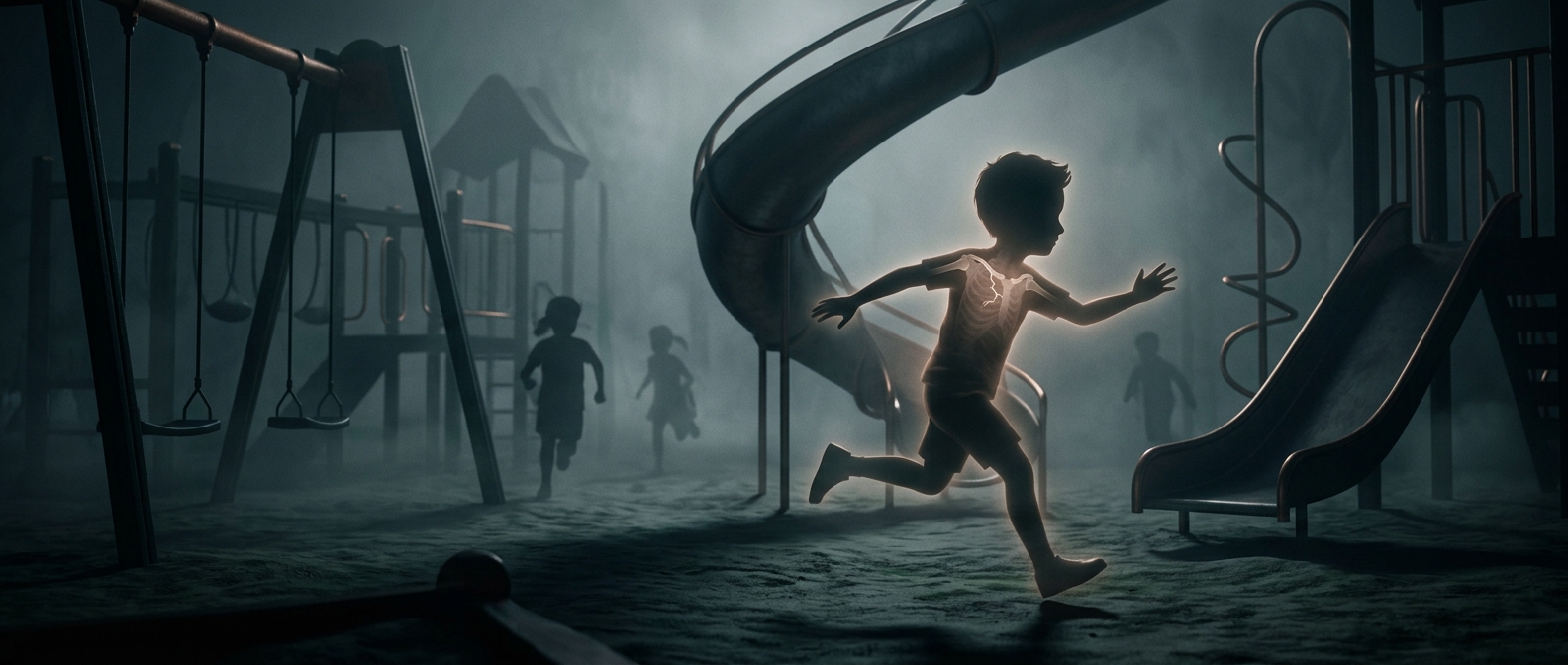
A player cannot simply switch from running to stillness. The body has momentum: when the feet stop pushing forward, the torso and limbs may keep moving. Braking too abruptly can carry a player past their balance point; braking too slowly leaves visible motion after the signal.
The body also makes tiny adjustments to stay upright. Ankles, knees, and hips shift weight almost constantly, even when someone appears to be standing still. In a game that demands a complete freeze, those ordinary corrections become risky. A player must settle into a stable position without a last-second wobble or step.
Uncertainty Changes the Movement
Because the caller chooses when to turn, players cannot plan a precise stopping point. Move cautiously, and they may fall behind; rush, and they have more momentum to absorb. The challenge is to keep movement controlled enough that the body can stop quickly, rather than to sprint at full speed and hope for the best.
That timing makes the game a test of inhibition as well as balance: players must interrupt an action already underway. The caller’s turn transforms a run into a sudden braking problem, and a tiny after-movement can matter as much as the distance a player covered.