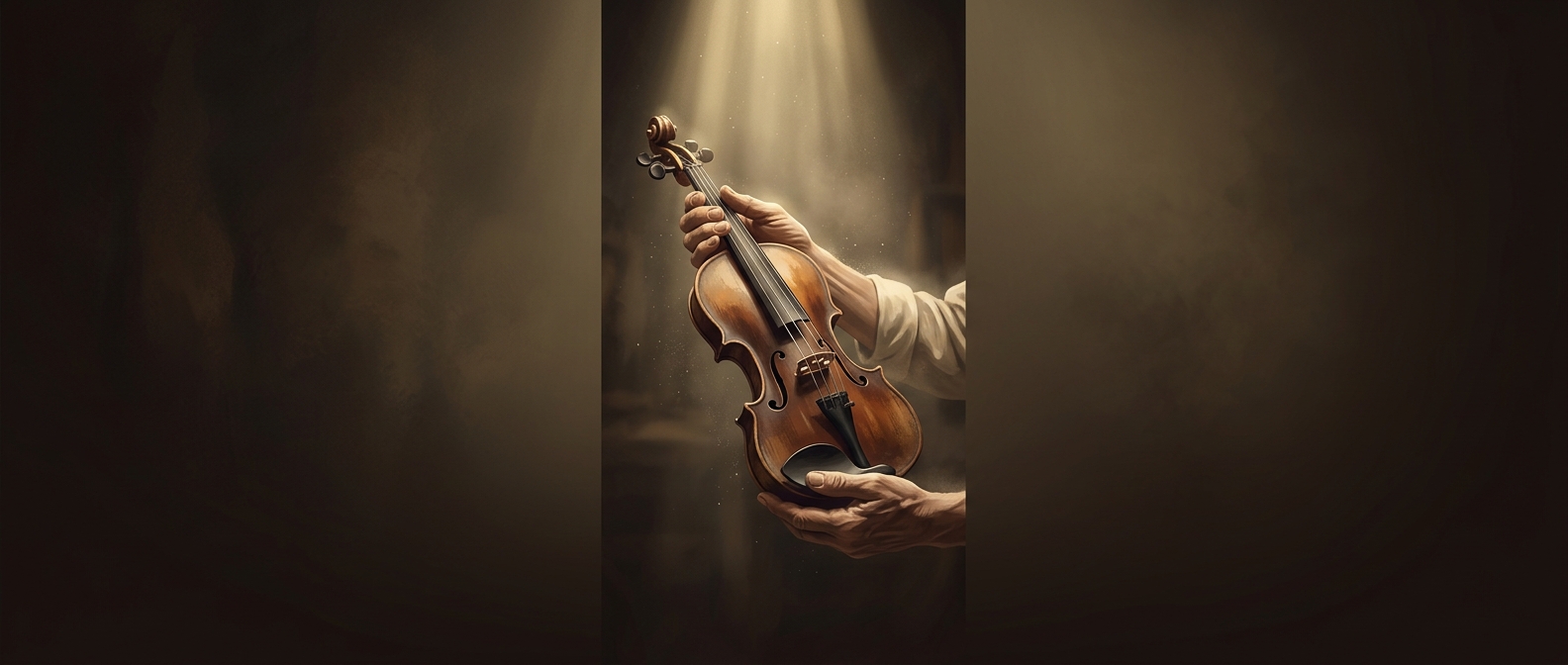
Why a Small Violin Repair Can Cost So Much
The visible damage may be tiny; the risk of getting it wrong is not. An old violin’s body is thin, curved wood under constant tension from its strings. A poorly placed patch or a joint that fails can change how the instrument vibrates, weaken the structure, or make later repairs harder. The restorer is charging for judgment as well as handwork: identifying what has failed, choosing the least damaging fix, and carrying it out without disturbing sound original material.
The Work Is Mostly Precision and Time
A repair can involve removing parts of the instrument, fitting a small piece of wood to an irregular surface, and joining it so the surrounding structure still moves as intended. Specialized tools help, but they cannot eliminate the need to work slowly and by hand. Glue choice matters, too: traditional animal glue is often used because a skilled repairer can soften and undo it later, rather than leave a permanent bond that complicates future conservation.
That reversibility is an economic choice. A quick, cheap fix may solve today’s problem while reducing the instrument’s future options—and potentially its value. A careful repair aims to preserve both playability and the ability to repair the violin again.
What the Bill Really Covers
The cost reflects years of training, focused labor, and responsibility for an object that may be rare, valuable, or personally irreplaceable. It can also include the time spent inspecting the instrument and deciding what not to alter. The price is less about the size of the damaged spot than the consequences of every decision around it. That is why a sliver of wood can demand more expertise than a much larger, ordinary repair.