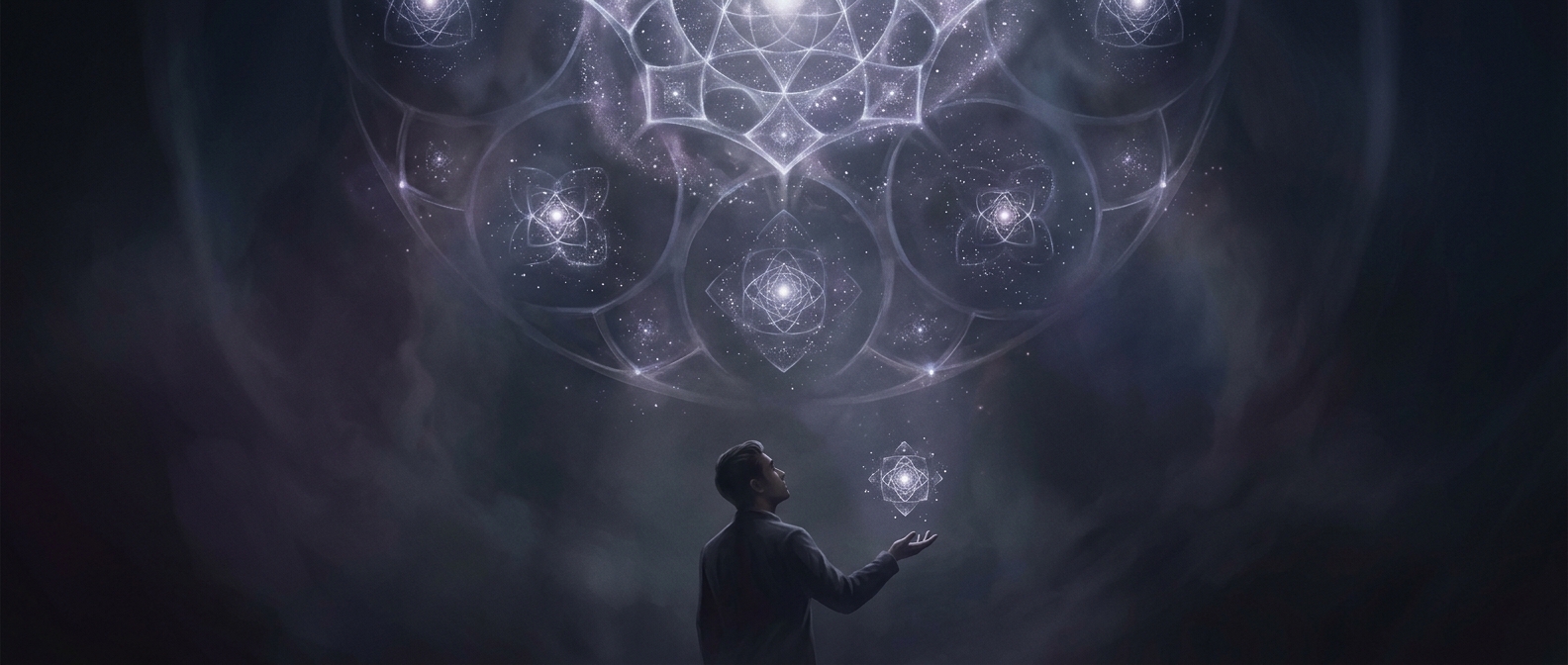
How a holon can be both whole and part
A holon is something that functions as a complete unit at one level while belonging to a larger unit at another. A cell, for example, has its own boundary and carries out processes that keep it alive. At the same time, it is one part of a tissue or organ, whose larger functions depend on many cells working together.
The idea is useful because “whole” and “part” are not opposites here; they describe relationships at different scales. The cell is not merely a fragment, but neither is it independent of the body around it. Its surroundings supply conditions it needs, while its activity contributes to the larger system.
Why the nested view matters
Thinking in holons draws attention to what changes as you move between levels. A holon has some organization of its own, yet it is also shaped by the system it belongs to. The same pattern can describe a person in a community, or a team within an organization—without claiming those examples work exactly like cells.
This perspective is especially associated with systems thinking: instead of asking whether something is a whole or a part, ask a whole of what, and a part of what? The answer depends on the scale being considered. A single unit can be complete enough to act, yet still rely on a larger whole to make sense of what it does.