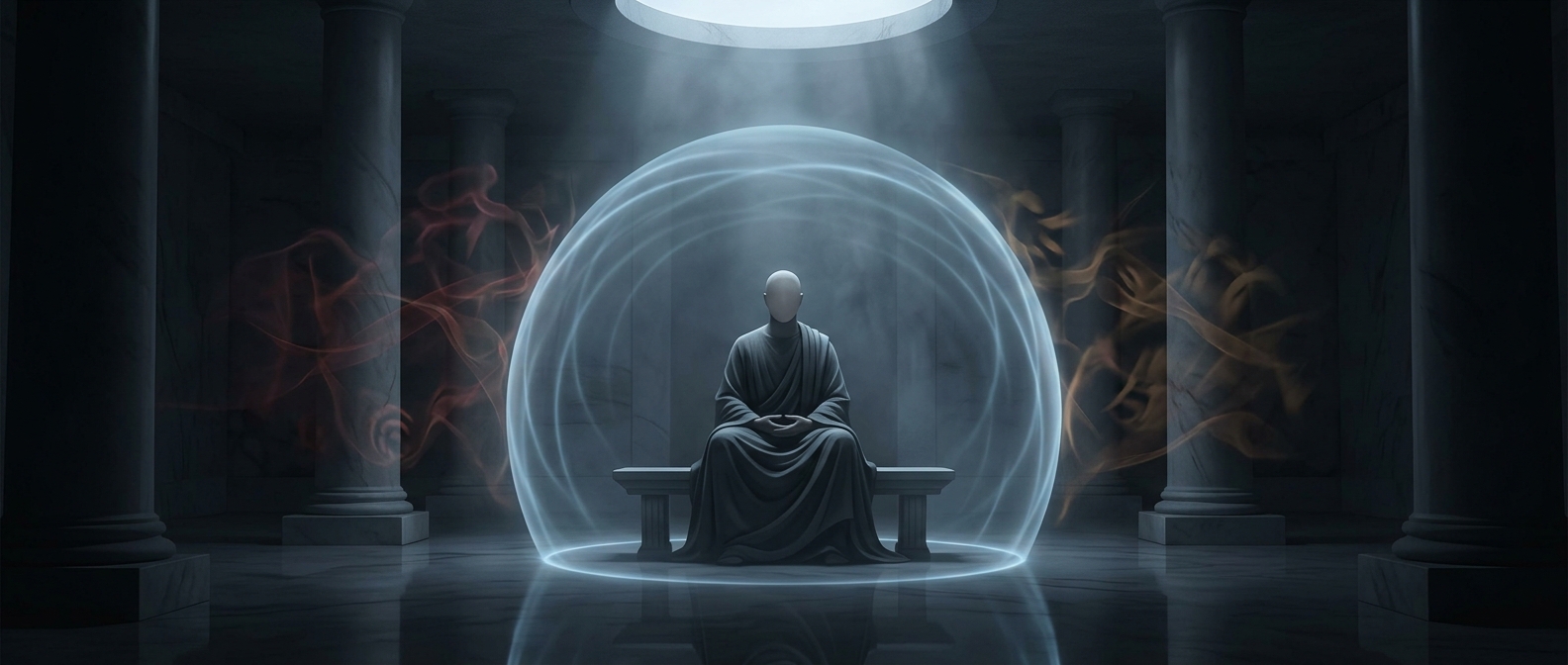
What ataraxia meant to ancient thinkers
Ataraxia is a Greek term for a mind free from disturbance. Philosophers treated it not as a burst of happiness but as a steadier condition: fears and wants no longer pull a person into constant agitation. It did not mean becoming emotionless or pretending that hardship did not matter.
The word is associated especially with Epicureanism and Pyrrhonian skepticism, though those schools described different routes to calm. Epicureans sought to quiet needless fear and desire; Pyrrhonian skeptics practiced suspending judgment—withholding a firm conclusion when arguments seemed evenly matched—so that the struggle to settle uncertain questions could ease.
Calm came from changing the struggle
The practical move was to notice where distress came from and stop feeding it. Some desires, such as basic needs, could be met simply; others depended on status, wealth, or outcomes beyond one’s command. Likewise, a person might not control an event, but could examine the assumptions and fears intensifying their response to it.
That focus can sound like indifference, but the point was different. Ataraxia aimed to reduce needless inner turmoil, not to erase care for other people or deny real pain. Its memorable challenge was to ask whether a disturbance came from the event itself—or from a fear or desire that could be reconsidered.