Why a chimney took a crooked path
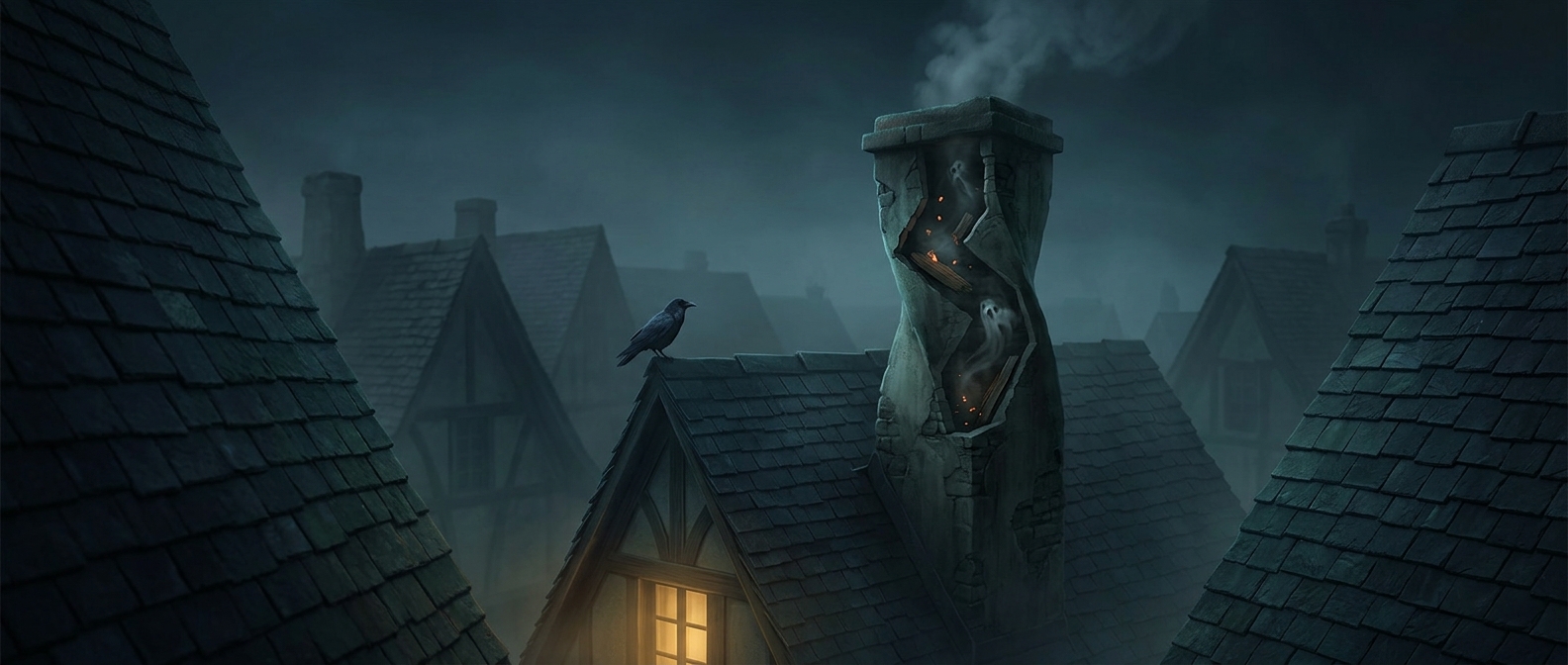
A straight chimney gives loose material in the flue a direct route downward. A bend, or offset, interrupts that path: debris descending from higher up is more likely to strike the angled section instead of falling straight into the fireplace below. It was a practical way to reduce one nuisance at the hearth.
The bend could create a different danger
Smoke and hot gases still had to travel upward through the crooked passage. At the change in direction, soot could collect rather than continue smoothly through the flue. Soot buildup narrows the passage and can be harder to spot or remove than deposits in a straight run.
That matters because soot can include combustible material. If it accumulates and later catches fire, a chimney fire can threaten the surrounding building. The feature meant to keep falling debris out of the room could therefore make regular chimney inspection and cleaning more important.
The tradeoff was built into the shape: an offset could interrupt a falling object’s path, but it also gave soot a place to linger.