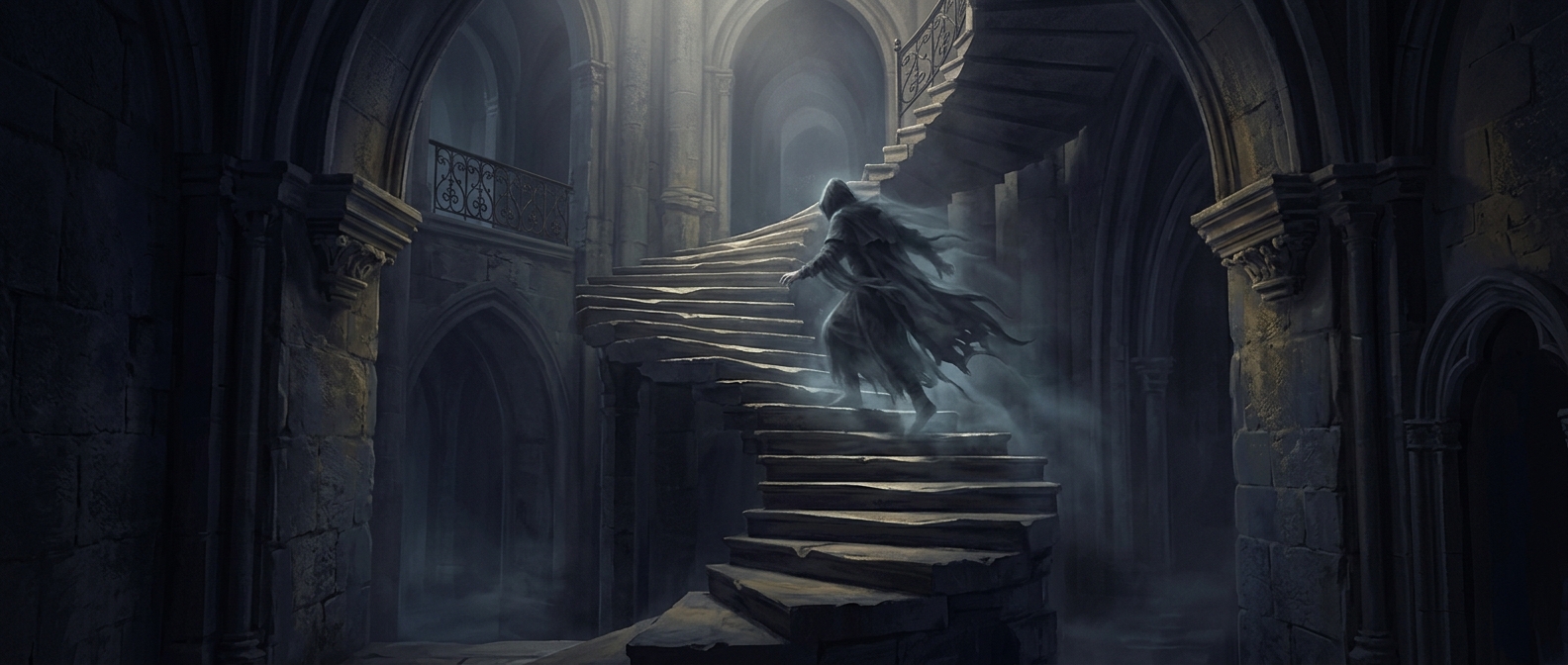
A Staircase Designed to Confuse an Invisible Visitor
In this belief, a crooked or uneven stair was more than a construction quirk: it was a trap for an intruder people could not see. The imagined defense relied on a simple weakness. If an unseen presence tried to climb, irregular steps might catch it off balance or stop it from moving smoothly through the house.
The idea made the staircase part of a home’s protection. Instead of confronting an invisible threat directly, builders could make the route itself difficult to use. The steps did not need to reveal where the intruder was; their unevenness was supposed to make passage hazardous.
The Defense Had a Human Cost
A step that disrupts an imagined visitor can disrupt anyone using it. Homeowners and guests still had to climb in ordinary light, with ordinary bodies—and an unexpected change in height or angle could cause a stumble. The same feature intended as protection therefore carried a practical risk for the people living with it.
That tension is what makes the belief memorable: the staircase turned a supernatural fear into a physical obstacle, but it could not distinguish between an invisible intruder and a distracted person carrying something upstairs.