A creature built for the sawmill era
The hodag belongs to Rhinelander, a northern Wisconsin town shaped by the lumber industry. In 1893, local timber worker and prankster Eugene Shepard claimed he had captured a fearsome creature in the woods. The tale played on a familiar divide: city visitors were curious about the Northwoods, while residents knew how easily an impressive story could be spun for outsiders.
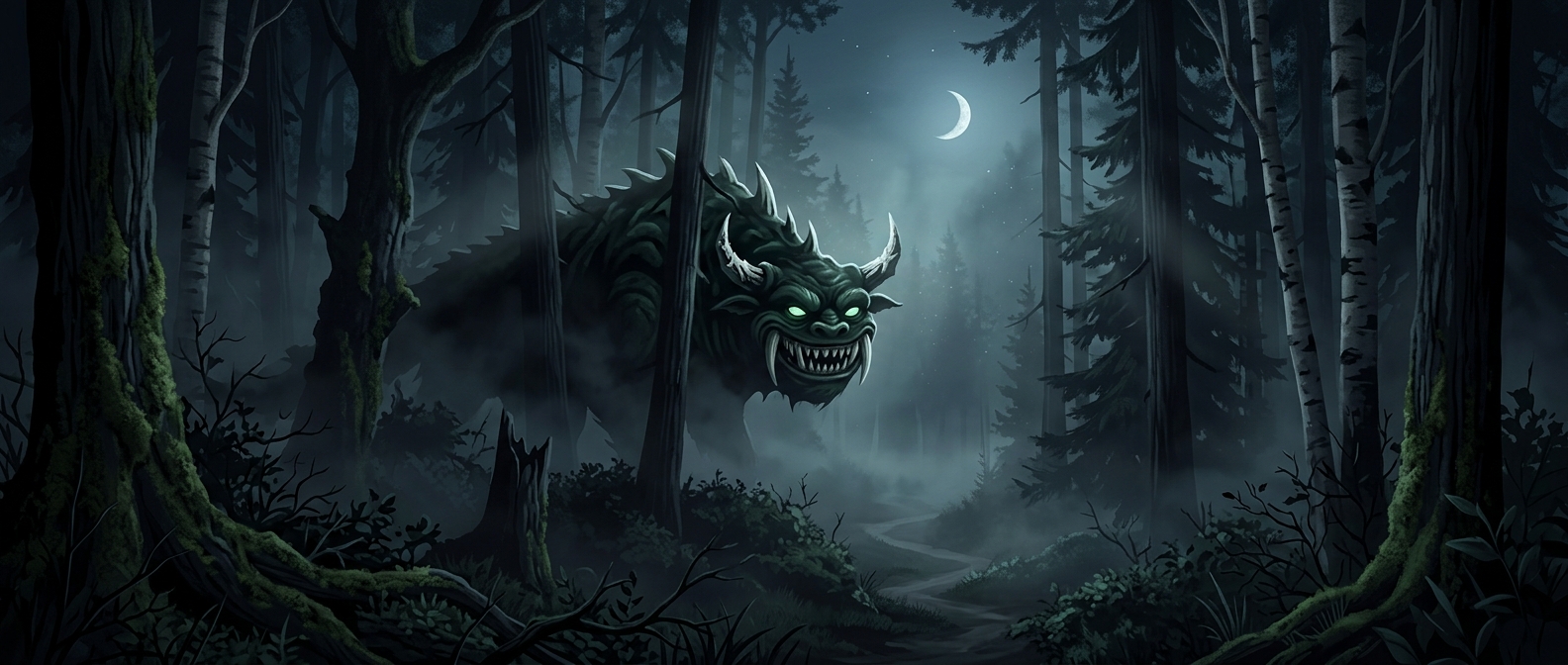
Shepard displayed what he presented as the animal’s remains—a constructed prop, not a genuine specimen. Its horns, spikes and exaggerated grin gave the story a memorable visual hook. The hoax drew attention, and the creature became more than a one-time joke.
From prank to hometown symbol
The hodag’s appeal was its local specificity. It seemed to come from the dense forests surrounding Rhinelander, where a strange animal could sound plausible to people unfamiliar with the region. As the story circulated, the monster became a playful emblem of the Northwoods and of the town itself.
That shift is why the hodag now appears as a mascot rather than merely a piece of hoax history. Local businesses and community events can use the creature to signal Rhinelander at a glance, while visitors encounter it as a bit of regional folklore. The joke endured because the town adopted it: what began as a trick on outsiders became a shared symbol for locals, too.
The hodag’s grin still carries the original tease, but its modern role is friendlier. It invites visitors into a local story whose punchline is no longer simply that someone believed in a monster; it is that Rhinelander made the monster its own.