When a Pumpkin Became a Night-Roaming Creature
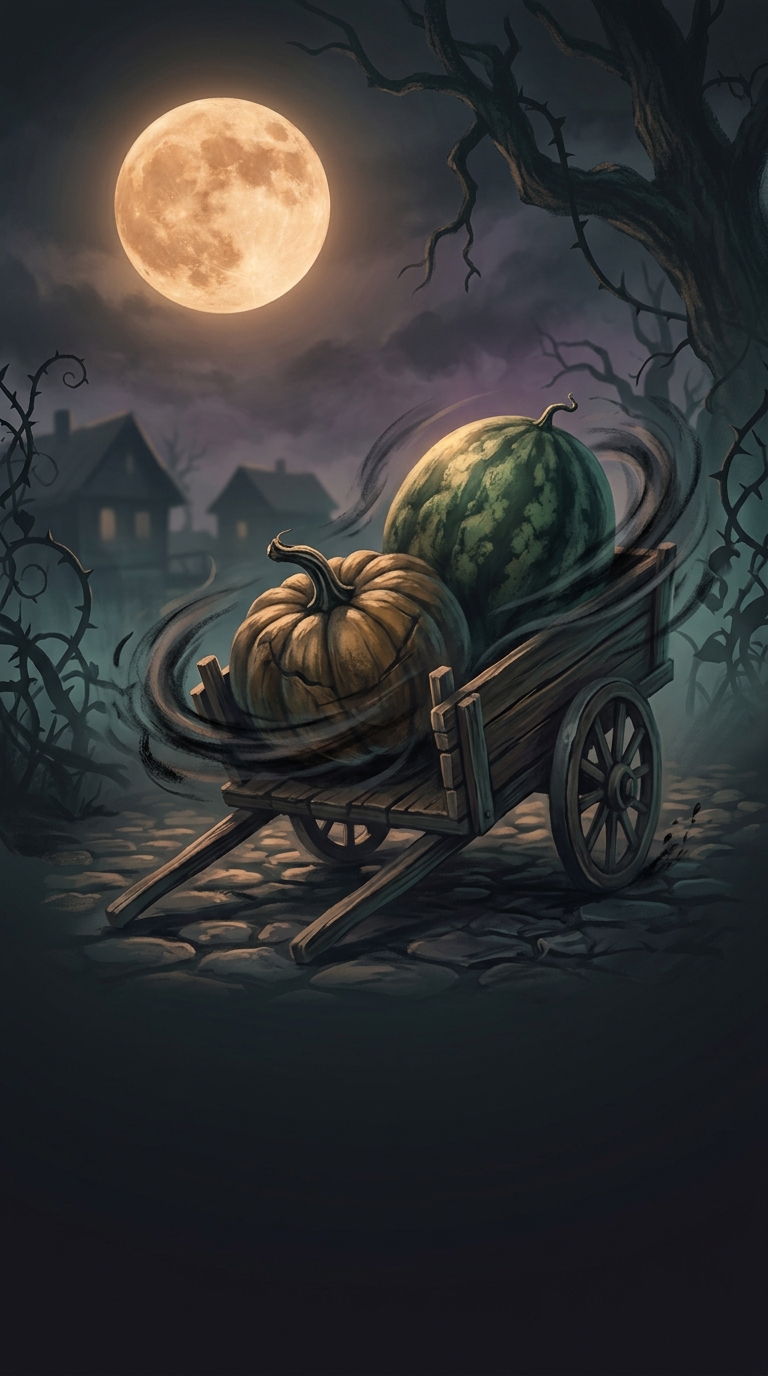
In some Romani folk traditions, a pumpkin or watermelon could cross an uncanny boundary: left out too long, or kept during a full moon, it might turn vampiric and begin moving by itself. The detail is striking because the creature starts as ordinary food, not a corpse or a person. Something familiar in the home becomes strange without warning.
The stories also give these fruit-creatures an unusual limitation: they have no teeth and cannot bite. That makes “vampiric” less a description of a conventional blood-drinking monster than a sign that the object has become unnaturally alive. Its inability to bite leaves the danger mysterious rather than straightforward.
The Unease of Ordinary Things Moving
The transformation hinges on recognizable circumstances—time left unattended, or the full moon—rather than a dramatic spell or a human villain. The result is a small domestic disturbance with a supernatural edge: an object that should sit still now has its own motion and intent. The toothless detail sharpens the image, too; the creature is unsettling, but its threat is not the familiar one of fangs and attack.
Romani communities and their storytelling traditions are diverse, so this should not be taken as a belief shared uniformly by all Romani people. As a piece of folklore, though, the image is memorable precisely because it turns a harmless-looking melon into something that can wander—while withholding the usual means by which a vampire would harm anyone.