How a skater’s trick became game animation
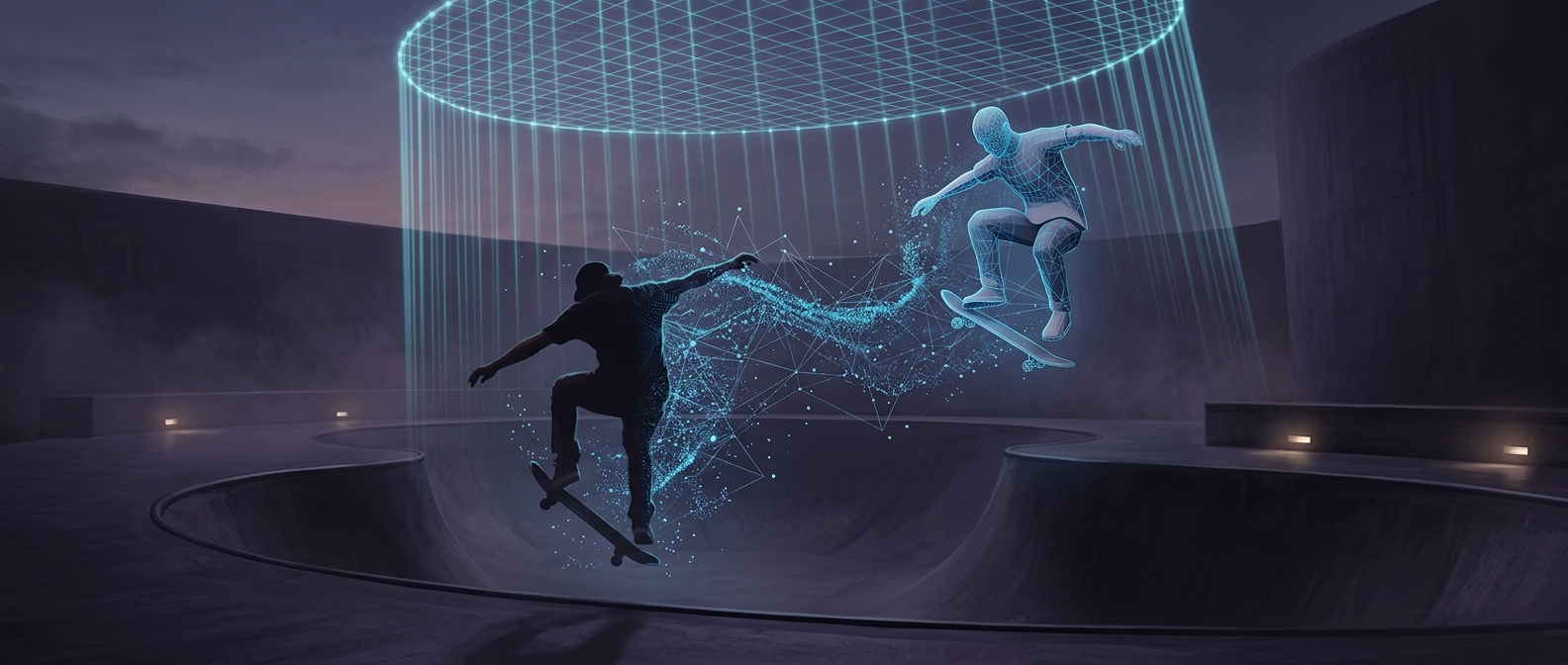
The reflective balls were motion-capture markers, not a way to scan a skateboarder’s body shape. Cameras tracked the markers as a pro performed a trick, recording how points on the body moved through space from moment to moment. Software used those paths to estimate the skater’s movements and turn a real performance into an animation.
That gave animators something difficult to invent from scratch: the changing rhythm of a trick. A jump, rotation, and landing each have their own timing and body position. Capturing a real skater preserved those details, including the way a movement flows rather than simply placing the character in a sequence of poses.
From real performance to playable character
The captured motion still had to be adapted for the game. A game character’s skeleton—the digital structure that controls its limbs—might not match the performer’s proportions exactly, and a recorded trick had to fit the game’s controls and animation system. Animators could clean up or adjust the data so the move worked on screen and could connect with other actions.
The result was a blend of performance and design: the skater supplied the motion, while the game shaped it into a responsive character animation. The reflective markers helped translate a real trick into something players could trigger with a button.