A monument scaled for the Strip
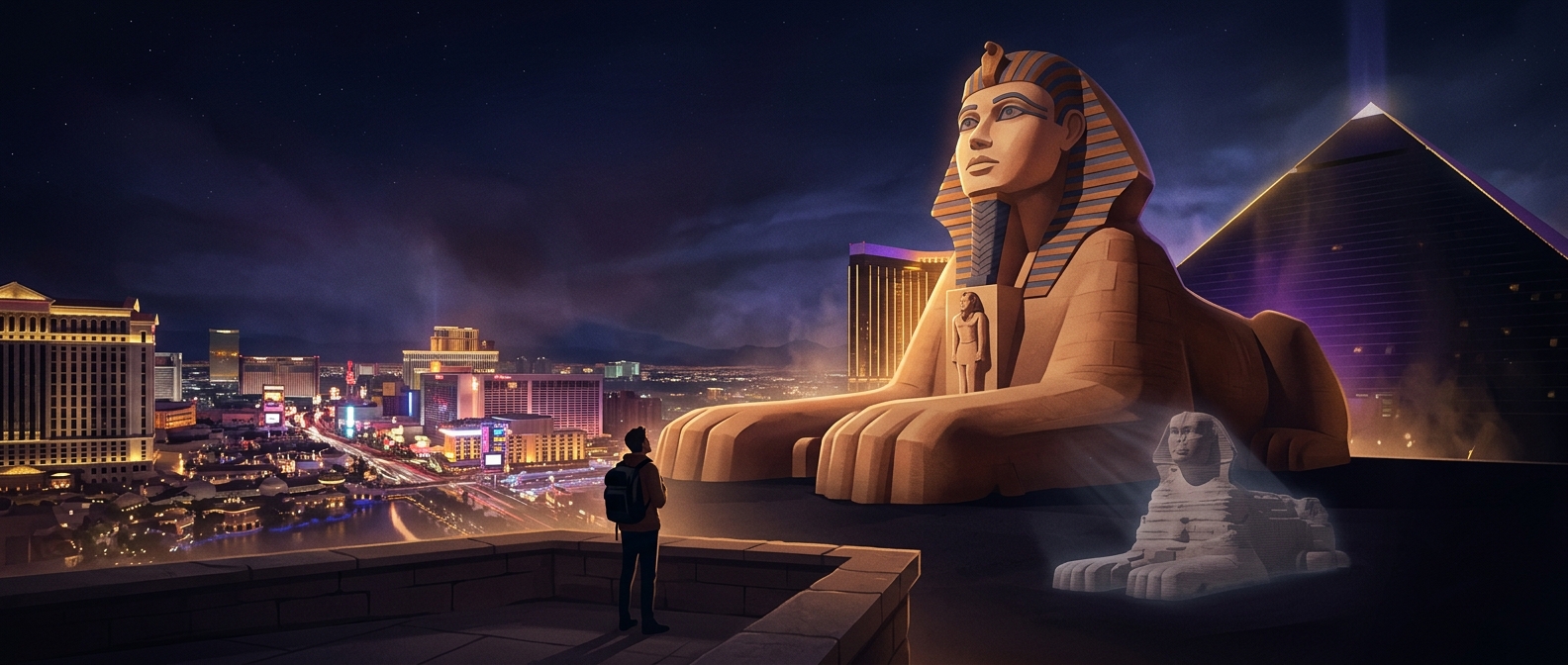
At the Luxor, the Sphinx is not simply a copy of an ancient monument. Its exaggerated size makes it work as a roadside landmark: visitors can recognize the Egyptian theme from a distance, before they reach the hotel’s pyramid-shaped entrance. The scale turns a familiar symbol into part of the building’s visual spectacle.
That is a different job from the Great Sphinx’s. The ancient statue at Giza is a limestone monument rooted in a specific landscape and history; Luxor’s version is a modern architectural feature, designed to greet hotel guests. Its resemblance invites the comparison, while the extra height makes clear that this is Las Vegas theatricality rather than archaeological reconstruction.
The comparison changes with the setting
The Great Sphinx is often described as about 66 feet tall, measured from the ground to the top of its head. Luxor’s Sphinx reaches 110 feet. The figures are striking, but they describe structures with different purposes and settings: one is an ancient monument, the other part of a themed resort built to be seen amid the Strip’s competing signs and buildings.
That contrast is what makes the comparison memorable. In Las Vegas, an icon associated with Egypt becomes an oversized entrance marker—and a reminder that the city’s attractions often borrow recognizable forms, then enlarge them until they become spectacles of their own.