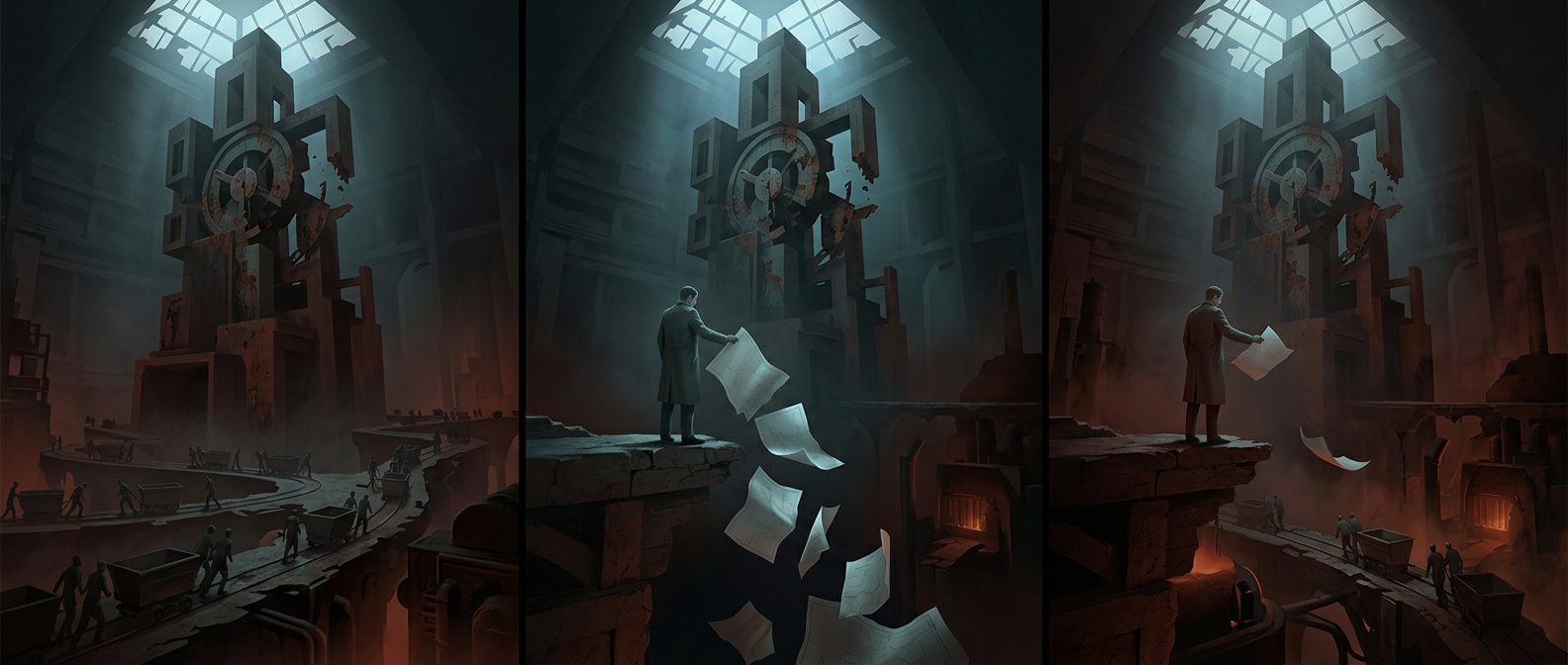
Why a production target can miss what people need
A planner deciding how many shoes, refrigerators, or tons of steel a country should produce faces a problem of coordination, not just arithmetic. Useful information is scattered among millions of households, shops, factories, and suppliers: which sizes are selling, what parts are running short, and what customers would buy if it were available. A national plan has to gather and translate those changing details into instructions before production begins.
In a market, prices and orders continually signal scarcity and demand. A central system can replace those signals with surveys, reports, and negotiated targets, but each report may be incomplete or out of date. If a factory receives an allocation of materials that does not match its actual needs, it may miss its target even when workers and machinery are available. A shortage in one component can stall production far beyond the factory that makes it.
Targets can distort the reports
The problem can deepen when success is measured by a quota. If a plant is judged by the number of items it produces, it has reason to meet the count—even if the items are poorly made or not the types people want. If the target is measured by weight or total value, managers may favor heavier or more expensive products. Those choices can make the reported plan look successful while leaving practical needs unmet.
Planners can revise targets, but information travels slowly through layers of offices, and production decisions often require advance commitments of labor, materials, and transport. By the time a mismatch becomes obvious, factories may already have made the wrong goods or used resources that could have gone elsewhere. The result is not simply “too much” or “too little”: it can be a warehouse full of products alongside a missing part that prevents anyone from using them.**