Saliva makes flavor molecules available
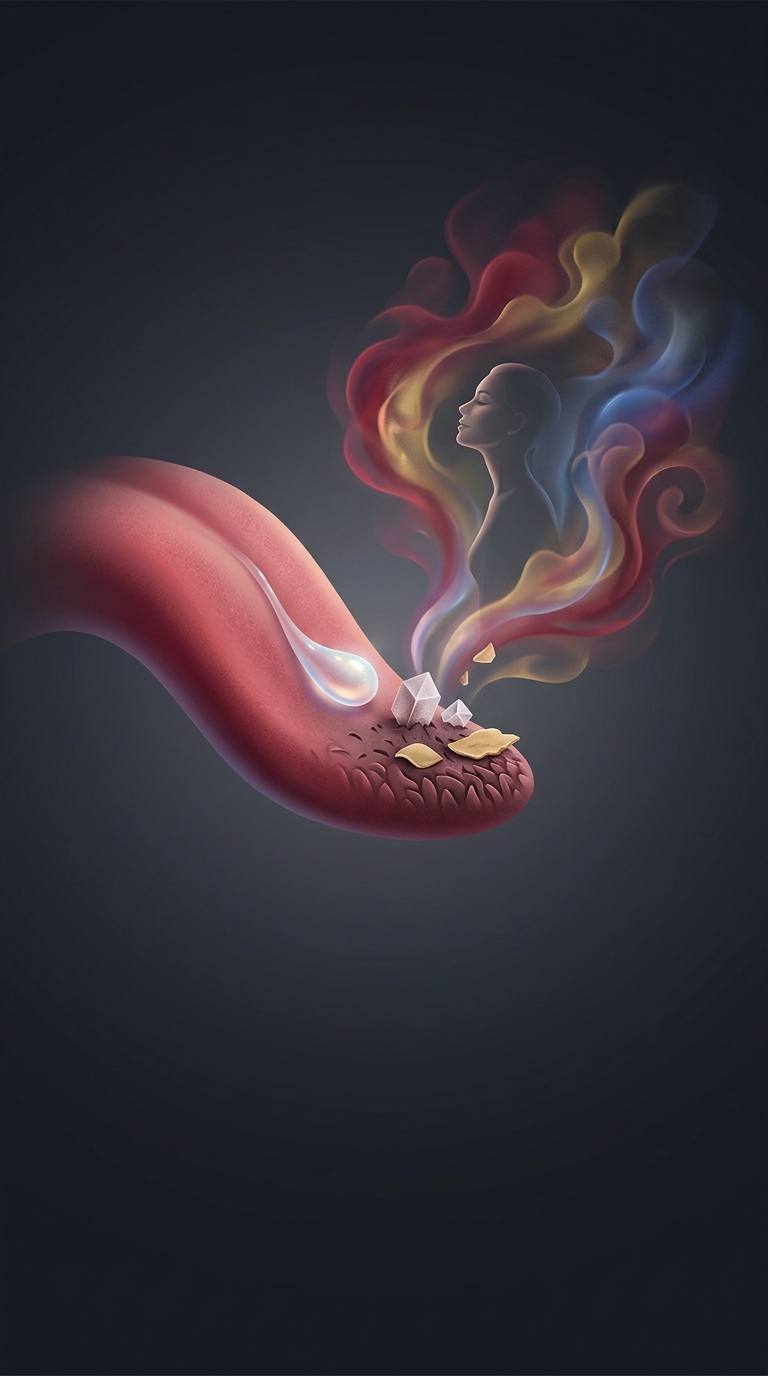
Many chemicals in food are locked in its solid structure. Chewing breaks that structure apart and mixes the pieces with saliva, a fluid made mostly of water. Some taste-related molecules dissolve into it, allowing them to move across the moist surface of the tongue and reach taste-bud cells. Without that liquid route, much of what is in a bite would be harder for the tongue to detect.
Taste-bud cells are not tiny tongues; they are specialized sensors. When a dissolved molecule activates one of them, the cell changes its electrical activity and passes a message to nearby nerves. The brain interprets those messages as basic taste qualities, including sweet, salty, sour, bitter, and savory. Different foods produce different combinations and strengths of these signals.
The nose completes the experience
The tongue’s signals are only part of flavor. As you chew and swallow, airborne molecules from food travel from the back of the mouth up into the nose. This route, called retronasal smell, lets the brain detect aromas while eating. It helps explain why food can seem bland when a stuffy nose blocks much of that pathway, even though the tongue can still register basic tastes.
Saliva also helps spread food around the mouth, while chewing releases more aroma and exposes fresh surfaces. Temperature and texture add further clues. Flavor is assembled from several streams of information, not read from the tongue alone. A bite becomes recognizable as, say, ripe fruit or toasted bread only after the brain combines taste, smell, and the feel of the food.