A cave became a shortcut through the loot grind
Destiny’s early gear chase depended heavily on random drops: enemies might leave behind an engram, an item that could become equipment when decoded, but no particular kill guaranteed a useful reward. Players who wanted better gear therefore faced a familiar calculation: how many enemies could they defeat, and how quickly?
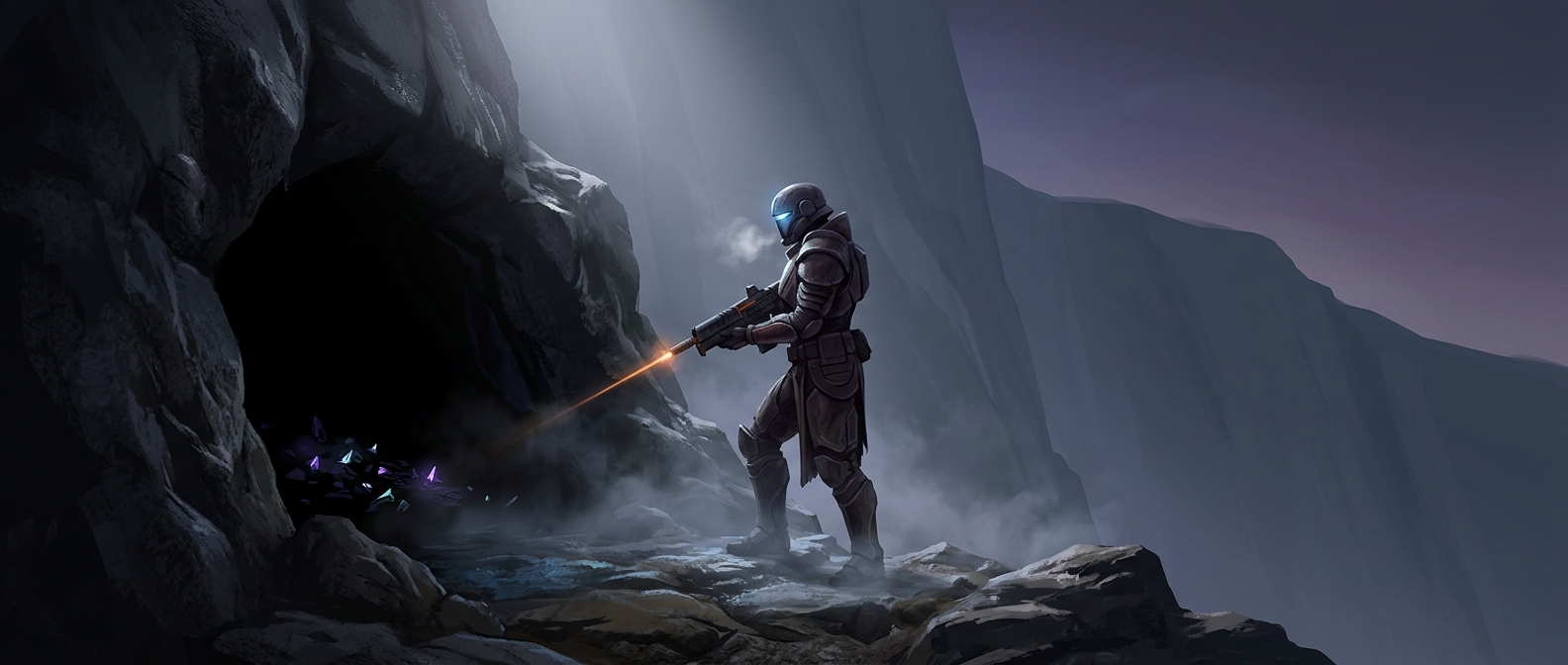
Near a cave in the Cosmodrome, enemies reappeared in a predictable cycle. Players could stand at a distance and shoot them as they emerged, collecting whatever loot dropped, then repeat. Instead of roaming through missions or tackling tougher encounters, a group could turn a small patch of the world into a steady, low-effort supply of chances at gear.
Repetition became the strategy
The tactic worked because it made the reward loop unusually simple. Players did not need to search for targets or coordinate a difficult fight; they only had to keep firing into the cave and gather the drops. More players could join in, and each added firepower without changing the basic routine.
That made the activity effective but dull. The cave was not a hidden level or a clever combat challenge. It was a place where the game’s enemy-spawn rhythm and random loot system happened to line up in a way that rewarded staying put. Players had found a more efficient path to the same goal the rest of the game encouraged them to pursue.
When a workaround reveals a design pressure
The phenomenon showed how strongly a game’s rewards can shape what players consider “playing.” If a repetitive method offers better progress per minute than varied missions, some players will choose repetition—even when it is less fun moment to moment. Bungie eventually changed the cave’s enemy spawns, breaking the easy farming loop.
The memorable part was not just that players found an exploit. It was that a cave, a predictable stream of enemies, and random rewards briefly made standing still feel like the smartest way to adventure.