How a magnetic bubble carried a bit
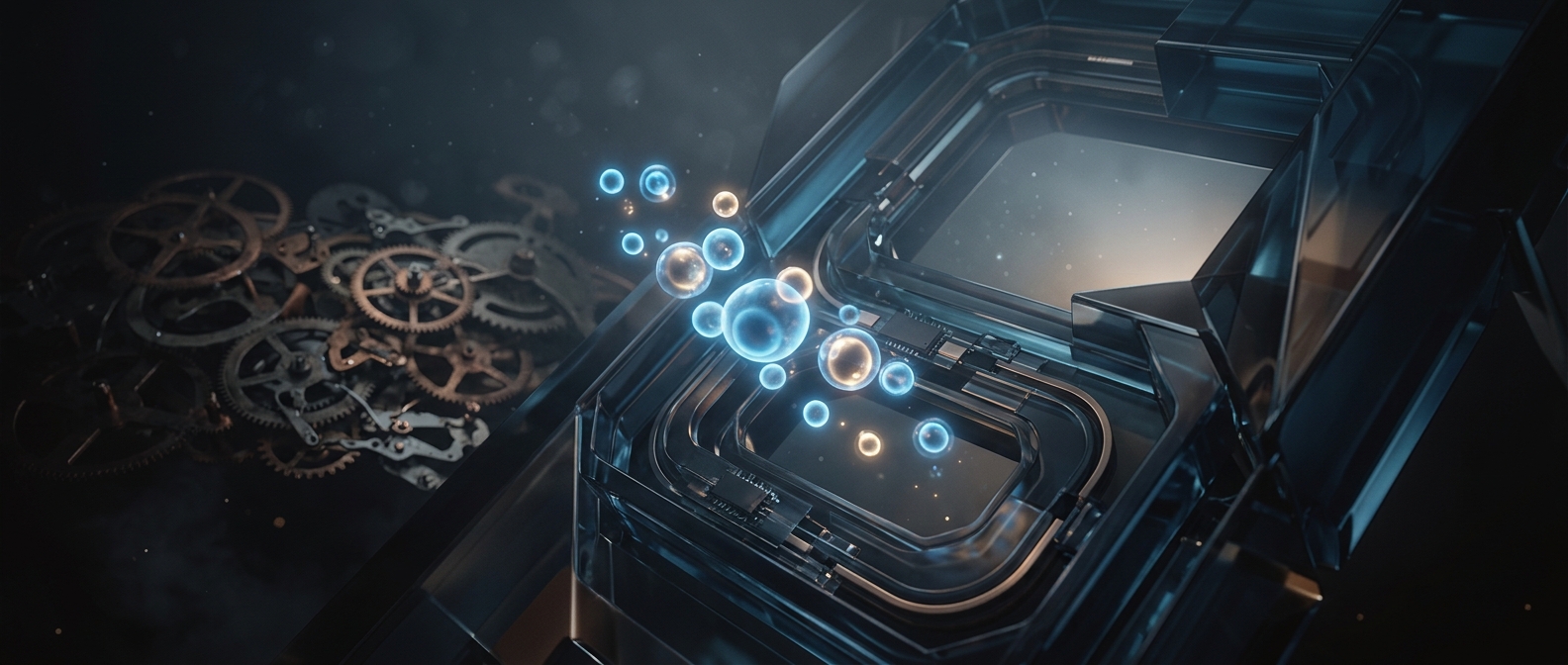
Magnetic bubble memory stored information as tiny, cylindrical regions of magnetization inside a thin magnetic film. A bubble’s presence or absence at a particular spot could represent a 1 or a 0. Because the film retained its magnetization without continuous power, the data could persist even when the device was switched off.
To move a bubble, the memory used a changing magnetic field together with small patterned elements on the film. As the field rotated, those elements created a sequence of favored positions, nudging each bubble along a track—rather like stepping stones guiding it across the surface. A detector at the end of a track read the passing bubbles as electrical signals.
No spinning disk, but data still had to travel
The design eliminated the motor and rapidly rotating platter of a disk drive. But it was not instant-access memory: to reach a particular bit, the system generally had to move bubbles along their tracks until they arrived at the read point. That made access more like waiting for data to pass by than jumping directly to any location.
The tracks also had to be carefully organized and controlled. The device needed magnetic-field circuitry to move the bubbles and electronics to create, detect, and manage them. Removing mechanical motion solved one engineering problem, but it did not make the whole memory simple or inexpensive.
Why the idea lost ground
As semiconductor memories improved, chips offered a more direct route to storing and retrieving data. Flash memory, in particular, could retain information without power and be built into compact devices without moving bubbles through a film. As flash became cheaper and more practical, bubble memory’s distinctive advantage—mechanical motionlessness—was no longer enough to offset its access and manufacturing tradeoffs.
Its history is a reminder that replacing a moving part does not automatically make a technology the better choice: the replacement must also compete on cost, speed, and ease of integration.