How Mozart Made Bad Music on Purpose
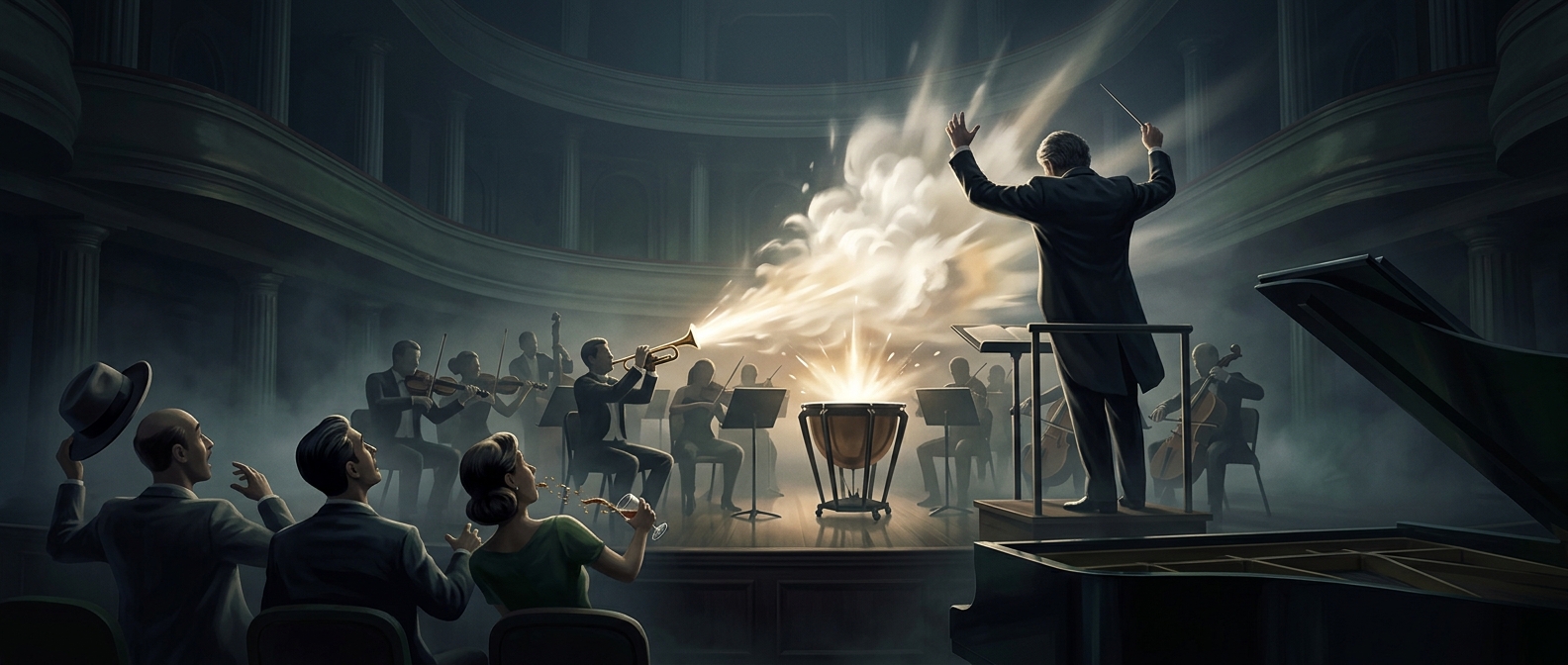
In 1787, Mozart composed A Musical Joke (its German title is Ein musikalischer Spaß), a chamber piece that sounds less like a polished work than a performance coming apart at the seams. Its humor depends on listeners recognizing musical rules—and hearing what happens when a composer seems unable to follow them.
The Joke Is in the Craft
The piece uses the familiar tools of classical music: orderly phrases, balanced sections, and changes of harmony that create expectation. Then it frustrates those expectations. A melody may stumble through awkward leaps; instruments can seem to disagree about what comes next; and the harmony may arrive at a chord that feels unfinished instead of providing a satisfying resolution.
A resolution is the musical sense of arrival that comes when tension in one chord settles into a more stable one. By withholding or mishandling that arrival, Mozart makes the music sound inept rather than merely surprising. The effect is sharper because the writing is controlled: the apparent mistakes are arranged to be heard as mistakes.
A Musical Portrait, Not Just a Collection of Errors
The piece also parodies the habits of musicians who can manage individual notes but fail to make them cohere. Its uneven phrasing and clumsy transitions suggest performers who do not listen closely to one another, while the strained harmonies evoke a composer reaching for effects without understanding how to make them work.
That distinction is what gives the joke its point. Random wrong notes would only sound random; Mozart builds a recognizable musical structure, then repeatedly lets it sag at moments when a competent composer would guide the listener onward. The result turns bad musicianship into a performance—and lets the audience hear the difference between a mistake and a mistake staged with expert precision.