The dance floor has its own sound system
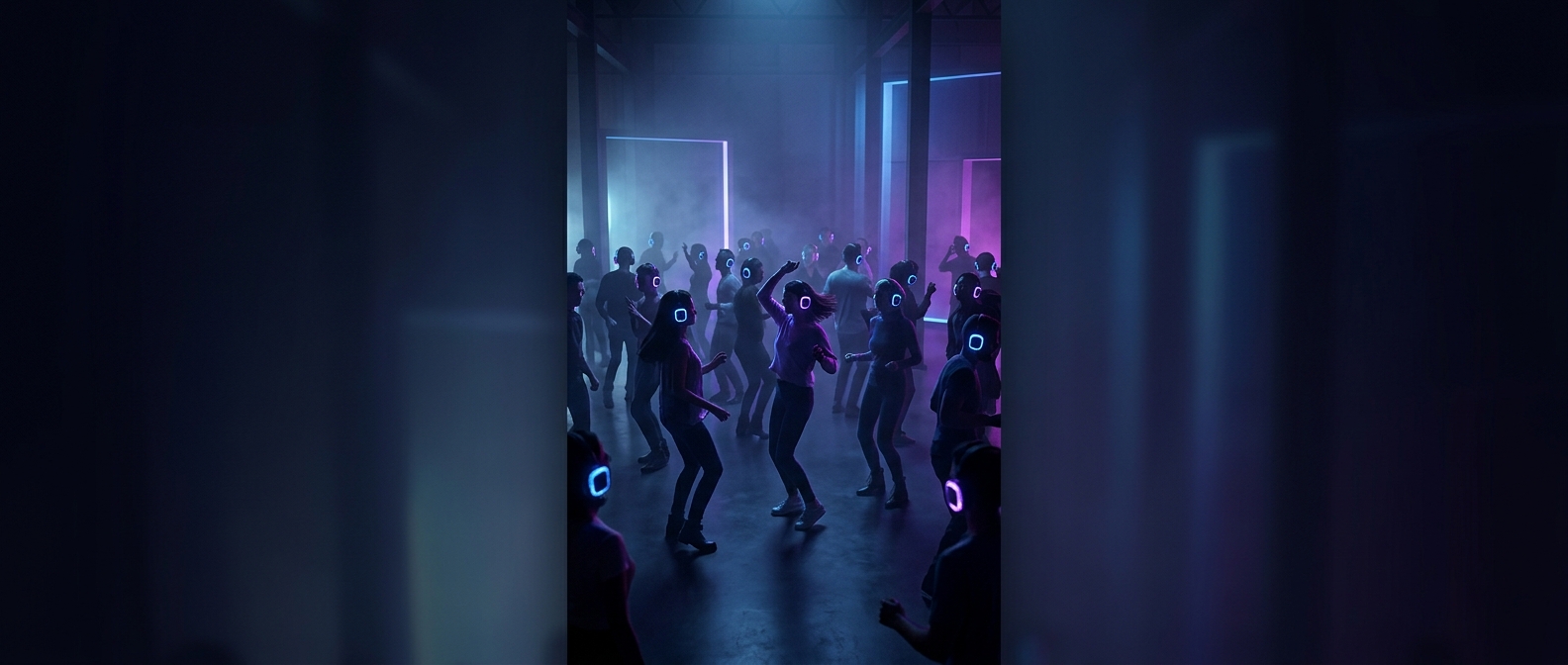
At a silent disco, the music travels by radio from a transmitter to receivers built into each dancer’s headphones, rather than through speakers aimed at the room. That changes where the sound is: it follows each listener instead of filling the space. The DJ can keep the music loud in the headphones without turning the whole venue into a speaker cabinet.
Some events offer several music channels at once. A switch on the headphones lets a dancer move between DJs or playlists, often with a colored light showing which channel is playing. The crowd may be dancing to different songs at the same time, even while sharing the same floor.
Quiet for the room, not for the crowd
The setup can make a loud-feeling event workable in places where sound spilling into nearby rooms or homes is a concern. It also gives listeners control over their own volume and lets organizers run music without relying on a room-wide sound system. The tradeoff is that each person needs a working pair of headphones, and the shared soundtrack that normally helps unify a crowd is no longer guaranteed.
That difference is visible when someone removes their headphones: the music disappears, but the dancers remain. Footsteps, laughter, and snippets of conversation still give the room a sound of its own. From outside the headphones, the scene can look strangely out of sync; put a pair on, and the apparent silence resolves into several private dance floors occupying one space.