How Ants Became Signs of Human Trouble
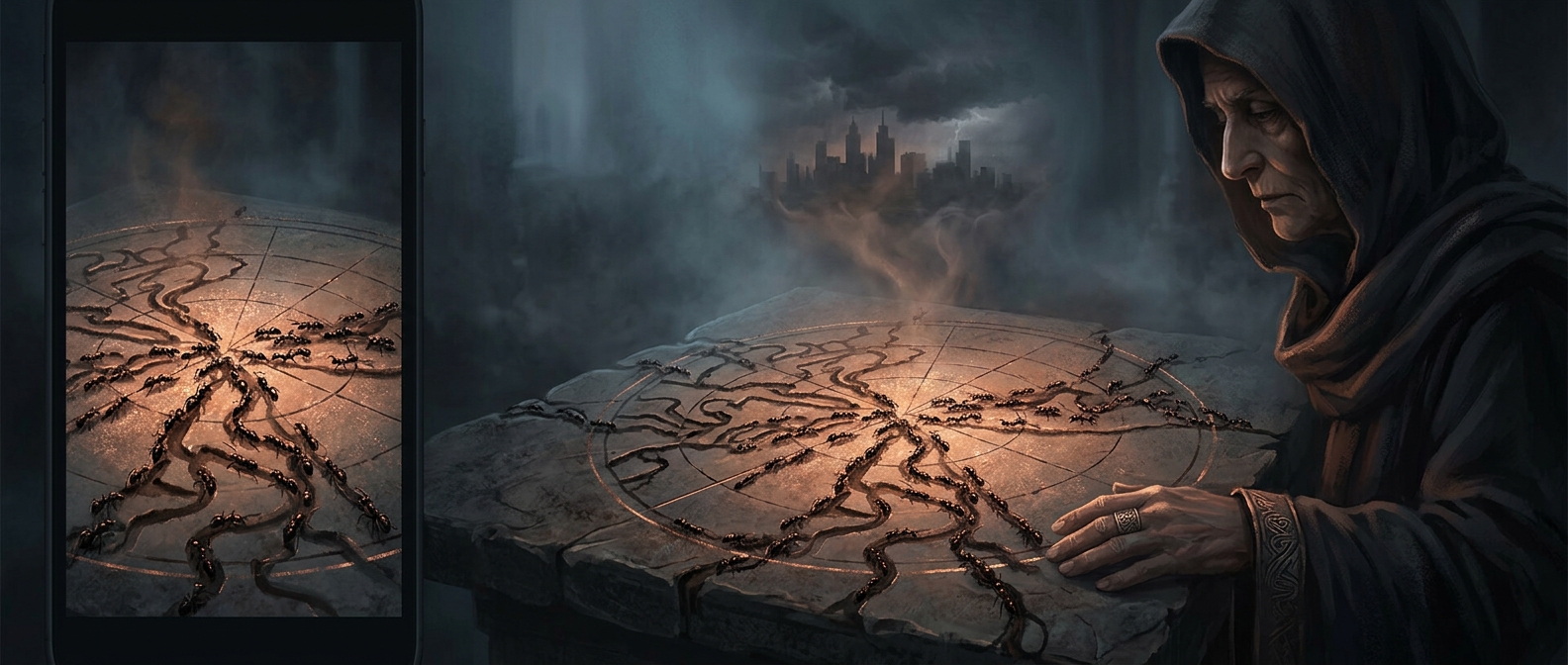
Myrmomancy treated ants’ ordinary activity as a message about events beyond the nest. Practitioners watched what the insects did—especially how they moved soil—and read those patterns as omens. A disturbance in the ground could be taken to suggest disturbance among people, including the prospect of war.
The practice depended on interpretation, not on a fixed measurement. An ant shifting dirt was visible and concrete; its significance came from the meaning a practitioner assigned to that action. The same behavior could therefore serve as a warning within a system of divination, even though it offered no reliable way to forecast human events.
From Nest Activity to a Warning
Ants are constantly digging, carrying material, and changing the shape of their nests. Myrmomancy turned that everyday work into a prompt for thinking about danger: observers looked for meaning in changes they might otherwise have overlooked. In that sense, the practice made a small scene in the natural world feel connected to the fate of a community.
A warning of war was not a report about armies or a prediction based on evidence. It was an omen—a sign interpreted as pointing toward a possible future. The striking idea is how little the sign needed to be: a handful of displaced soil could be read as a portent of upheaval on a human scale.