Why Water Became a Metaphor for Feeling
Water has no fixed shape of its own: it takes the form of a cup, channel, or pool, yet it can also spill beyond its boundaries. That makes it a useful image for emotion in mystical and poetic traditions. A feeling may adapt to changing circumstances, remain hidden beneath a calm surface, or suddenly overflow what once contained it.
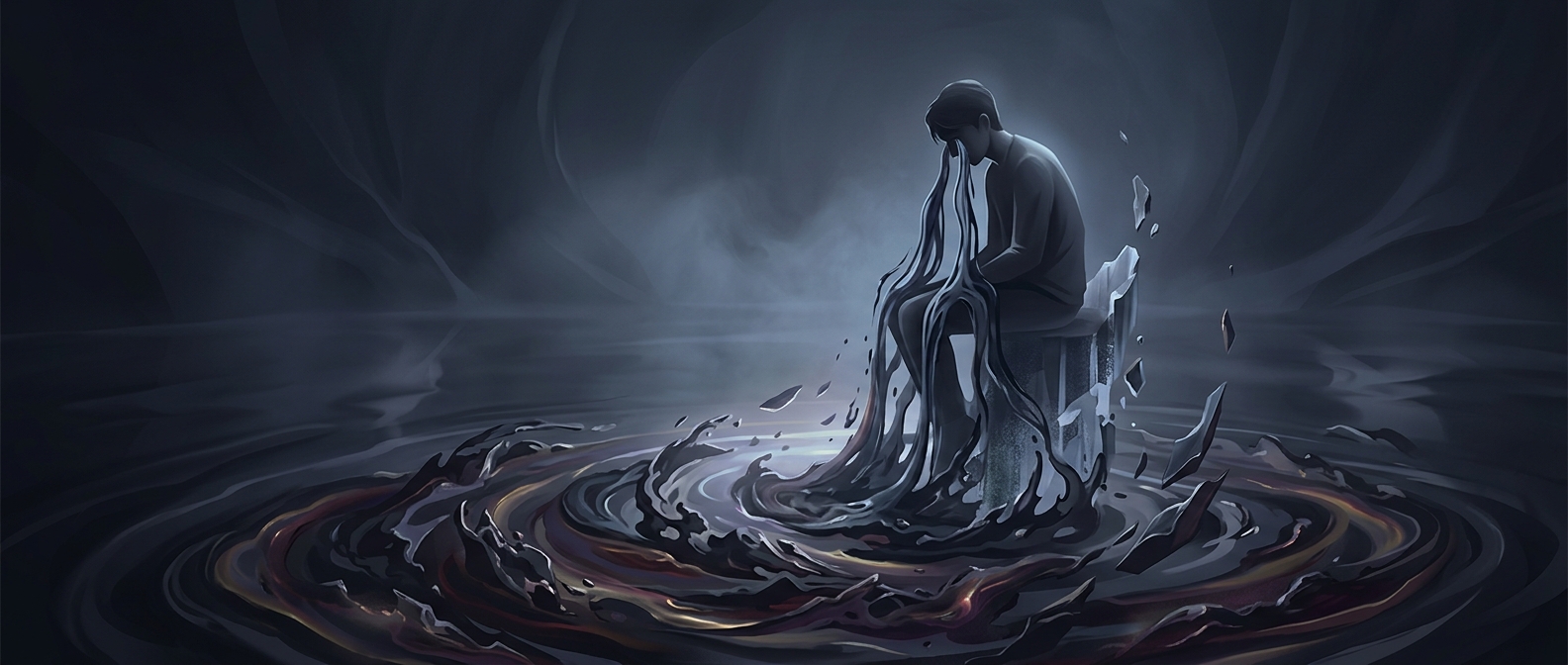
The metaphor also gives emotion a kind of physical presence. Grief can seem heavy; anger can surge; calm can feel like still water. These images do not claim that feelings literally behave like liquid. They make inner experiences easier to picture and speak about.
Softness That Can Change Stone
Water’s power adds another layer. A stream may look gentle, but flowing water can gradually wear away rock. In the same way, a feeling need not be loud to have lasting force: longing, fear, or devotion can shape a person’s choices over time.
This combination—flexibility alongside persistence—is what makes water more than a symbol of being “swept away.” It can suggest that emotions change shape without simply disappearing. A river bends around obstacles, while continuing onward; the image offers a way to think about feeling as both responsive and consequential.