A harvest staged for television
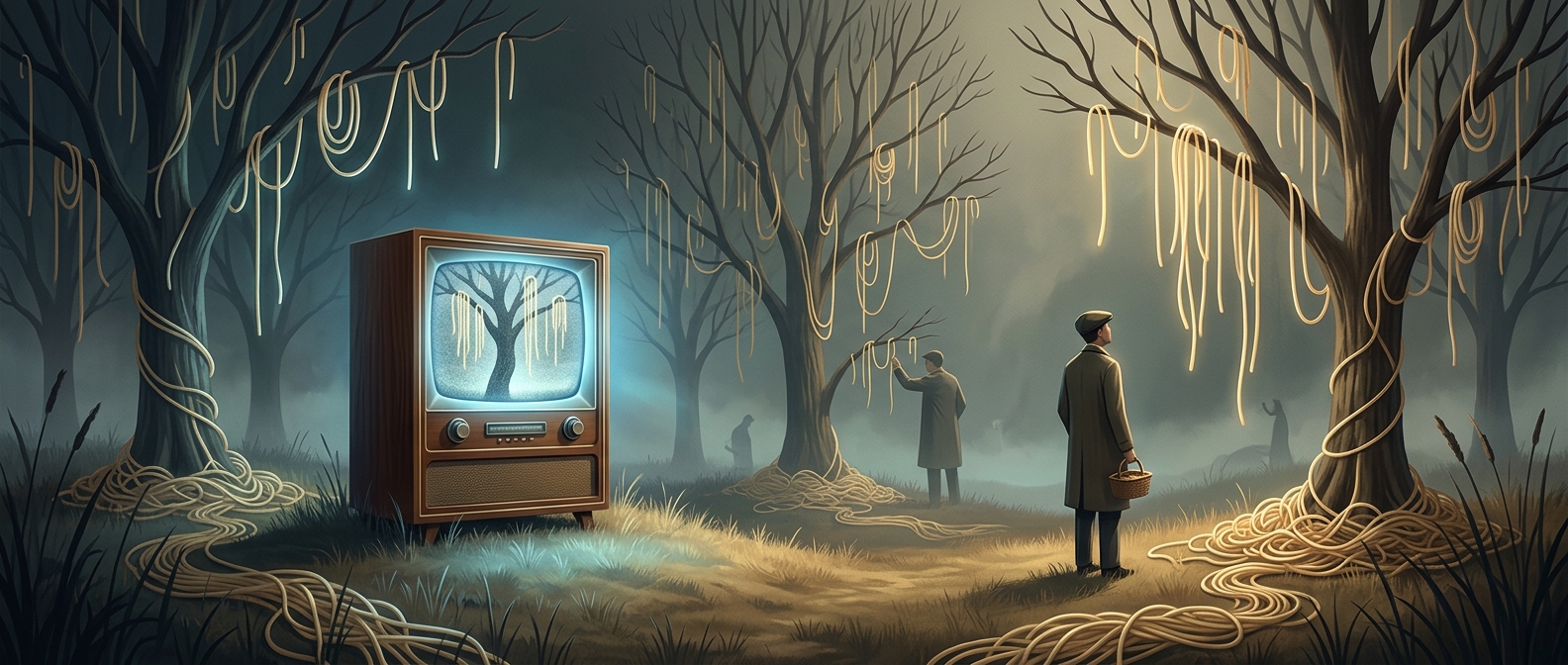
On April 1, 1957, the BBC’s current-affairs program Panorama aired a short film of Swiss farmers gathering long strands of spaghetti from trees. The scene was carefully arranged: pasta was hung from branches so the camera could present it as a crop being picked and dried. The calm, documentary-style narration made the absurd image feel like an ordinary piece of rural life.
Why viewers took it seriously
Spaghetti was still unfamiliar to many British households. Unlike bread or potatoes, it did not grow in a form most viewers could recognize, and television was a relatively new way to encounter distant places. A report from Switzerland, delivered in the trusted tone of a serious news program, supplied just enough detail to make the impossible seem plausible.
The joke also depended on what viewers did not know. Pasta is made by mixing flour—usually from durum wheat—with water, shaping the dough into strands, and drying them. It is manufactured food, not a plant product that can be picked from a tree. But for people who had rarely handled spaghetti, the film’s visual “evidence” could fill that gap.
The joke traveled beyond the screen
After the broadcast, viewers called the BBC to ask how they could grow spaghetti themselves. Their questions showed how television could turn a staged image into something that seemed worth acting on: the film looked like reporting, so some people treated it as practical information. The hoax became memorable not just because pasta trees were ridiculous, but because it briefly made an unfamiliar food seem to have a harvest season.