When the fjord is the road
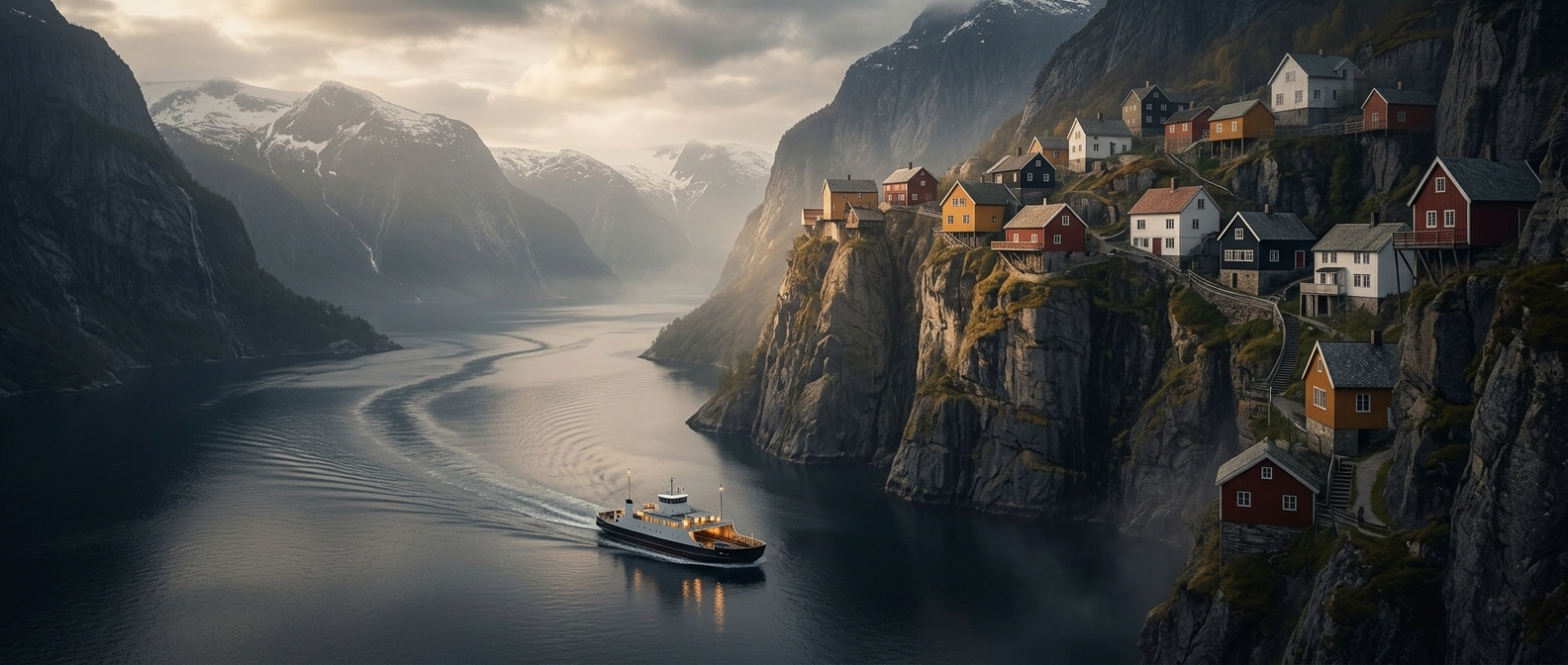
In some Norwegian cliffside settlements, the landscape leaves little room for a road. Mountainsides drop sharply into deep water, while narrow strips of shore offer few places to build. A ferry can connect homes to larger towns without cutting a costly route through rock or building along unstable slopes. The water is not a barrier to travel so much as the most practical corridor through the terrain.
A supply chain with a tide in it
That geography shapes ordinary errands. Food and other goods have to make the same crossing as residents, so deliveries depend on boat access and the timing of transport. A missed trip can mean waiting for the next one rather than taking a different route by car. The ferry therefore links more than a village to the outside: it helps determine when supplies arrive and how people plan their days.
For children, learning to handle a boat is practical knowledge, not just recreation. It offers a way to move around a landscape where a bicycle cannot carry you far beyond the doorstep. In these villages, the water that separates neighbors from the mainland is also the route that keeps daily life connected.