A river crossing with a clock change
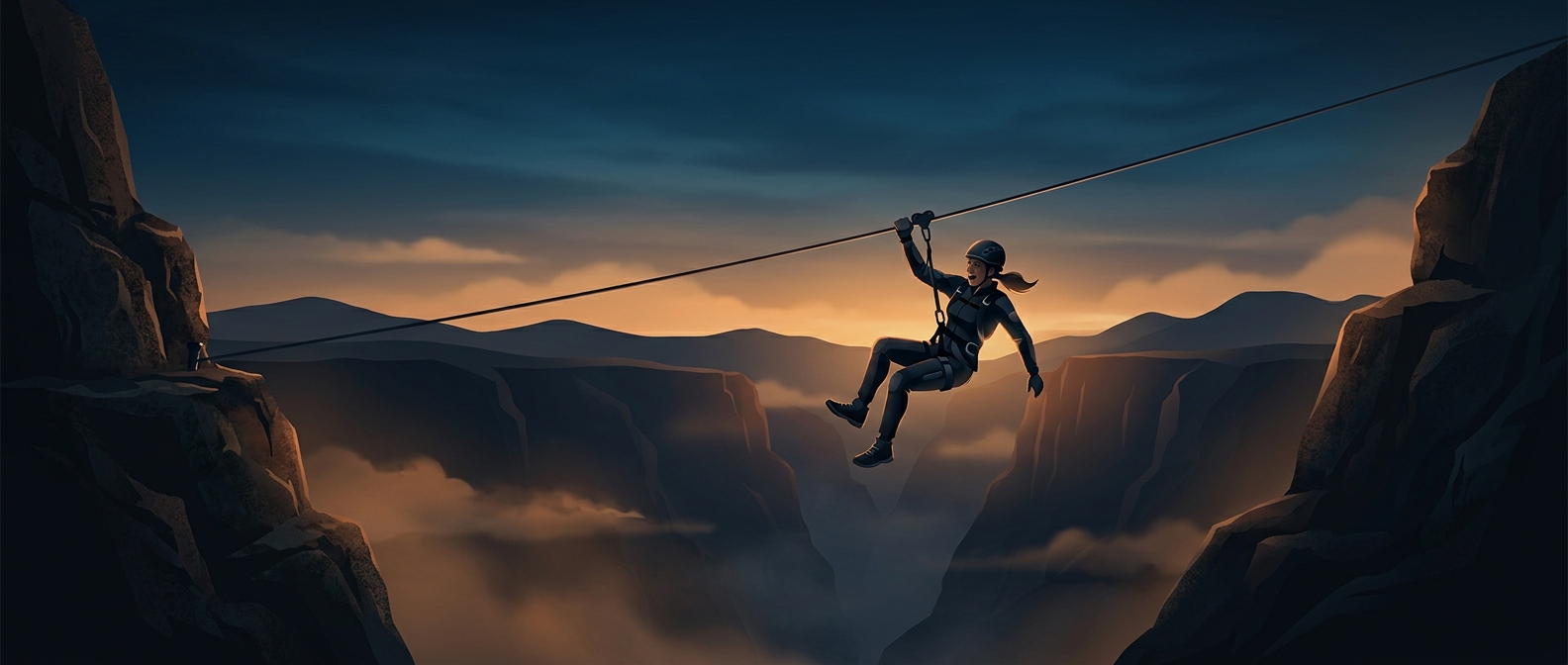
At the lower Guadiana, the river is more than a scenic gap: it marks the border between Spain and Portugal. The towns of Sanlúcar de Guadiana and Alcoutim face each other on opposite banks, so the zipline turns a stretch of international boundary into a direct, airborne crossing.
A zipline works by sending a rider suspended from a wheeled trolley along a sloping cable. Gravity supplies the motion; the rider does not steer across the river like a boat operator. The cable’s route makes the crossing feel unusually immediate: the opposite bank is visible throughout, but the rider passes above the water rather than following the river’s curves.
Why the arrival time looks impossible
The clock change is separate from the ride itself. Mainland Portugal keeps a clock one hour behind Spain, so a trip lasting about a minute can end at an earlier local time than it began. The rider has not gained an hour; the watch has crossed a time-zone boundary.
That small mismatch makes the crossing memorable in two ways at once. The river separates two countries, while the cable briefly makes the distance between their riverfront towns feel almost trivial—and the clocks immediately remind riders that they have arrived somewhere different.