A passport cover can get between the book and the reader
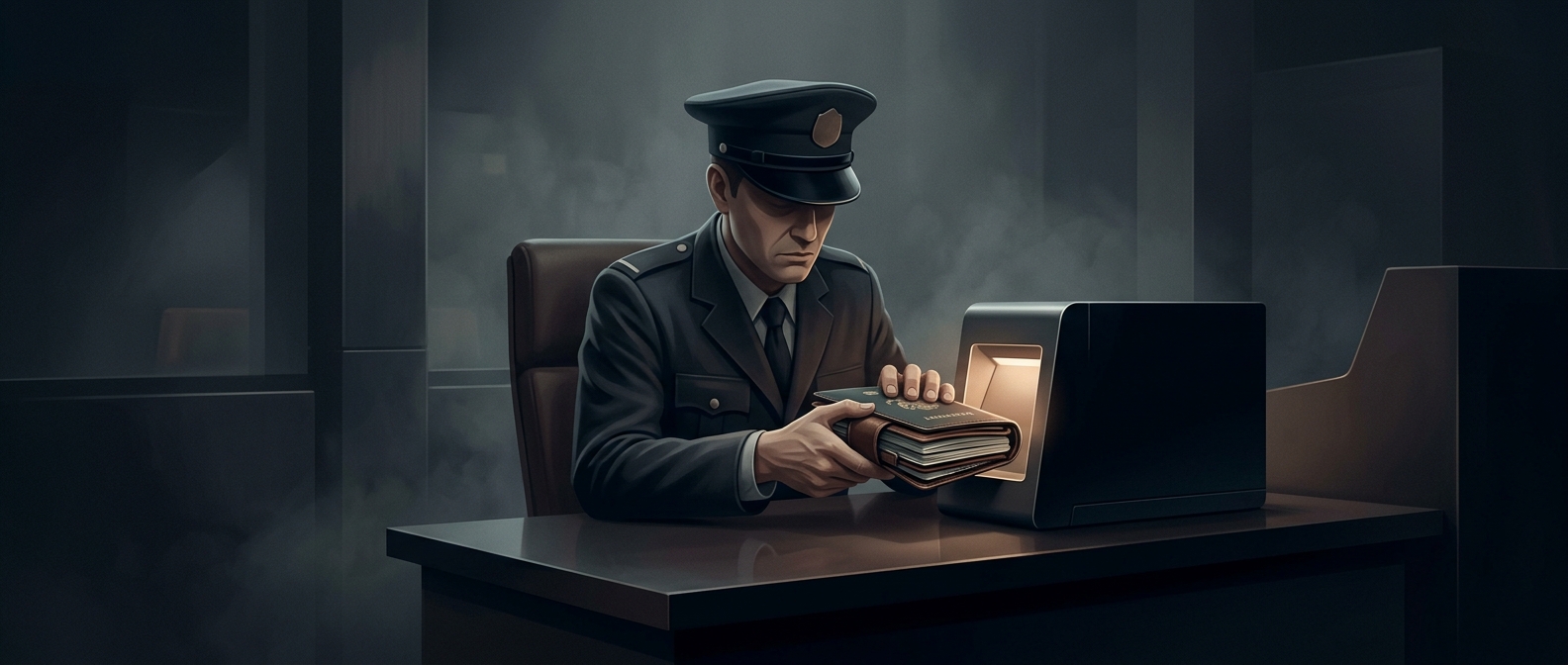
Electronic passports contain a small contactless chip that stores identity information, including a digital image. To read it, an officer places the passport on or near a compatible reader; the chip communicates wirelessly rather than through a visible contact point. The chip’s location varies by passport design, so inspection equipment and procedures must accommodate different booklets.
A thick protective cover adds material and bulk around the passport. It can make the booklet harder to position flat and consistently on a reader, or interfere with a reliable read. Removing the passport from its cover gives the reader direct access to the booklet and lets the officer handle it as designed.
Inspection is more than a successful scan
The officer also needs to examine the passport itself: its pages, cover, and binding. A separate cover can hide those edges or make it harder to open and turn the booklet smoothly. Taking it off lets the officer check that the physical document is intact and that its parts appear properly joined, alongside verifying the electronic data.
That extra step is small, but it interrupts a quick sequence of handling, scanning, and inspection. A slim or removable passport holder is easier to set aside; the passport can then be read and examined without the holder getting in the way.