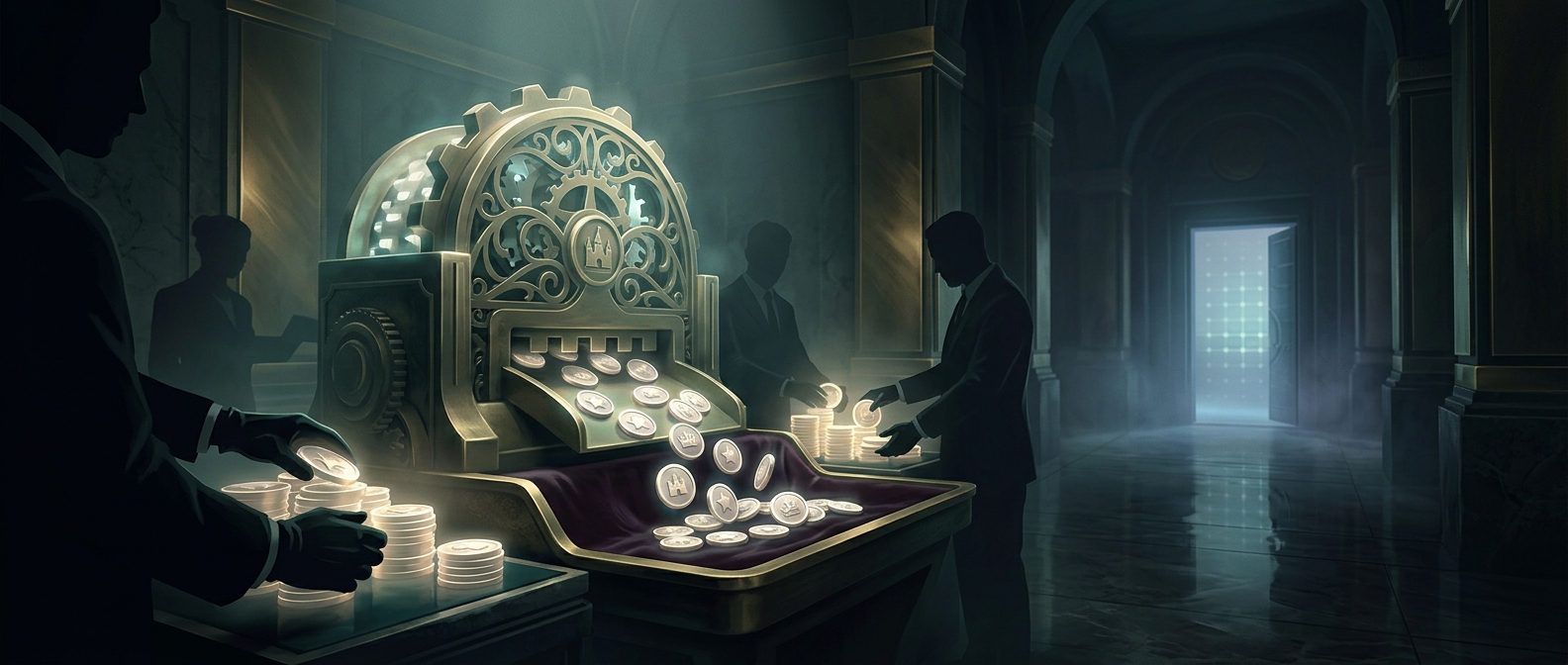
Money could begin with a ruler’s account
Alexander del Mar, a 19th-century historian of money, challenged the tidy idea that currency arose simply because traders grew tired of swapping goods. In the barter story, people first exchange surplus items, then settle on a widely desired commodity—perhaps metal—to make trade easier. Del Mar instead traced money through the institutions that named units, issued coins, and required people to meet public obligations in them.
That shifts the question from “What is valuable enough to trade?” to “Who can define what counts as payment?” A state that collects taxes in a particular unit gives people a practical reason to obtain it. It can also spend that unit—paying soldiers or suppliers—before collecting some of it back. The currency then circulates through private transactions as well as public ones.
The unit of account is a source of power
A coin was not merely a piece of metal with a convenient weight. Its official mark could certify a denomination, while public rules established how that denomination counted toward debts or taxes. This did not mean every government could make money valuable by decree alone: people also had to accept it, and its purchasing power could weaken. But political authority helped shape the conditions under which money was used.
The consequence is easy to miss when currency is treated as a neutral tool for shopping. Whoever sets the unit and controls its supply can influence payments, public finance, and the terms on which obligations are settled. Del Mar’s historical lens makes money look less like a clever invention that appeared between traders and more like an institution woven into the machinery of government.