How a camel became a tornado
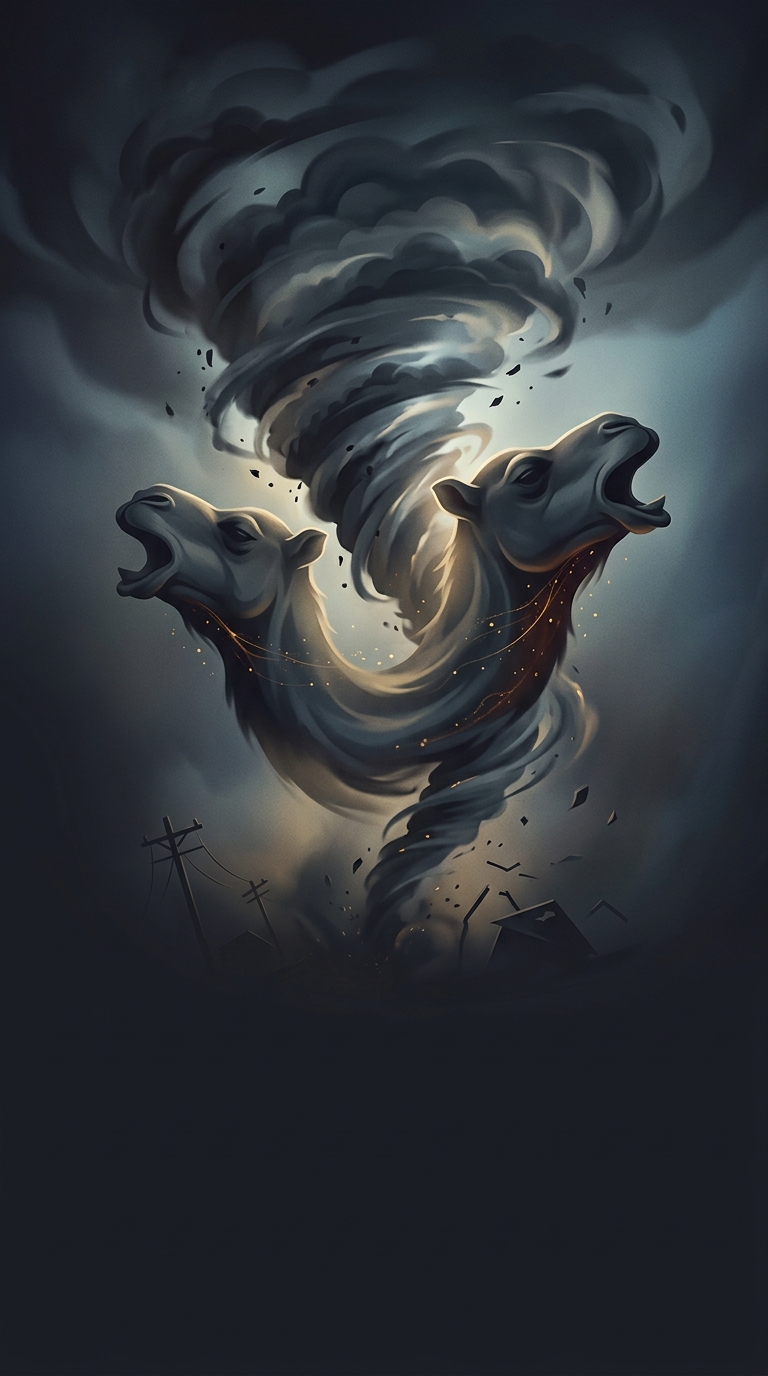
The roar in Twister began with a sound that audiences would not normally associate with a storm: an angry camel’s moan. Sound designers reshaped that animal vocalization for the tornado in the film’s climax, turning a recognizable biological sound into something that felt vast and threatening.
Slowing a recording changes more than its duration. In ordinary playback, it also lowers the pitch, stretching quick fluctuations into longer, heavier sounds. A camel’s rough, expressive moan can therefore lose its familiar animal character and take on the weight and eeriness of a cinematic monster.
Making the storm feel alive
That transformation suits the scene’s purpose. A tornado has no voice, but a movie storm needs to register not only as wind and destruction, but as an immediate presence. A deep, irregular roar gives the force a kind of personality without making it literally human or animal. The sound suggests something that is moving, surging, and bearing down on the characters.
The effect also shows why film sound is not simply a matter of recording what a camera sees. A real storm recording might convey wind, but it may not deliver the dramatic scale or menace a scene needs. By slowing and heavily editing a camel’s vocalizations, the designers could build a more expressive cue from an unexpected source. The result is memorable precisely because the sound’s origin and its on-screen meaning are so far apart.