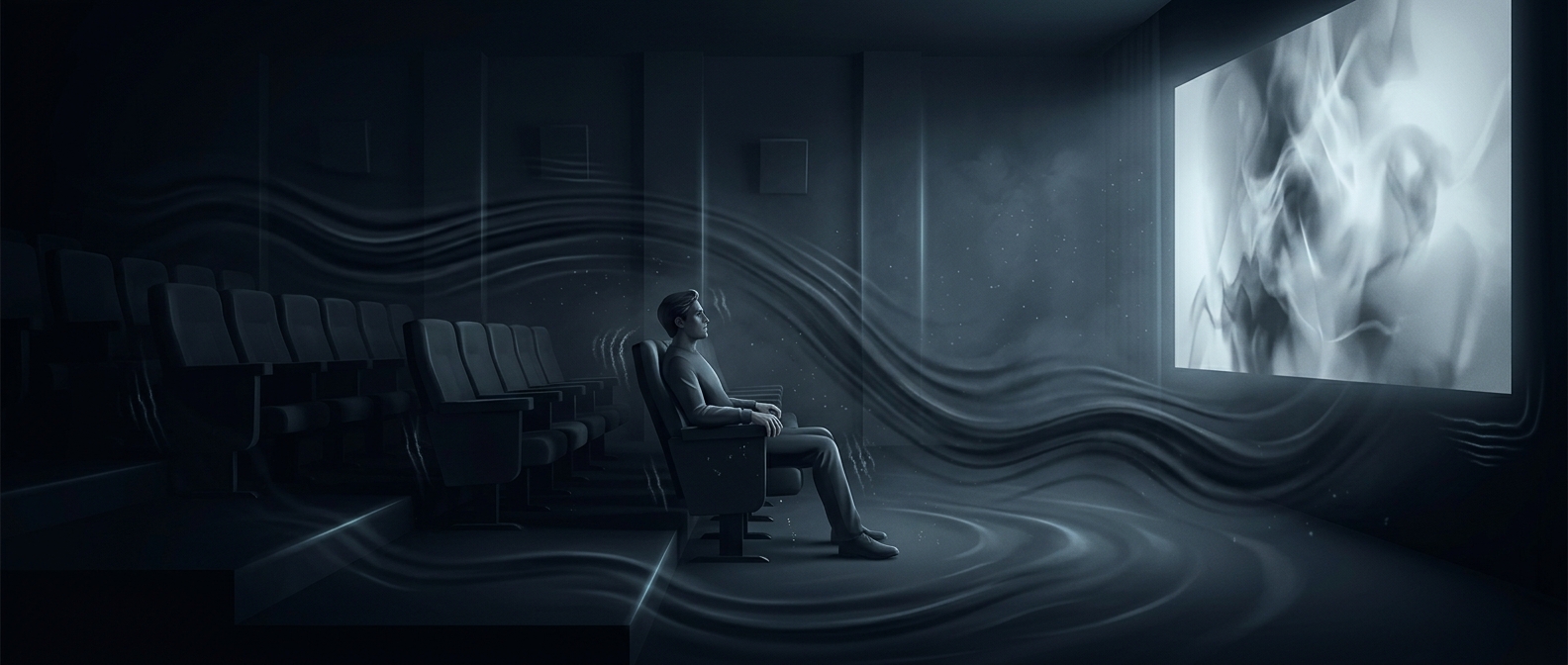
A rumble below the edge of hearing
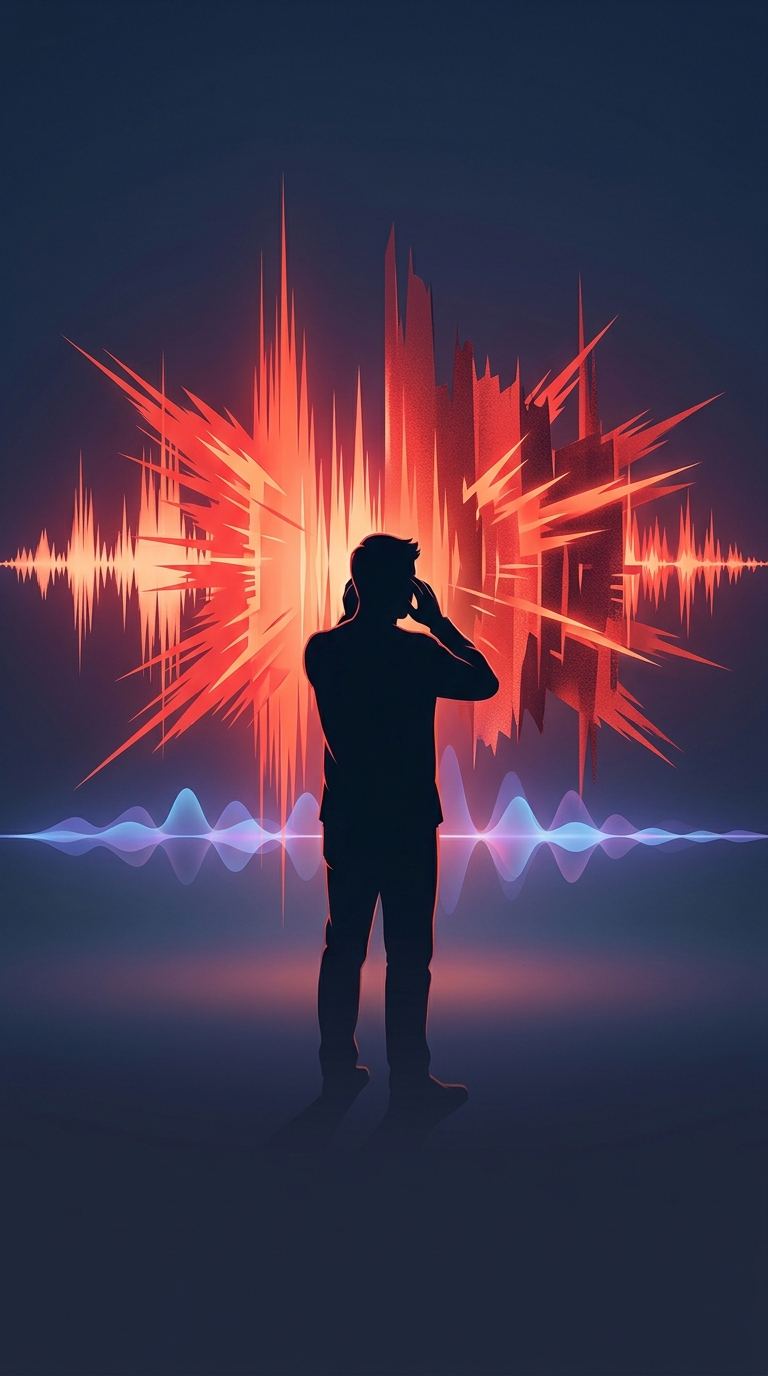
Human hearing is often described as beginning around 20 hertz, or 20 sound-wave cycles per second. Infrasound sits below that threshold: a listener may not recognize it as a musical note, even when powerful speakers reproduce it. At sufficient levels, very low-frequency sound can also be felt as vibration or pressure, especially in a room with speakers capable of producing it.
That makes it useful for horror sound design. A faint low rumble can add a bodily sensation to a scene without announcing itself as a conventional sound effect. The audience may register a sense of pressure or unease while concentrating on the image, rather than consciously identifying a noise.
Dread is built from the whole mix
Infrasound is not a reliable switch for fear. Its effect depends on how loud it is, the playback system, the room, and the listener; some viewers may feel something, while others notice nothing. Filmmakers therefore use it as one layer among others—alongside silence, rising tones, sudden impacts, and ordinary bass sounds that are plainly audible.
The low frequency can make a quiet moment feel less settled before anything frightening appears. When a sound is too subtle to name but still felt as vibration, the soundtrack can make tension seem to come from the room itself, not just from what is on screen.