The scare is built from contrast
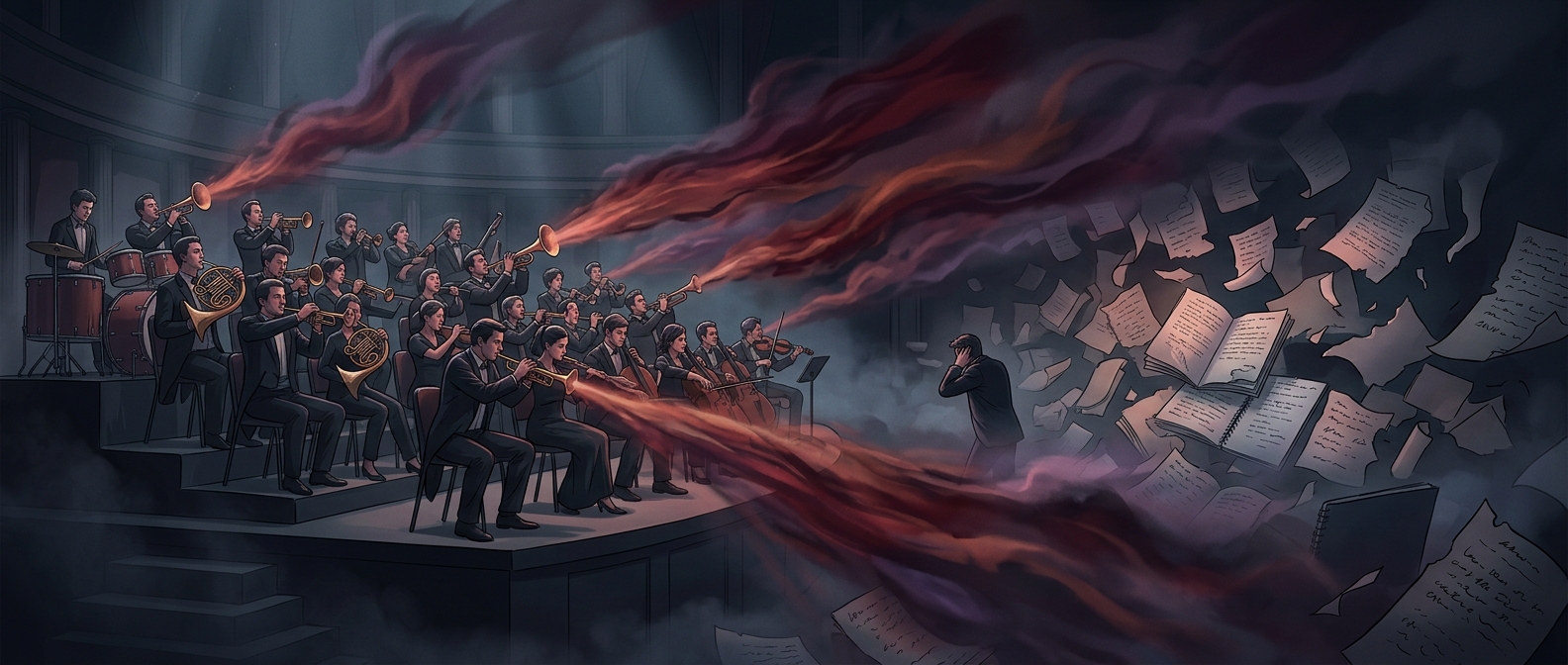
A jump scare often works less like a picture of danger and more like a sudden interruption. A scene may hold viewers in a quiet stretch, with only faint room tone or a low musical cue. When a sharp musical hit arrives, the change in sound level is abrupt enough to trigger the body’s startle response: attention snaps toward the apparent threat before the viewer has time to judge whether it is actually frightening.
The contrast matters as much as the volume. A loud blast after silence feels more startling than the same blast after a noisy chase. Editors and sound designers can shape that contrast by thinning out the soundtrack, leaving a pause, then placing a forceful hit exactly where they want the audience to flinch.
Why the music can do the work
A brass chord or other harsh, sudden sound is easy to register as an alarm-like event. It can make a reveal feel dangerous even when the creature on screen is ordinary, poorly lit, or not especially convincing. The jolt is real, but it comes from the timing and intensity of the sound—not necessarily from suspense the story has earned.
That makes the technique useful in production. A brief musical sting is simpler to create than a frightening creature or an elaborate sequence of escalating tension. It can also redirect attention: the audience reacts to the impact first, then sees what caused it. When the image does not sustain the threat, the scare may quickly feel cheap. The soundtrack has made viewers jump; it has not necessarily made them believe the monster is terrifying.