A mirror turns an ordinary routine into a reveal
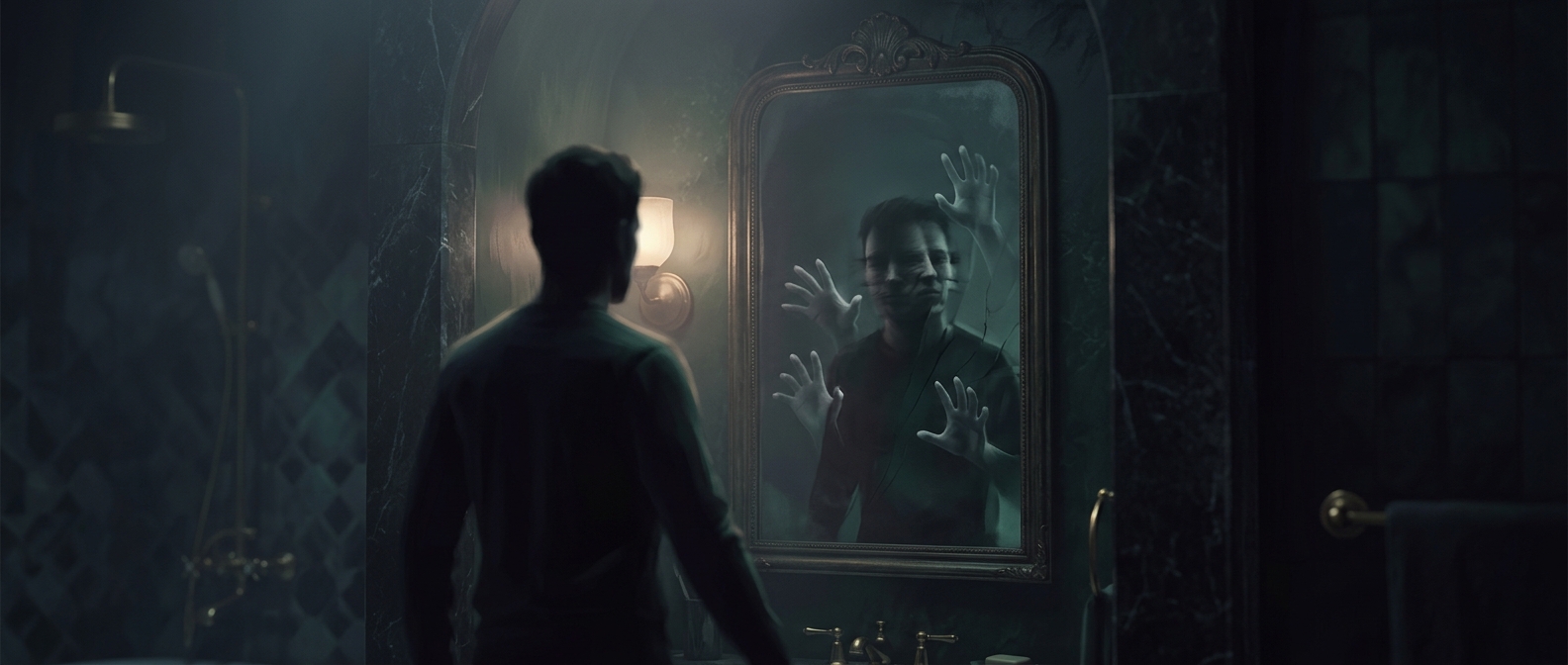
A bathroom mirror gives a horror scene a small, believable reason to make a character look away. They open the cabinet, reach for something, or lean toward the sink. Those everyday movements create a brief interval when the audience can see the character’s face but not the space behind them—or can see that space reflected in the glass.
That makes the mirror more than spooky scenery. It lets filmmakers control exactly when the character and viewer learn the same thing. A threat can be visible in the reflection before the character notices, or it can appear only after a door or head movement changes the view.
The cabinet door does the editing
A medicine-cabinet door can act like a movable curtain. While it is open, it blocks part of the reflected image; as it swings, it gradually exposes what was hidden. The movement also gives the audience a natural cue to watch the mirror, building expectation without an abrupt cut or an implausible camera angle.
The setup is practical, too: the character’s action motivates the shot, and the mirror supplies a second view of the room within the same composition. But the effect depends on careful staging. The actor, camera, reflected background, and door must line up so the reveal reads clearly—and so the mirror does not accidentally show equipment or a crew member.
Familiarity makes the change land
Bathrooms are private, routine spaces where people expect to be alone. A reflection normally confirms that the room is ordinary; a small change in it can therefore feel like evidence that the room is no longer safe. The scare works by turning a familiar check—looking at yourself in the glass—into a moment when you have to check what is behind you, too.