A novel its author could not recall writing
Stephen King later said he had little or no memory of writing Cujo, which was published in 1981. He was struggling with severe cocaine and alcohol addiction during that period. The gap was not simply a matter of forgetting a few scenes: heavy substance use can disrupt the formation of memories, leaving a person able to function for stretches of time without later being able to retrieve what happened.
That makes Cujo an unsettling case of a finished, carefully structured novel emerging from a period its author could not reliably remember. King’s account does not mean he was unaware of every moment as he wrote, or that addiction somehow supplied the book’s ideas. It does show how little a completed work can reveal about the condition of the person who made it.
The story’s pressure comes from confinement
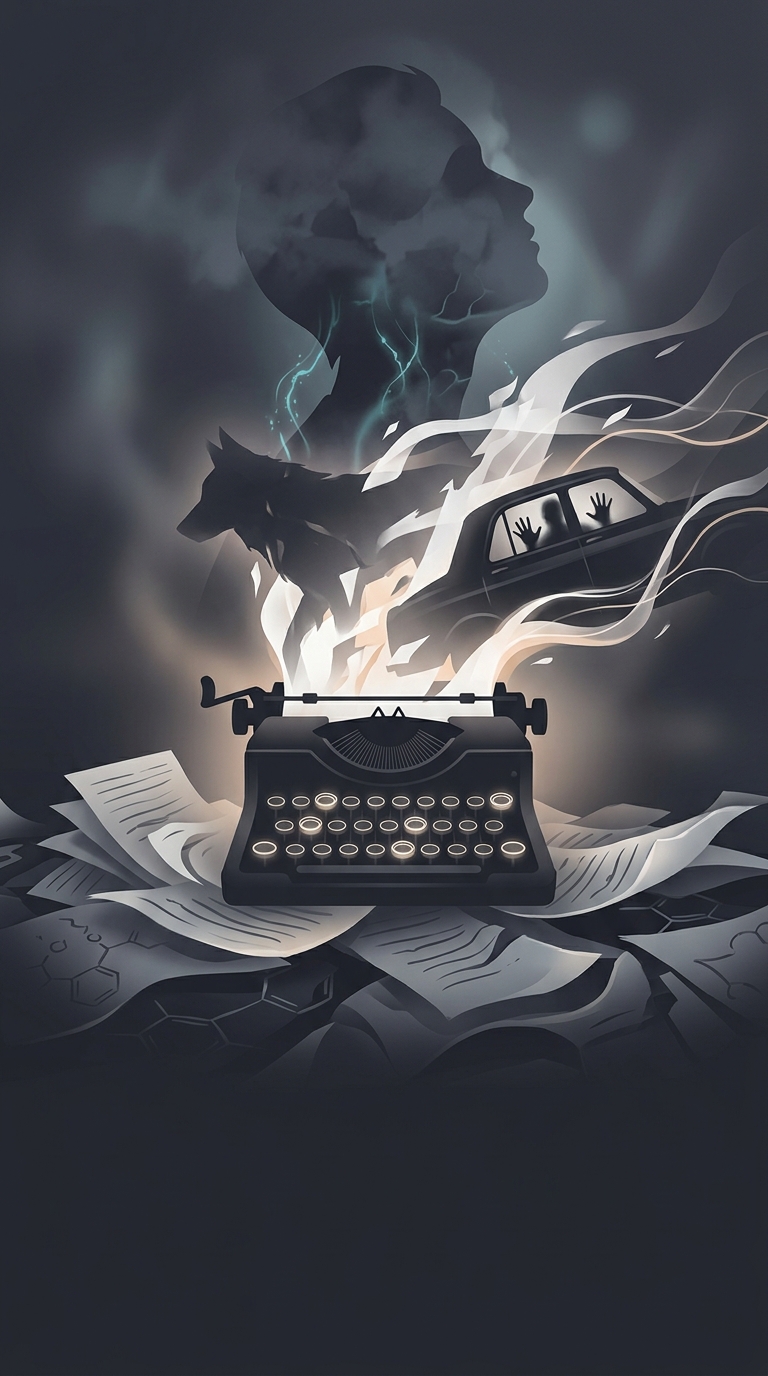
The novel’s central predicament is brutally simple: a mother and her young son are trapped inside a car while a rabid dog waits outside. The car, normally a means of escape, becomes a fragile shelter. Heat, thirst, fear, and the inability to summon help turn a familiar domestic setting into a narrowing set of choices.
That design gives the horror its force. The danger is not an elaborate supernatural puzzle; it is the collision of an ordinary breakdown with an animal the characters cannot safely approach. Each failed attempt to get out makes the car feel less like protection and more like a trap.
A stark contrast between form and memory
Readers encounter Cujo as a coherent sequence of escalating decisions. King’s later recollection of making it, by contrast, is marked by absence. The contrast is a reminder that a novel’s apparent control does not guarantee that its creation was controlled—or that its author will remember the work afterward.