Why a Closed Door Is Never Free in Five Nights at Freddy’s
In the original Five Nights at Freddy’s, the security office has a limited power supply for the night. The doors and hallway lights run on it, as does the monitor used to check the cameras. Each control gives the player information or protection, but using several at once makes the power drain faster.
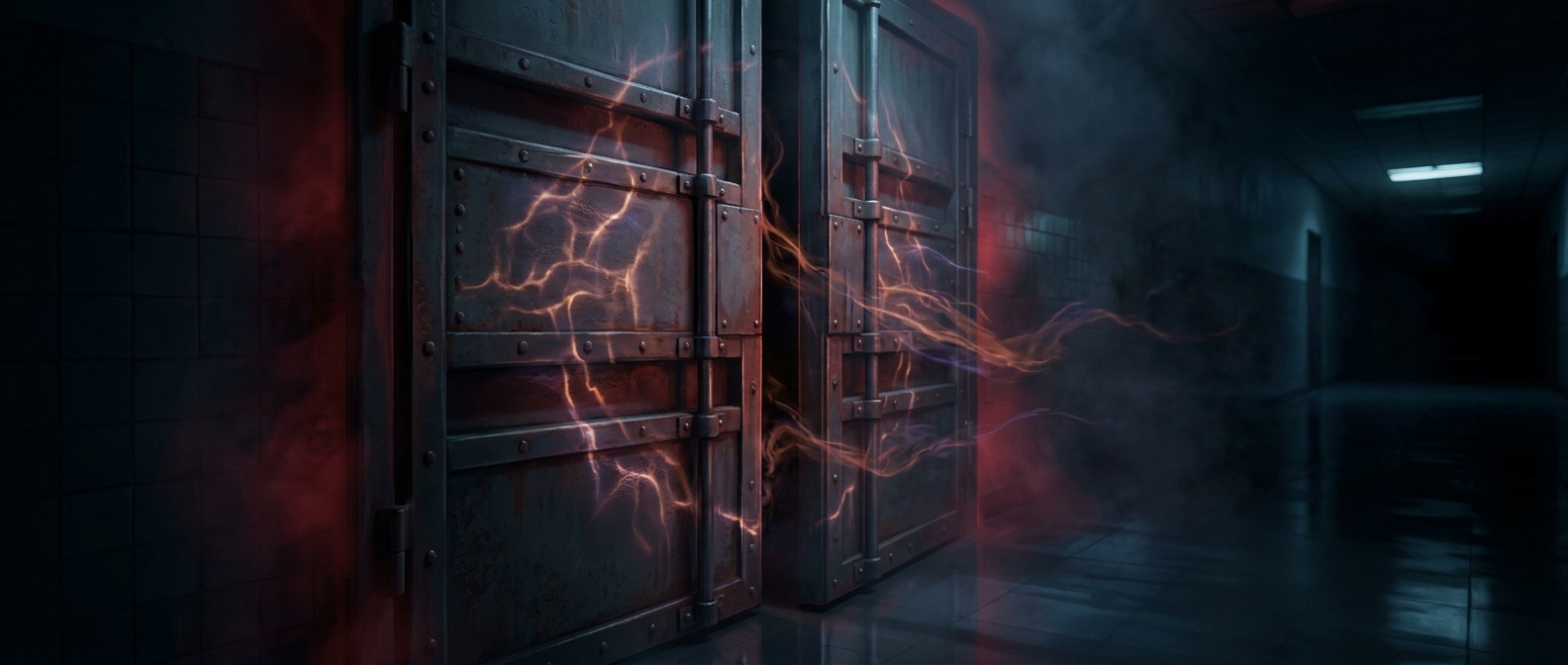
That turns a simple defense into a timing problem. Shut a door when an animatronic is near, and it can block an attack from that side. But leaving it shut spends power even when the threat has passed. The sensible move is not to keep every defense on; it is to check, react, and release the controls when they are no longer needed.
The Power Meter Makes Waiting Dangerous
The player is trying to last until morning, so every decision has a future cost. Checking cameras can reveal where an animatronic is, but watching too long leaves less power for the doors and lights. Skipping checks saves electricity, but risks reacting too late. The game makes caution itself something to manage.
If the supply runs out, the office loses its powered defenses and goes dark. The player can no longer rely on the doors and lights to manage the threat, making a blackout especially perilous near the end of a night. The tension comes from having no permanently safe option: protection now can mean fewer ways to respond later. A door is not just a barrier; it is a short-term resource spent against the possibility of a worse moment ahead.