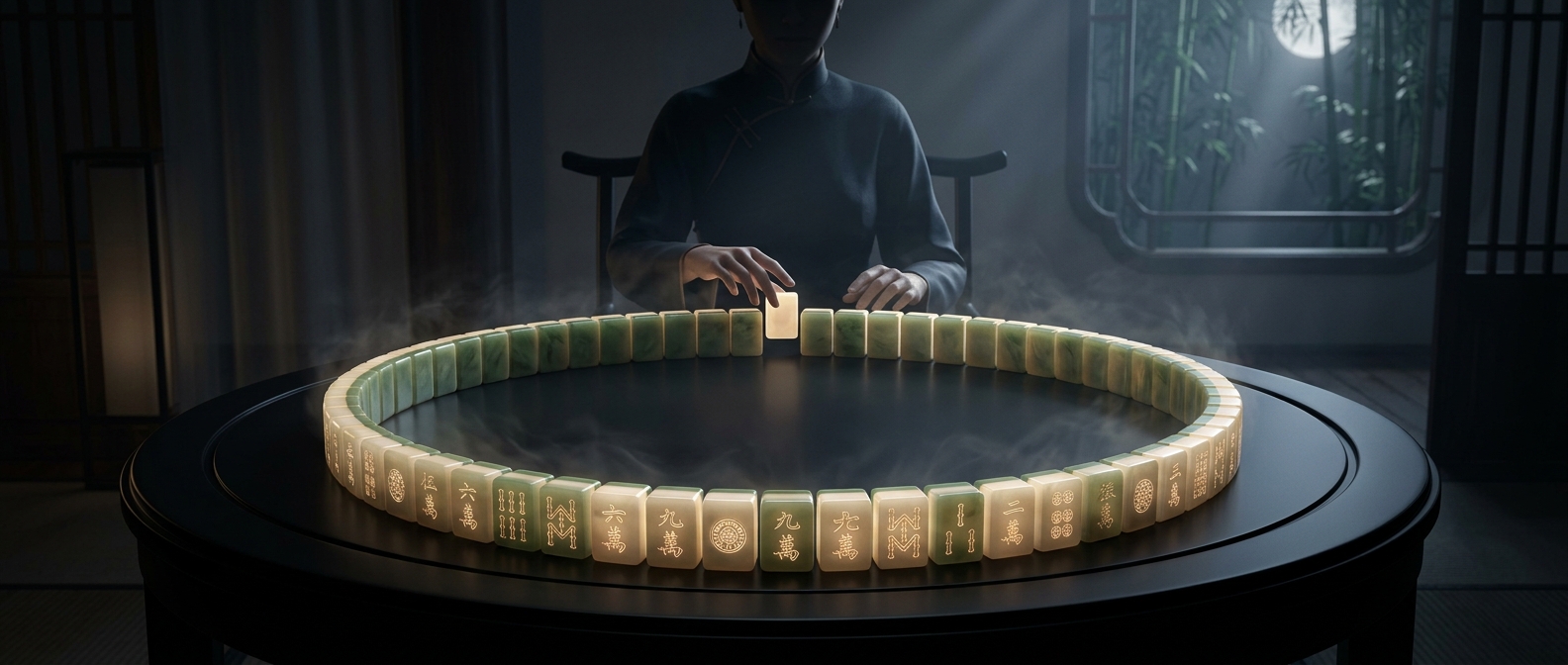
How a 144-tile Mahjong set is built
A standard set combines 136 tiles used to form a hand with eight bonus tiles. The 136 are four copies each of 34 designs: 27 suited tiles—numbered one through nine in bamboo, dots, and characters—and seven honor tiles, consisting of four winds and three dragons. Four copies matter because matching tiles and repeated sequences are among the basic ways to assemble a winning hand.
The other eight tiles are four flowers and four seasons. They are usually treated as bonuses rather than as pieces in the hand’s ordinary combinations. When a player draws one, many rule sets have them reveal it and draw a replacement tile, so the bonus changes play without taking the place of a needed suit or honor tile.
Why the count can vary at the table
The 144-tile count describes a familiar traditional set, not every version of Mahjong. Some sets or rules leave out flowers and seasons, producing a 136-tile game; regional versions may also add or handle tiles differently. The distinction is practical: the bonus tiles are part of the standard set’s inventory, but whether they enter a particular game depends on the rules being played.
That split explains the set’s design: most tiles build the hand, while a small, separate group adds bonus opportunities. Before play, checking whether flowers and seasons are in use tells players which tiles belong in the wall—the face-down supply they draw from—and which will be set aside for replacement draws.